
A cement packaging facility needs an air pollution control system to capture dry, fine mineral dust from a bulk-loading hopper exhaust stream before venting to the atmosphere. Which control technology is specifically designed to filter dry particulate matter at high collection efficiency?
Select an answer to reveal the explanation.
Short Explanation
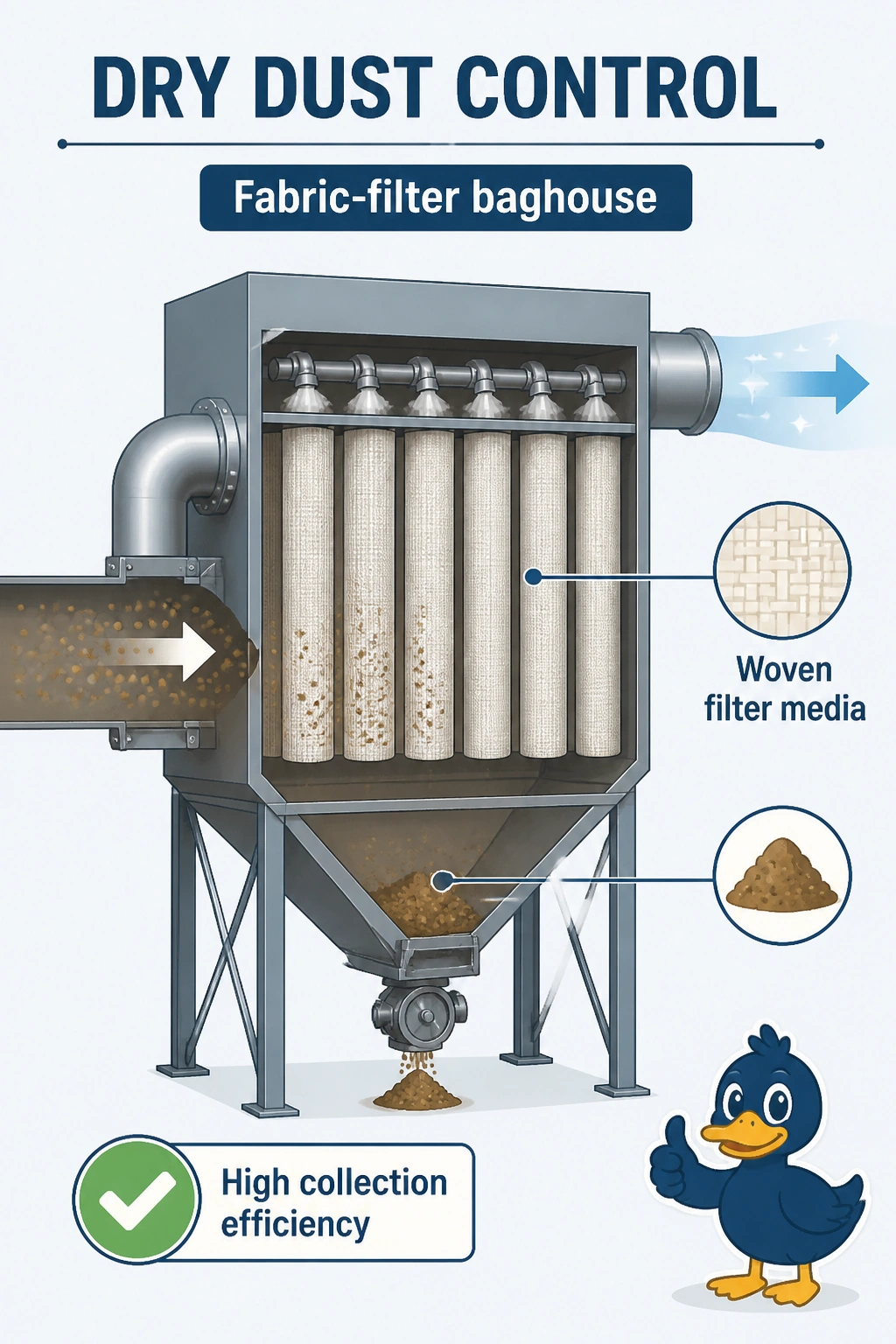
Think of a baghouse like an industrial vacuum cleaner turned inside out: dirty air passes through fabric sleeves, leaving dry dust behind. The trap is picking a vapor or gas control device for solid particles; you need to match the air cleaner to the physical state of the pollutant.
Full Explanation
To control dry mineral dust in an exhaust stream, engineers install a fabric-filter baghouse that traps suspended dry dust particles on woven filter media, building a porous dust cake that boosts capture efficiency for fine particulates before periodic pulse-jet cleaning drops the dust into a hopper. A thermal oxidizer that burns volatile organic vapors at high temperature is designed to destroy gaseous organic compounds by combustion, and mineral cement dust is noncombustible. A catalytic converter that reduces nitrogen oxide gases into nitrogen targets gaseous combustion byproducts rather than solid airborne particulates, and heavy dust would foul the catalyst bed. An activated-carbon adsorber that captures organic solvent vapors relies on microporous adsorption of vapor molecules and would rapidly plug if fed dense mineral dust. As a caveat, baghouses require temperature and moisture control because condensation can blind the fabric bags and spike differential pressure. During routine environmental rounds, check the baghouse differential pressure gauge and inspect the exhaust stack for visible dust plumes that indicate a torn filter bag.
Prefer to study offline? Printable PDF study book + test engine ($7.50, unofficial). These questions stay free here.