
A multi-building manufacturing campus relies solely on an overhead public-address (PA) speaker system for emergency notifications, leaving workers in high-noise stamping bays and outdoor yard areas unable to hear evacuation instructions. Which improvement best strengthens the facility's emergency communication plan?
Select an answer to reveal the explanation.
Short Explanation
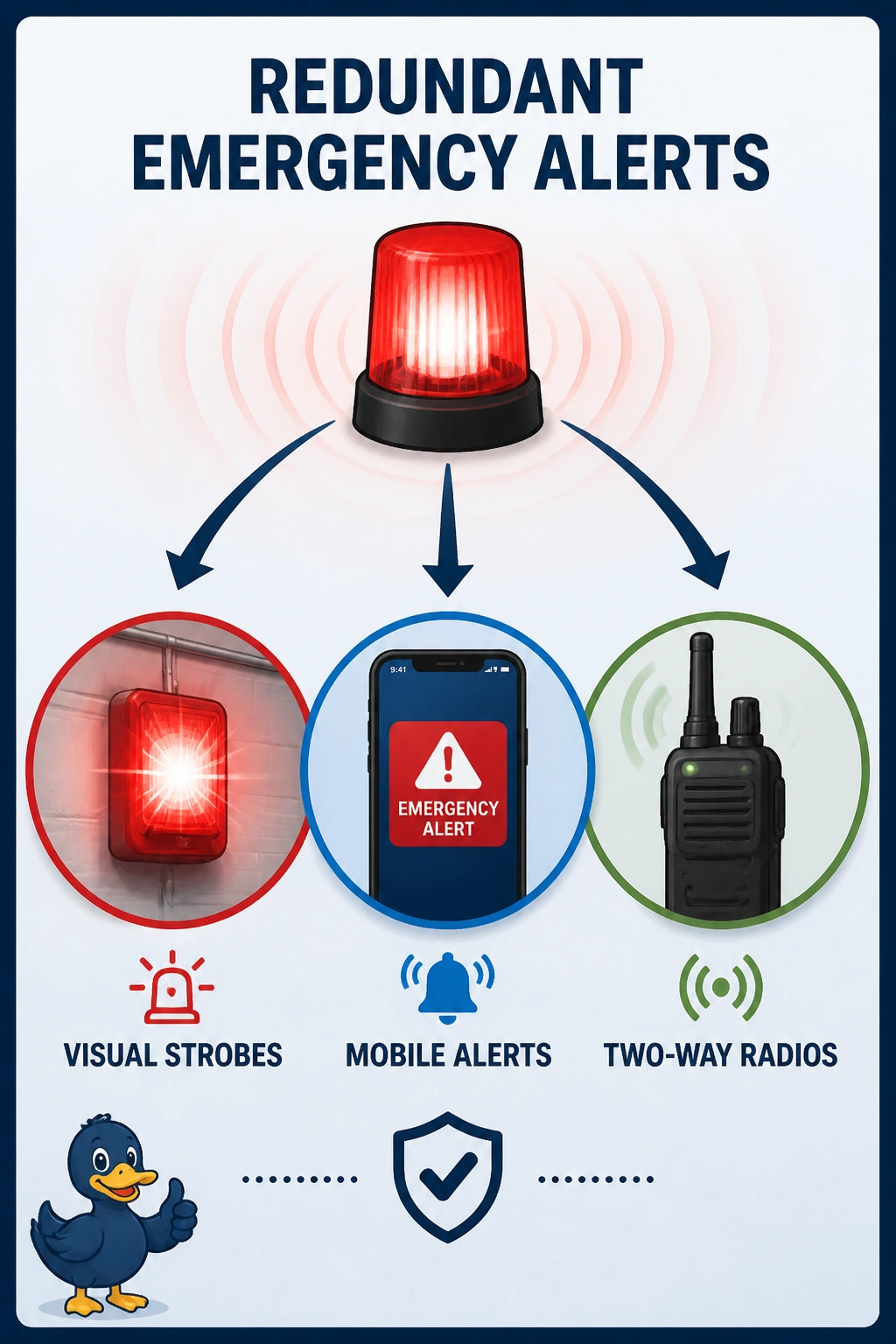
When you rely on one overhead voice system, workers in loud bays or outdoor areas may miss evacuation instructions. Redundancy gives you visual strobes, mobile alerts, and two-way radios, while louder hallway speakers, a receptionist phone chain, or quiet-time PA testing won’t close that gap.
Full Explanation
Adding visual strobes, mobile alerts, and two-way radios provides redundant ways to reach workers who cannot hear the overhead PA through stamping noise, hearing protection, or outdoor distance. Combining visual, audible, and personal wireless notifications reduces reliance on any single channel if it loses power or cannot reach a high-noise bay. Increasing PA volume in quiet office hallways may create uncomfortable sound levels there without making instructions audible in the stamping bays or yard. Assigning one receptionist to call every department supervisor by landline creates delays and a human bottleneck, and supervisors may be away from their desks. Testing the overhead PA annually during a scheduled weekend shutdown checks it when machinery is silent, so it can miss the real-world audibility problem during production. One caveat: alarm signals must be distinctive and perceptible above ambient noise under 29 CFR 1910.165, and backup power is essential during outages. For a practical check, conduct an unannounced drill during peak stamping operations and confirm that the visual strobes and mobile alerts reach workers throughout the facility and yard.
Prefer to study offline? Printable PDF study book + test engine ($7.50, unofficial). These questions stay free here.