
A remote logging and sawmill operation sits 45 minutes by ambulance from the nearest clinic or hospital. Under OSHA's Medical Services and First Aid standard (29 CFR 1910.151), what must the employer ensure on-site?
Select an answer to reveal the explanation.
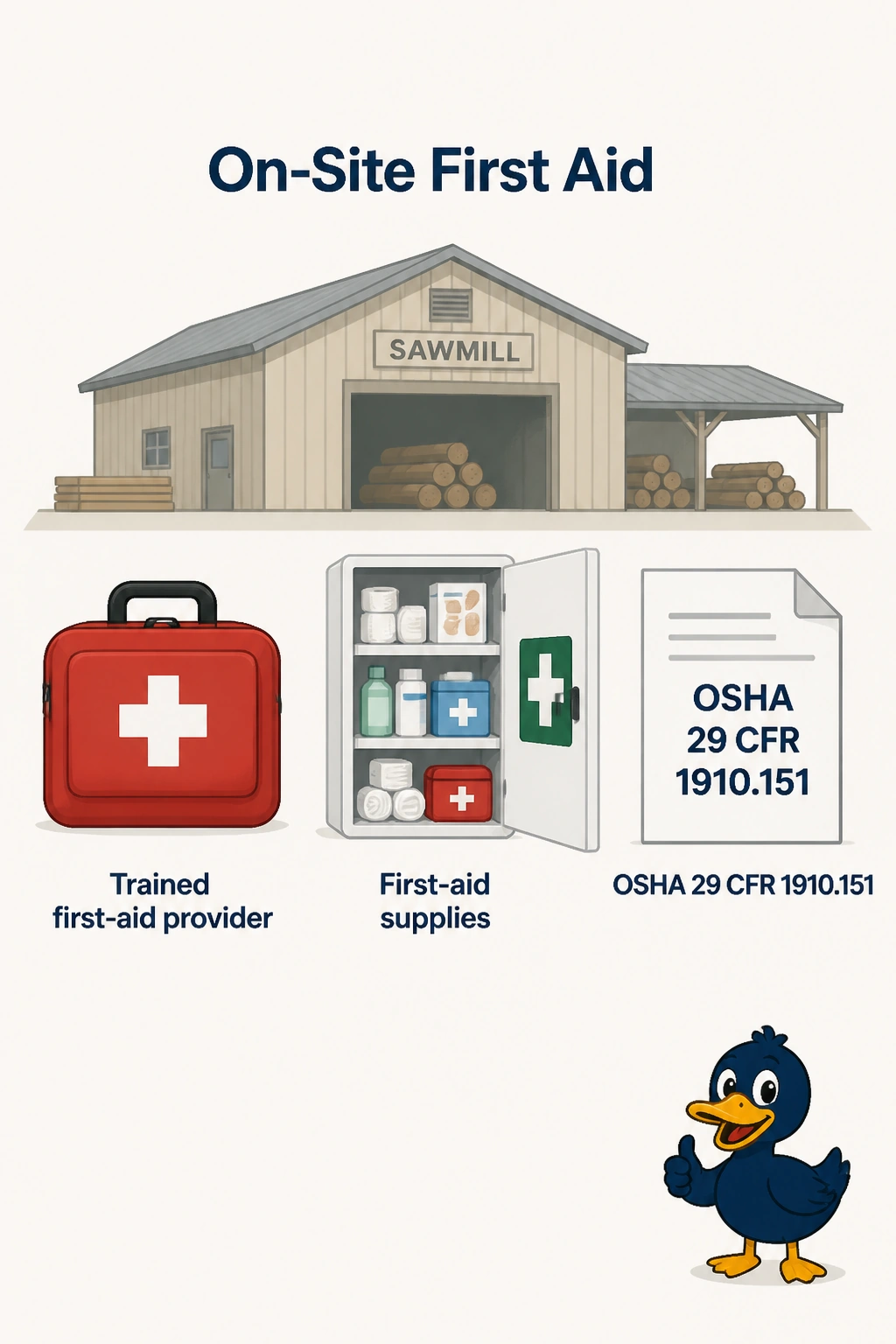
Short Explanation
When an ambulance is 45 minutes away, those first few minutes after a severe cut or crush injury belong to your on-site crew. The trap is assuming you need a physician or helipad on standby instead of a trained first-aid responder with stocked supplies.
Full Explanation
Under OSHA's Medical Services and First Aid standard (29 CFR 1910.151), when an infirmary, clinic, or hospital is not in near proximity to the workplace, the employer must ensure a person or persons are adequately trained to render first aid and that adequate first-aid supplies are readily available. An adequately trained first-aid provider and readily available first-aid supplies directly fulfills this requirement so severe bleeding, shock, or fractures receive immediate care during the 45-minute ambulance response window. A licensed physician stationed at the mill during all active production shifts goes far beyond what the standard requires. A contract helicopter landing pad cleared for emergency medical evacuations may support remote air transport, but it does not satisfy the immediate on-site first-aid duty. Quarterly bloodborne pathogen vaccination clinics for every mill employee addresses a different standard and schedule rather than acute trauma response. As a caveat, OSHA expects response times of roughly 3 to 4 minutes for life-threatening emergencies. Operationally, inspect first-aid kits monthly for expiration dates and verify that trained responders cover every shift.
Prefer to study offline? Printable PDF study book + test engine ($7.50, unofficial). These questions stay free here.