
A severe thunderstorm warning escalates to a tornado warning at a single-story logistics warehouse with a wide-span metal roof and large glass lobby windows. Where should the emergency coordinator direct employees to shelter?
Select an answer to reveal the explanation.
Short Explanation
When a tornado warning sounds, you want as many solid interior walls between your crew and the storm as possible. The trap in a warehouse is hiding near tall racking or wide-span metal roofs that are the first structures to fail in extreme wind.
Full Explanation
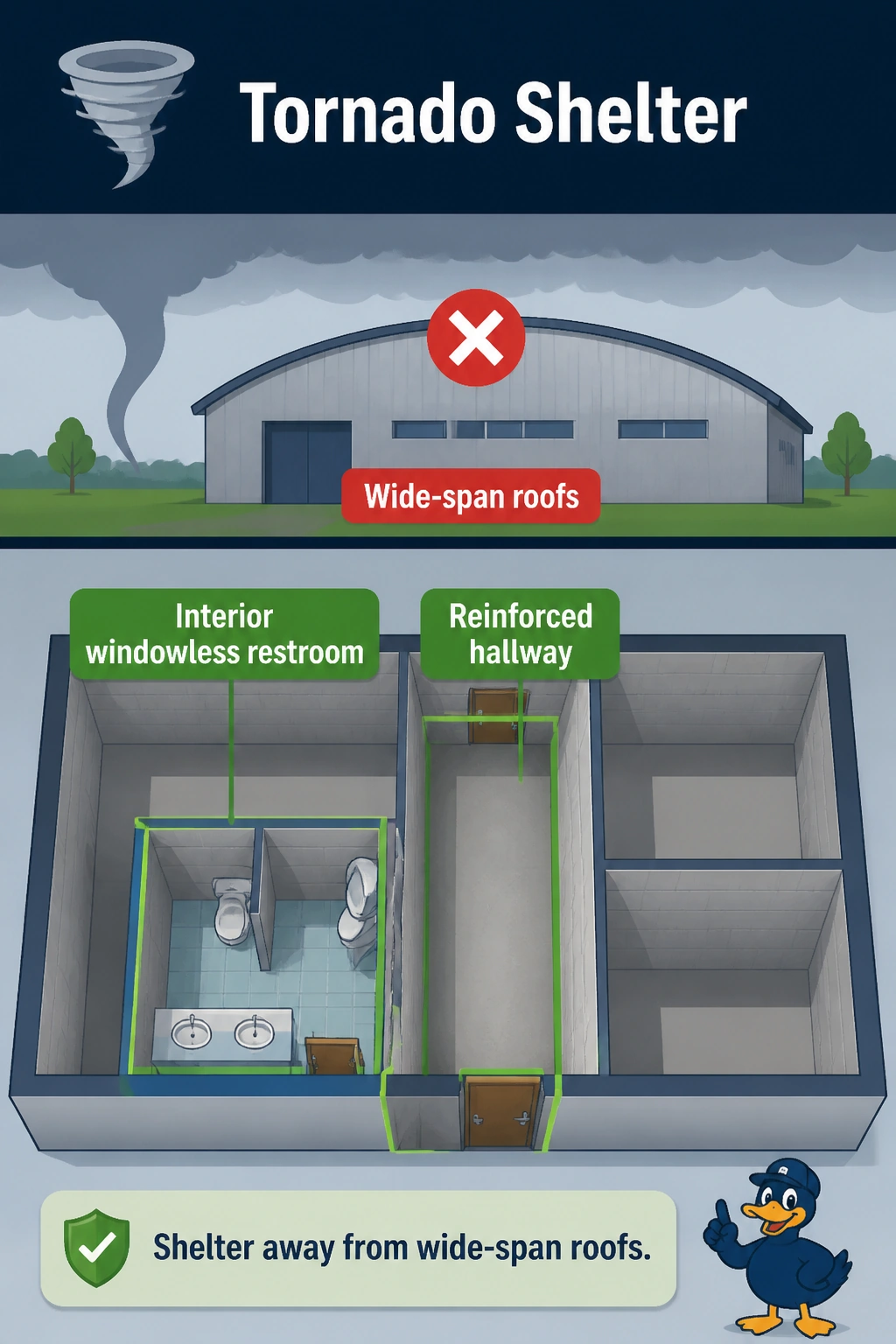
During a tornado warning, employees should shelter In an interior windowless restroom or reinforced hallway away from wide-span roofs because small, structurally supported interior rooms on the lowest floor offer the strongest protection against roof uplift and windborne debris. Wide-span warehouse roofs lack interior load-bearing columns and can collapse or peel away under high wind uplift, while exterior windows shatter into lethal projectiles. Directing workers Underneath the high-bay pallet racking near the glass shipping office and dock doors exposes them to falling inventory, collapsing steel uprights, and broken glass. Sending staff Inside parked semi-trailers at the loading dock to shield against flying debris is dangerous because high winds can overturn or blow trailers away from the dock. Sheltering In a glass-walled corner office under the wide-span roof nearest the exterior wall combines exterior glass that shatters into projectiles with a roof section most vulnerable to uplift and collapse. As a caveat, verify that the designated shelter area does not sit beneath heavy overhead piping, mezzanine storage, or hazardous chemical lines. For an operational check, post severe-weather shelter maps at every time clock and conduct an annual tornado drill to time how quickly crews reach the interior shelter.
Prefer to study offline? Printable PDF study book + test engine ($7.50, unofficial). These questions stay free here.