
After a severe tornado damages a medical-device distribution center, all personnel are safely evacuated and emergency responders have secured the utilities. Which plan guides leadership in restoring critical order fulfillment, IT infrastructure, and alternate warehouse operations?
Select an answer to reveal the explanation.
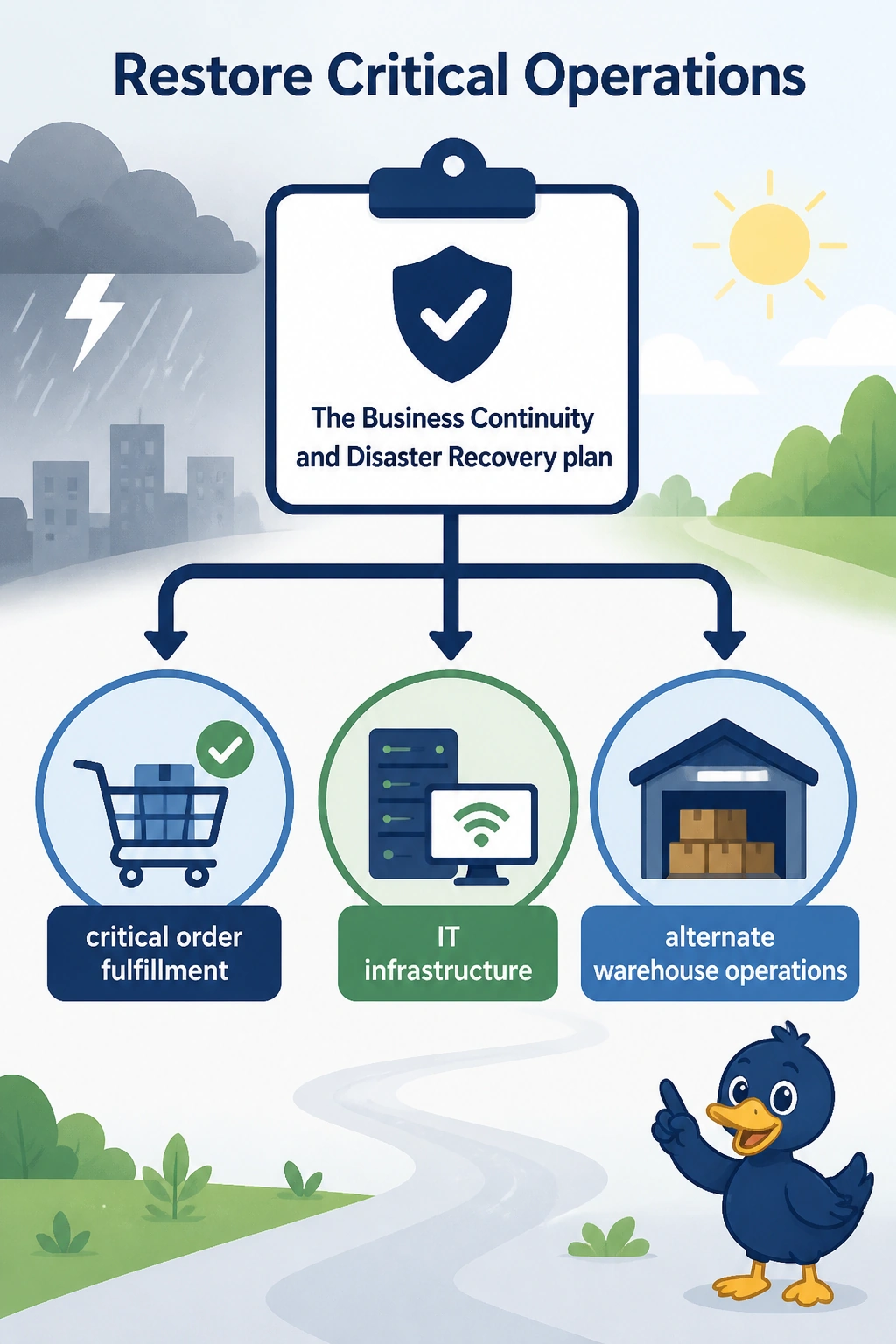
Short Explanation
Once the dust settles and everyone is safe, your emergency evacuation plan has already done its job. The trap is reaching for life-safety or spill-response binders when the real question is how to get the business back on its feet.
Full Explanation
Once immediate life safety and site stabilization are complete, leadership transitions from emergency response to operational recovery using The Business Continuity and Disaster Recovery plan. This plan establishes recovery time objectives, alternate facility sourcing, supply-chain workarounds, and IT data restoration so essential customer deliveries resume quickly. By contrast, The site Emergency Action Plan for immediate personnel evacuation under 29 CFR 1910.38 focuses on alarms, exit routes, critical shutdown duties, and headcounts during an active emergency rather than multi-week business restoration. Similarly, The Hazardous Waste Operations and Emergency Response plan governs safe containment, personal protective equipment, and decontamination during uncontrolled hazardous substance releases. Likewise, The Spill Prevention, Control, and Countermeasure plan addresses oil storage containment and waterway protection under EPA 40 CFR Part 112, not enterprise logistics or IT recovery. Caveat: recovery teams must still coordinate with safety personnel to verify structural integrity and temporary utilities before re-entering damaged areas. As an operational check, test backup vendor contacts and off-site data backups during annual continuity exercises.
Prefer to study offline? Printable PDF study book + test engine ($7.50, unofficial). These questions stay free here.