
After a chemical release triggers an evacuation at a food processing facility, employees gather at designated outdoor assembly areas. What action must the emergency coordinator ensure next under OSHA's Emergency Action Plan standard?
Select an answer to reveal the explanation.
Short Explanation
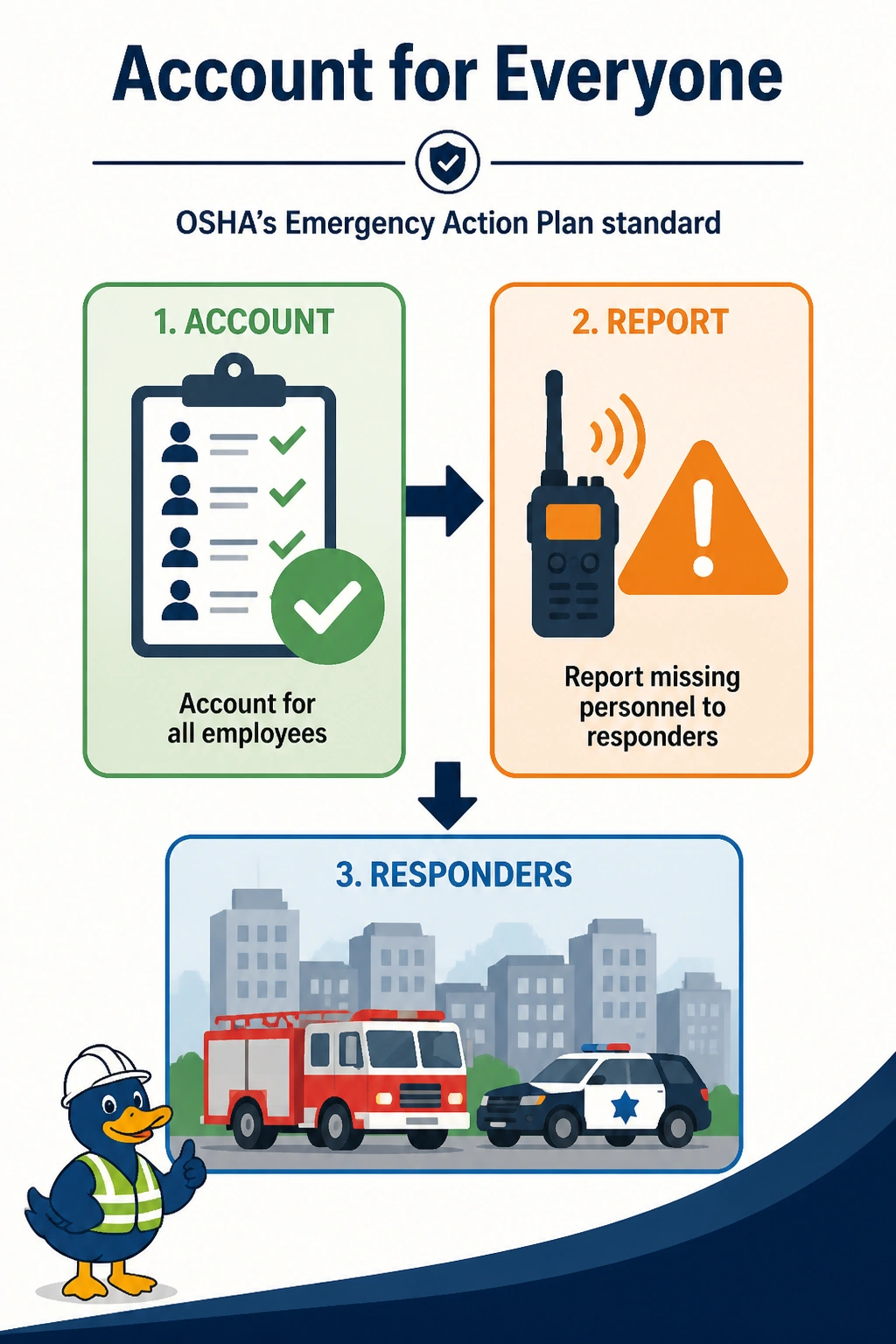
During an evacuation, your assembly area headcount is the single fastest way to tell firefighters whether everyone made it out safely. The deadly trap is sending untrained supervisors back into a hazardous building to look for someone instead of letting trained responders perform the rescue.
Full Explanation
OSHA 29 CFR 1910.38 requires an Emergency Action Plan to establish procedures to Account for all employees and report missing personnel to responders after evacuation is complete. Rapid headcount and visitor sign-in verification give incident command actionable information on who may still be trapped and where they were last seen. Choosing to Send floor supervisors back inside the building to search restrooms and breakrooms exposes untrained personnel to toxic vapors, smoke, or structural hazards and creates additional victims. Choosing to Instruct all evacuated workers to leave the site immediately in personal vehicles prevents an accurate headcount and can block emergency vehicle access routes. Choosing to Wait for local fire responders to arrive before beginning any personnel headcount wastes critical minutes when facility staff already know their shift rosters and assembly locations. Caveat: employees assigned to remain behind for critical plant shutdowns before evacuating must have separate accountability check-in procedures. Operational check: conduct periodic unannounced evacuation drills and verify that assembly area wardens can reconcile shift rosters and visitor logs within minutes.
Prefer to study offline? Printable PDF study book + test engine ($7.50, unofficial). These questions stay free here.