
Staff ask whether the manageability benefit of cloud means the city no longer needs skilled administrators. Which response is accurate?
Select an answer to reveal the explanation.
Short Explanation
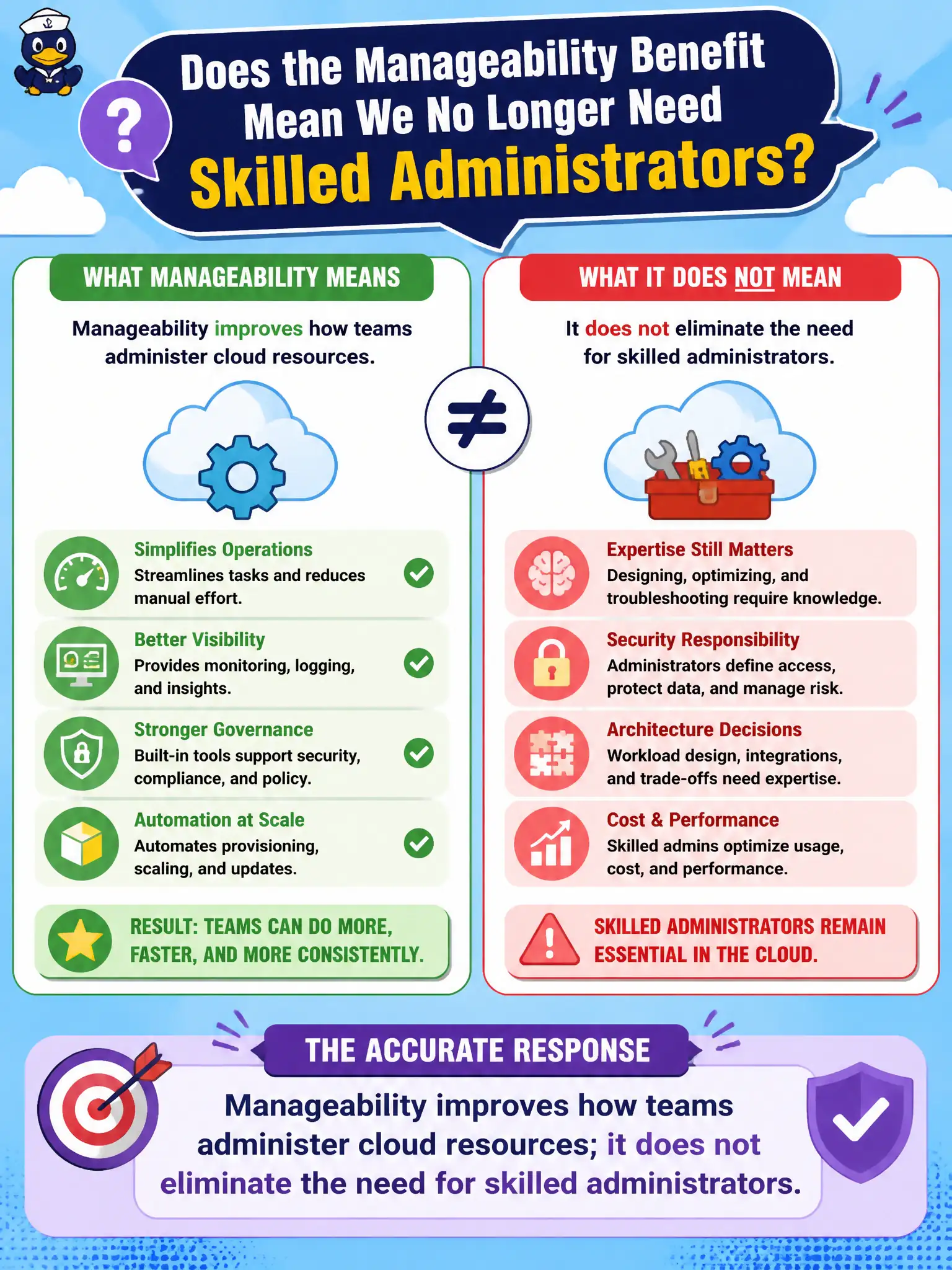
Better tools do not fire the firefighters — they give them better hoses. Cloud manageability upgrades how you run the estate; it does not mean zero admins. Somebody still owns design, access, and day-two care.
Full Explanation
Manageability improves how teams administer cloud resources—portals, automation, and consistent tooling—without eliminating the need for skilled administrators. Cities still need people who design access, interpret policy results, handle incidents, and own day-two operations within shared responsibility. Better hoses do not retire the firefighters. Replacing all administrators with unattended scripts forever overstates automation and ignores accountability when scripts fail or scopes are wrong. Manageability does not apply only when nobody logs into the portal; portals are part of the benefit and skilled use of them is expected. Microsoft employees do not become the city’s only operators for customer-owned workloads, identities, and configurations. Exam caveat: do not confuse “easier to manage” with “no operators required”—AZ-900 keeps human responsibility in the model alongside tooling benefits. Operational check: redefine admin roles around cloud tooling (identity, policy, automation, monitoring) rather than assuming headcount can drop to zero after migration, and document who still owns break-glass and change approval. Keep runbooks that name human owners for identity changes, policy exceptions, and incident response even when automation handles routine tasks.