
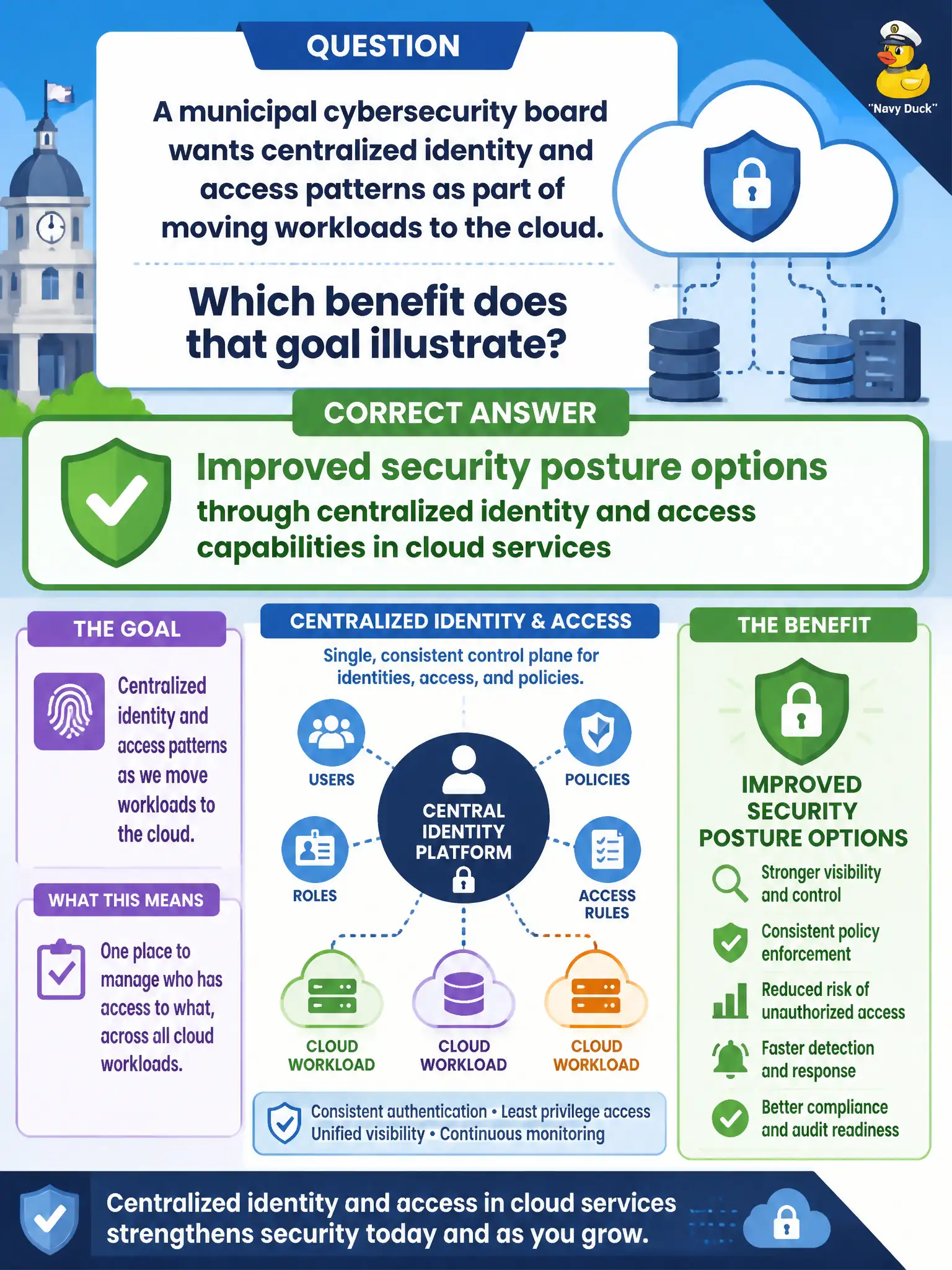
A municipal cybersecurity board wants centralized identity and access patterns as part of moving workloads to the cloud. Which benefit does that goal illustrate?
Select an answer to reveal the explanation.
Short Explanation
Centralized identity is like one badge office for the whole city instead of a different lock for every closet. That kind of access pattern is a cloud security-benefit story. It is not a promise of zero breaches or a return to paper visitor logs.
Full Explanation
Cloud security benefits include centralized identity and access patterns across services, giving a municipal cybersecurity board stronger posture options than fragmented per-closet credentials and local accounts. Directory-based sign-in, conditional access patterns, and consistent role assignment models illustrate that theme at AZ-900 depth without requiring advanced identity architecture labs or custom federation design. Centralization improves visibility and control; it does not magically remove every threat. Guaranteed zero breaches for every public portal is not a cloud benefit—no platform promises perfect immunity. Replacing authentication with handwritten visitor badges abandons cloud identity capabilities rather than illustrating them. Eliminating role assignments or least privilege contradicts secure access design; centralized identity makes least privilege easier to apply and review, not obsolete. Exam caveat: improved posture options are not the same as a compliance certification checkbox—benefits describe capability themes, not an automatic audit pass for the municipality. Operational check: verify municipal apps and admin portals use centralized identities and that privileged roles follow least-privilege assignments rather than shared local accounts or standing broad admin rights.