
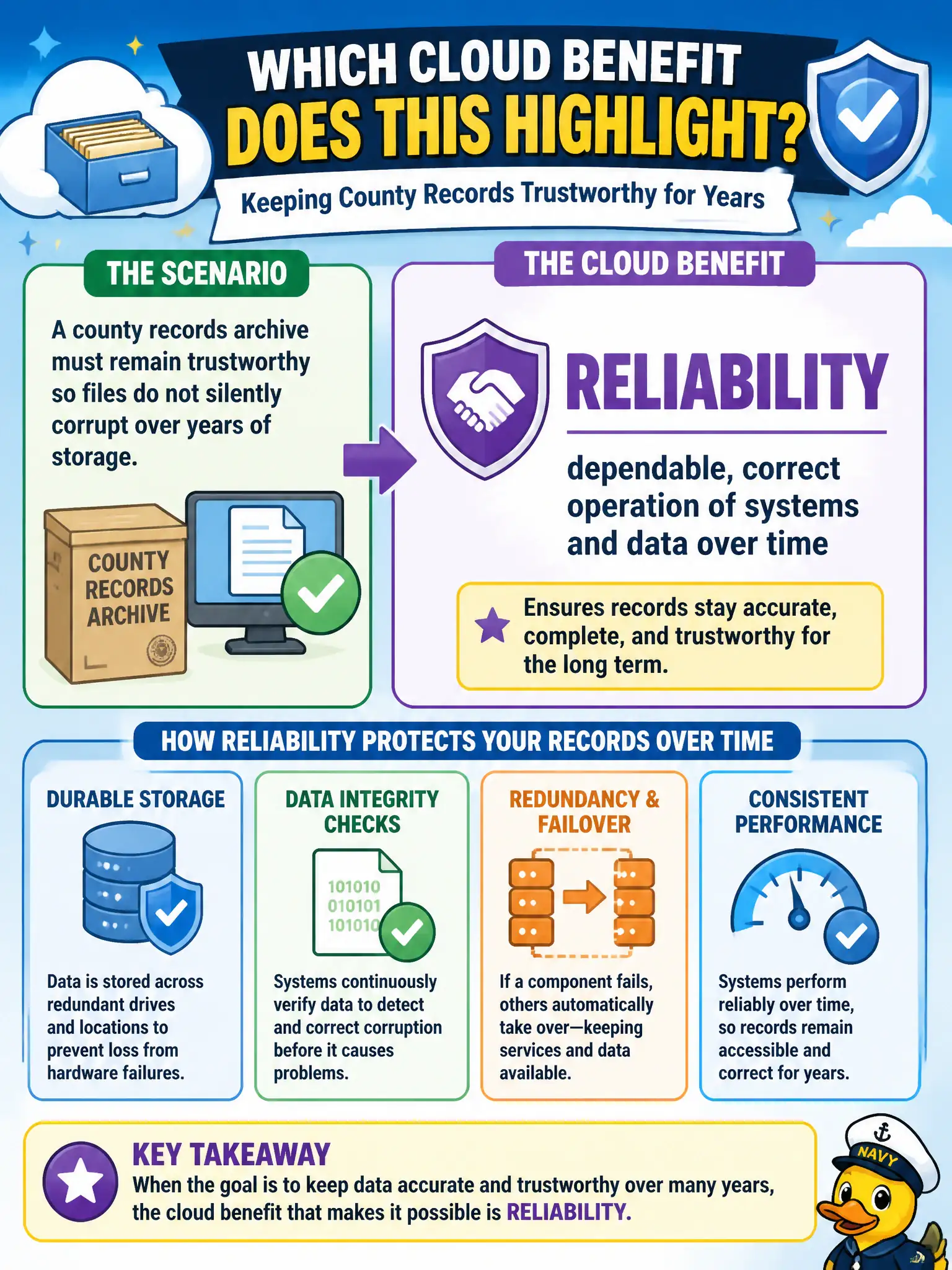
A county records archive must remain trustworthy so files do not silently corrupt over years of storage. Which cloud benefit does that requirement highlight?
Select an answer to reveal the explanation.
Short Explanation
Think of the archive like a vault that has to stay honest for decades — silent corruption is the enemy. Reliability is the cloud-benefit word for systems and data that keep working correctly over time. Spiky CPU and weekend app launches are different benefit themes.
Full Explanation
Reliability in Azure Fundamentals means dependable, correct operation of systems and data over time. A county records archive that must not silently corrupt is a textbook reliability scenario: integrity and trustworthy retention matter as much as uptime slogans or marketing “always on” language. Cloud platforms support reliability through durable storage designs, redundancy options, and operational practices that keep data correct across years—not merely through short-term scale events or weekend feature releases. Candidates should map “trustworthy over years” to reliability rather than to speed-of-change vocabulary. Agility—shipping a new mobile app every weekend—addresses speed of change and delivery cadence, not long-term data trustworthiness. Elasticity—automatically doubling CPU for a one-hour spike—covers demand response and scale, not archive integrity. Preferring capital tape libraries each fiscal year is an on-premises CapEx pattern; buying more tape does not define the reliability benefit under test and may still leave corruption and handling risks unaddressed. Exam caveat: reliability overlaps with durability and availability language on the exam, but the archive-corruption angle specifically tests correct ongoing operation of data. Operational check: verify backup, integrity, or redundancy controls for the archive tier and confirm restore or checksum practices are documented for audit readiness.