
A parks department fears that moving to the cloud means an unpredictable blank check. What does the consumption-based model itself actually mean?
Select an answer to reveal the explanation.
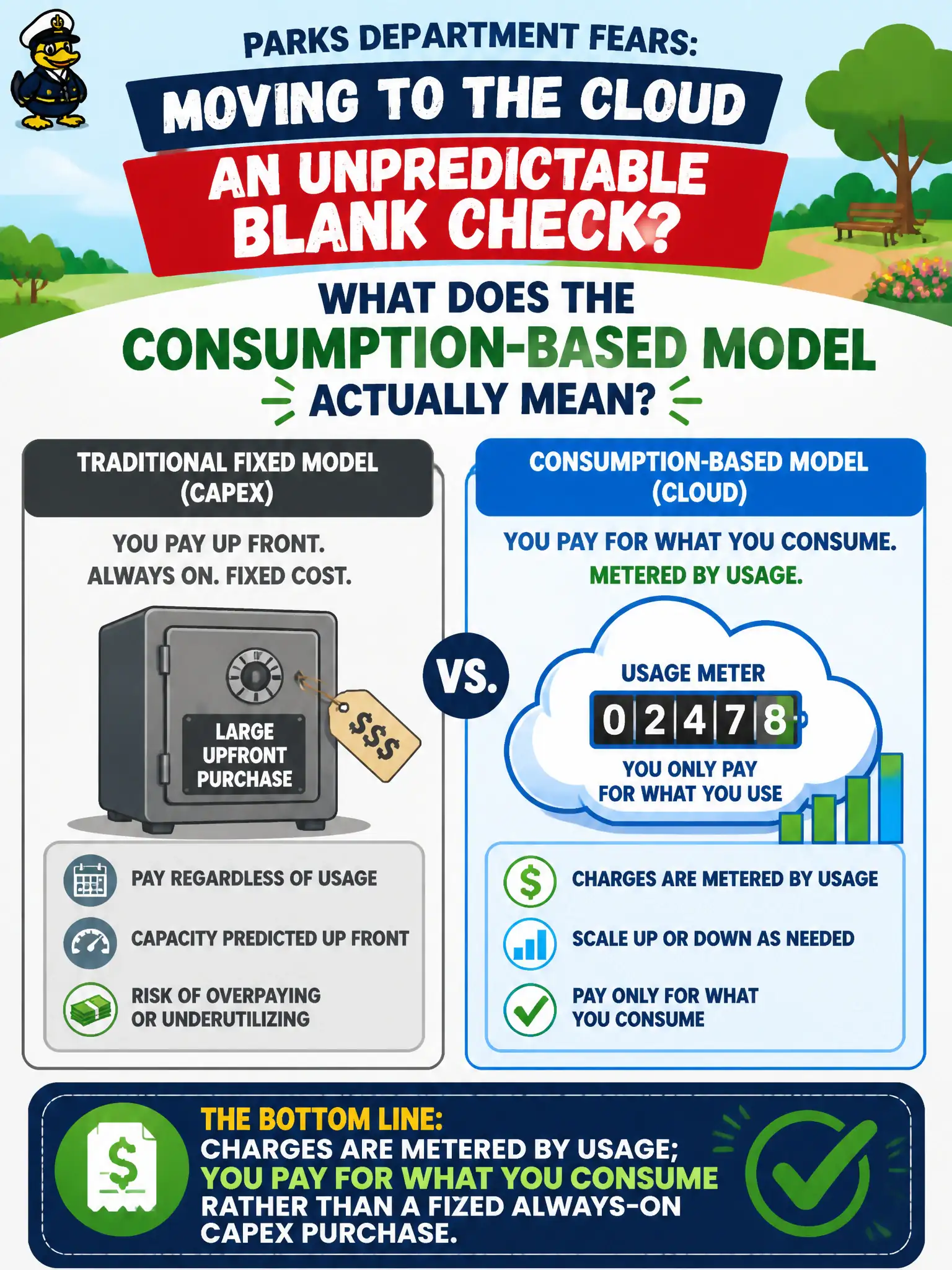
Short Explanation
Consumption-based is a parking meter, not a mystery raffle. The meter tracks how long you parked and what stall you used. You can still set spending guardrails later—but the model itself is simply pay-for-what-you-use.
Full Explanation
The consumption-based model means charges are metered by usage: the city pays for what it consumes—compute hours, storage gigabytes, transactions—rather than buying a fixed always-on CapEx asset and hoping utilization matches. For the parks department, that is the opposite of a blank check mystery; it is a usage meter. Predictability still requires governance (budgets, tags, alerts), but the model itself is simply pay-for-use instead of own-the-hardware.
A single random monthly amount unrelated to resource use is not how Azure consumption works—meters map to measurable units. Claiming consumption removes all need for budgets or cost reviews confuses the billing model with cost management practice; cities still set guardrails. Asserting every Azure service is free after the first year regardless of usage invents a blanket giveaway that does not describe the consumption model.
Exam caveat: consumption-based describes how you are charged for use; it does not by itself guarantee low cost—poorly sized always-on resources can still run up OpEx, which is why monitoring and rightsizing remain relevant even under pay-as-you-go.
Operational check: enable a monthly budget and alert on the parks subscription or resource group, then review Cost Analysis filtered by the parks tags so leaders see which meters drive spend and that invoices correlate to actual resource use rather than a blank-check narrative.