
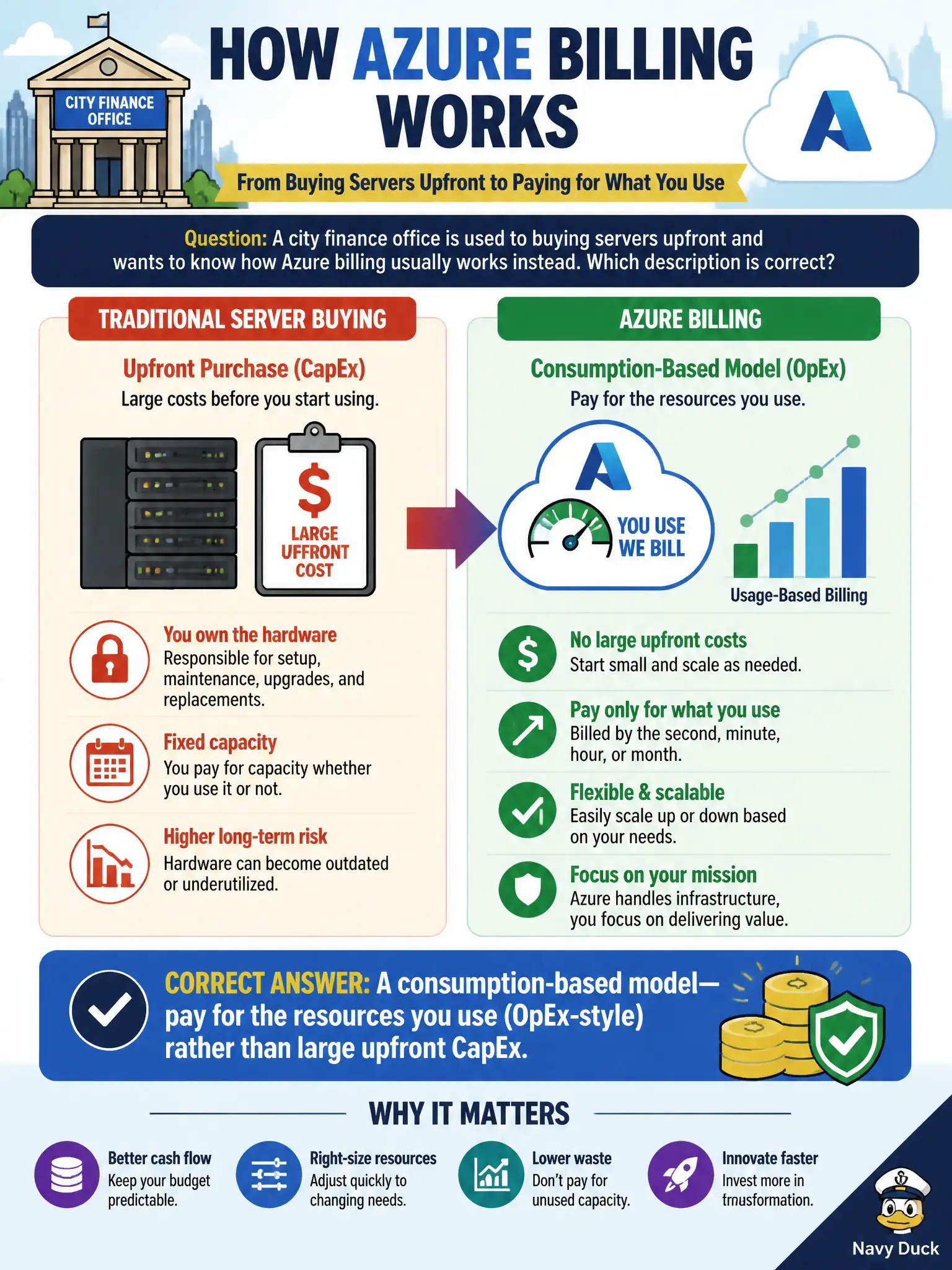
A city finance office is used to buying servers upfront and wants to know how Azure billing usually works instead. Which description is correct?
Select an answer to reveal the explanation.
Short Explanation
Stop writing giant checks for boxes you might not fill. Azure's usual story is the meter: use it, pay for it, turn it down when council season ends. That consumption idea is the OpEx shift finance keeps asking about.
Full Explanation
Azure billing for fundamentals is typically described as consumption-based: pay for the resources you use in an OpEx-style pattern rather than large upfront CapEx purchases of physical servers. City finance teams used to writing capital purchase orders for hardware should expect meters, usage, and the ability to scale resources to demand. That contrast—consume versus buy boxes upfront—is the core teaching point.
Azure does not always require buying physical servers upfront with multi-year CapEx purchase orders for ordinary cloud consumption. A single fixed fee that never changes with usage or resource size is not the usual consumption story. Claiming consumption billing applies only to Microsoft 365 seats and never to Azure resources invents a false product boundary.
Exam caveat: reserved instances, savings plans, and other commitments can blend prepaid discounts with consumption; they refine cost management but do not erase the fundamentals contrast with traditional server CapEx. Operational check: enable cost analysis and budgets for the subscription, tag municipal cost centers, and review idle resources monthly so OpEx meters reflect intentional use rather than forgotten always-on capacity.