
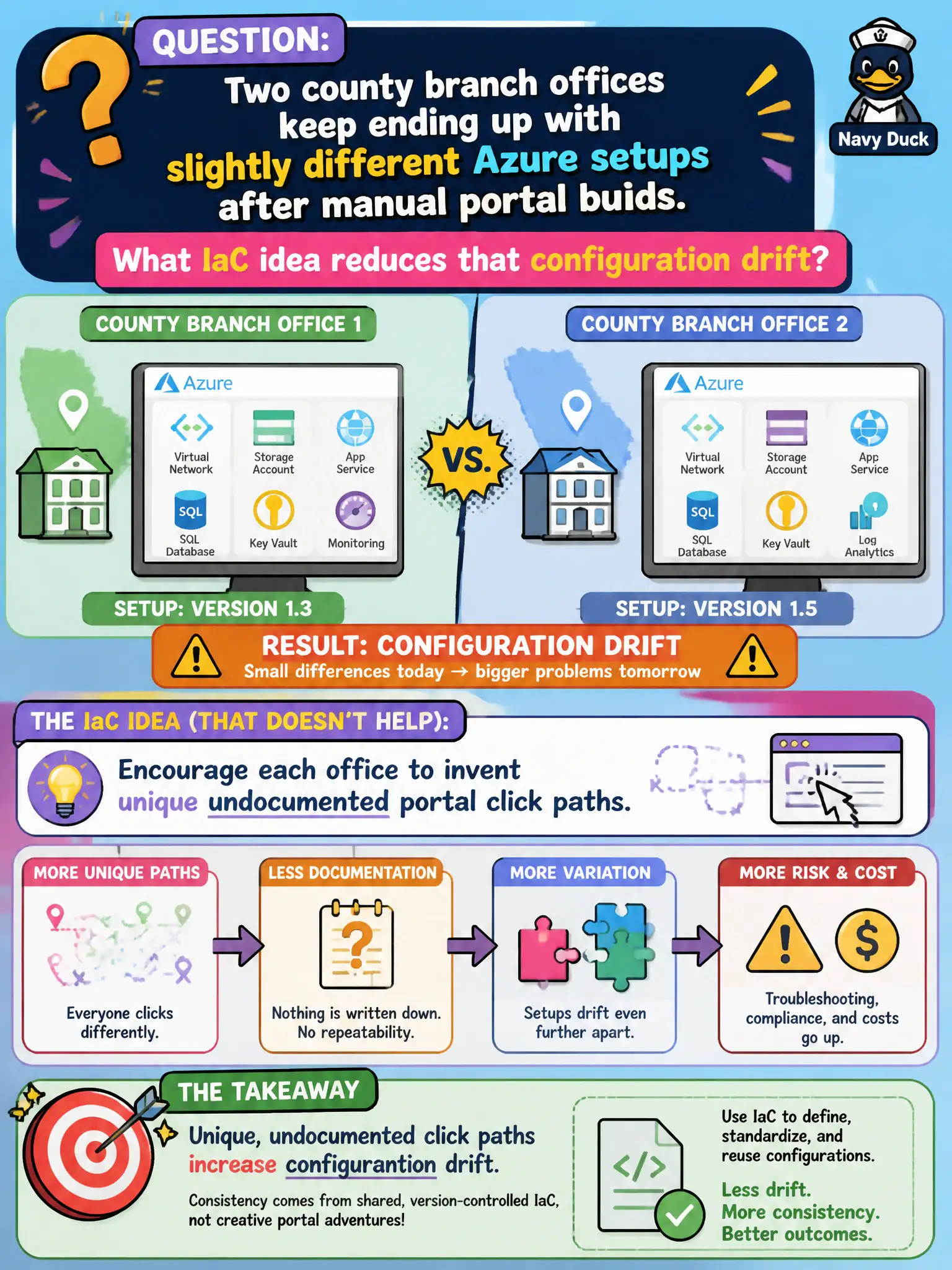
Two county branch offices keep ending up with slightly different Azure setups after manual portal builds. What IaC idea reduces that configuration drift?
Select an answer to reveal the explanation.
Short Explanation
Manual builds are like two chefs cooking from memory — the soups never match. Shared declarative templates are the shared recipe that keeps both branch sites aligned.
Full Explanation
Deploying from shared declarative templates so both sites start from the same desired configuration is the IaC idea that reduces drift between county branch offices. One reviewed definition drives both deployments; differences become intentional parameters (names, addresses) rather than accidental click omissions.
Encouraging each office to invent unique undocumented portal click paths institutionalizes drift. Banning templates so operators retype every setting from sticky notes maximizes human error. Using only Azure Service Health emails as the configuration source of truth confuses platform status notifications with desired-state definitions for your resources.
Exam caveat: shared templates reduce unintentional drift but teams must still control who can edit the shared definition—otherwise drift moves from portals into ungoverned template edits. Operational check: publish one sanctioned template for the branch baseline, deploy it to two sandbox “branch” resource groups with only allowed parameters changed, then compare resource properties and tags for unintended differences. Prefer a single owned repository path for the branch baseline so offices pull the same revision instead of emailing copies of templates.