
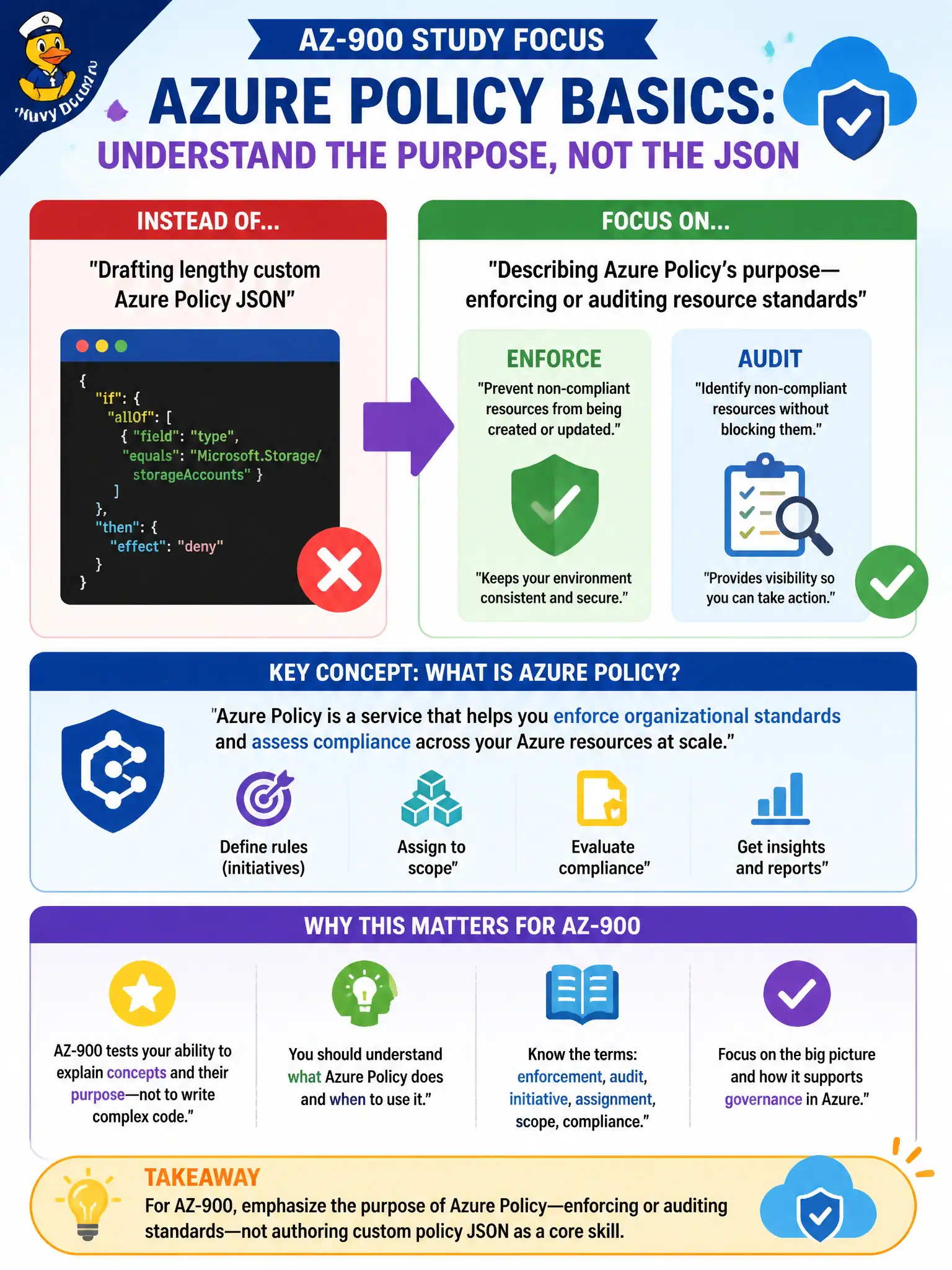
An intern starts drafting lengthy custom Azure Policy JSON for the fundamentals study group. What should the mentor emphasize for AZ-900?
Select an answer to reveal the explanation.
Short Explanation
AZ-900 is “what is Policy for,” not “hand-write the JSON.” Know that it audits or enforces resource standards. Leave the deep authoring for associate-level admin tracks.
Full Explanation
For AZ-900, the mentor should emphasize describing Azure Policy’s purpose—enforcing or auditing resource configuration standards—rather than treating custom policy JSON authorship as the core skill. Fundamentals candidates need to know what Policy is for, how it differs from RBAC and locks, and that effects such as Audit and Deny support municipal governance goals. Deep alias lists and lengthy custom definitions belong to administrator learning paths beyond the fundamentals exam.
Memorizing every Policy alias used in custom definitions exceeds AZ-900 expectations. Custom Policy JSON is not the only way tags appear on resources—tags can be applied manually in the portal, via infrastructure-as-code, or through other automation. Policy’s purpose is also not limited to sending SMS alerts when VMs reboot; that confuses Policy with monitoring and notification tooling.
Exam caveat: you may still see portal screenshots of policy definitions on the exam, but recognition of purpose beats writing JSON from memory under time pressure. Operational check: have the study group explain Policy in two clear sentences to a non-technical bureau lead (set standards, then audit or enforce), assign one built-in policy in a lab subscription without writing custom JSON, and review the Compliance results together before exam day.