
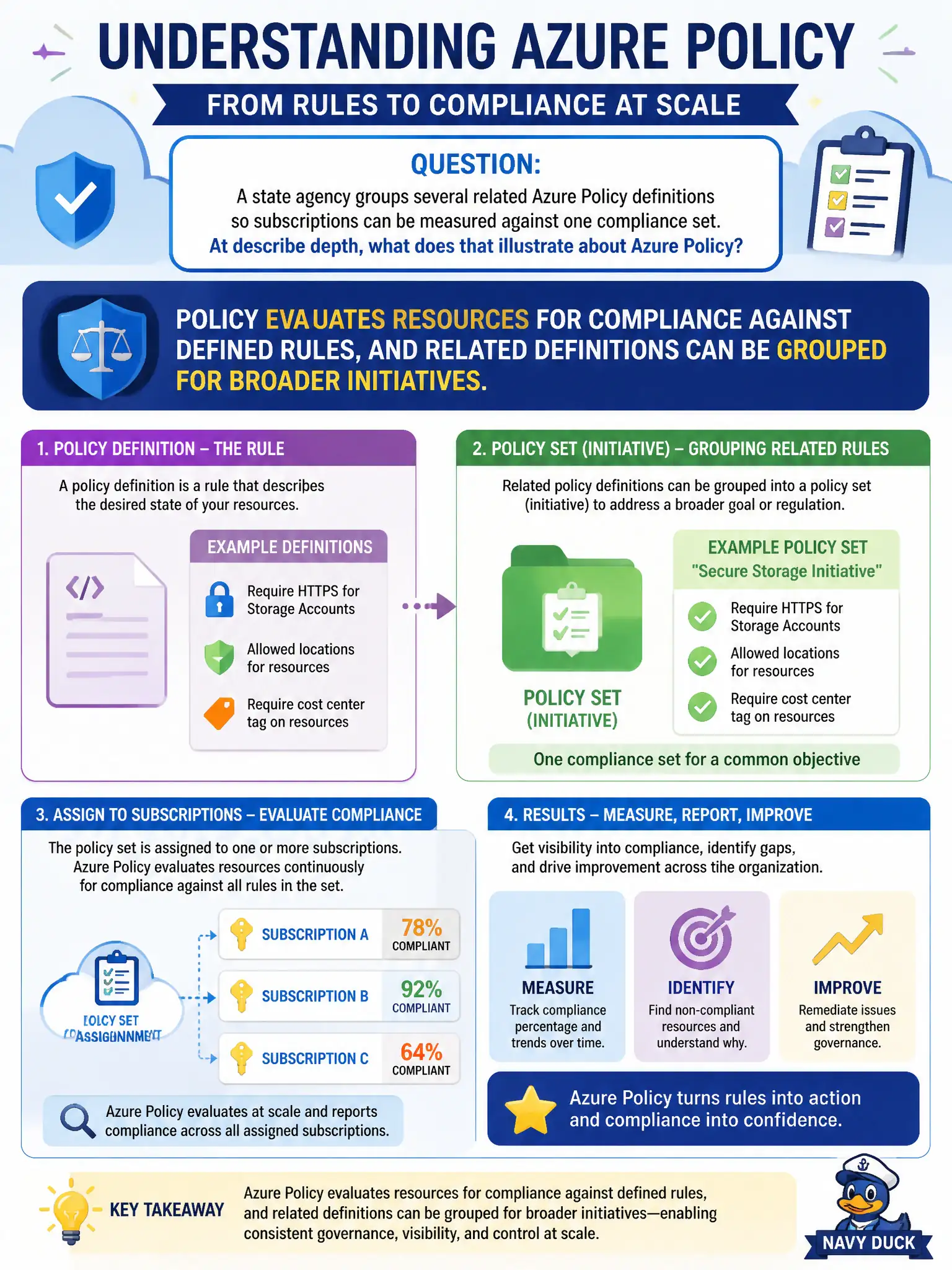
A state agency groups several related Azure Policy definitions so subscriptions can be measured against one compliance set. At describe depth, what does that illustrate about Azure Policy?
Select an answer to reveal the explanation.
Short Explanation
One rule is a policy; a bundle of related rules is how bigger compliance themes get rolled out. Azure still scores resources against those definitions—grouped or not. That is the describe-level idea, not a JSON-authoring lab.
Full Explanation
Azure Policy evaluates resources for compliance against defined rules. Related policy definitions can be grouped into initiatives (policy sets) so a state agency can assign one compliance package—security baseline, tagging standard, allowed locations—to subscriptions instead of managing dozens of one-off assignments. That grouping is how municipal and statewide governance teams scale consistent measurement.
Policy is not limited to a single resource with no ability to group rules. Policy does not replace Azure Monitor as the alerting engine for metrics and logs. Policy also does not store VM passwords in tags for auditors; secrets belong in Key Vault and proper secret stores, never in tag metadata.
Exam caveat: remember the vocabulary at describe depth—definitions are individual rules, initiatives group definitions, and assignments attach them to a scope such as a management group or subscription. Operational check: in Azure Policy, open Definitions/Initiatives (wording varies slightly in the portal), locate a built-in initiative such as a security or tagging baseline, assign it to a non-production subscription, and verify Compliance aggregates multiple definition results under that one assignment.