
A city Azure estate uses different spellings and keys for the same ideas across departments, which breaks cost reports. What tagging practice improves governance and reporting?
Select an answer to reveal the explanation.
Short Explanation
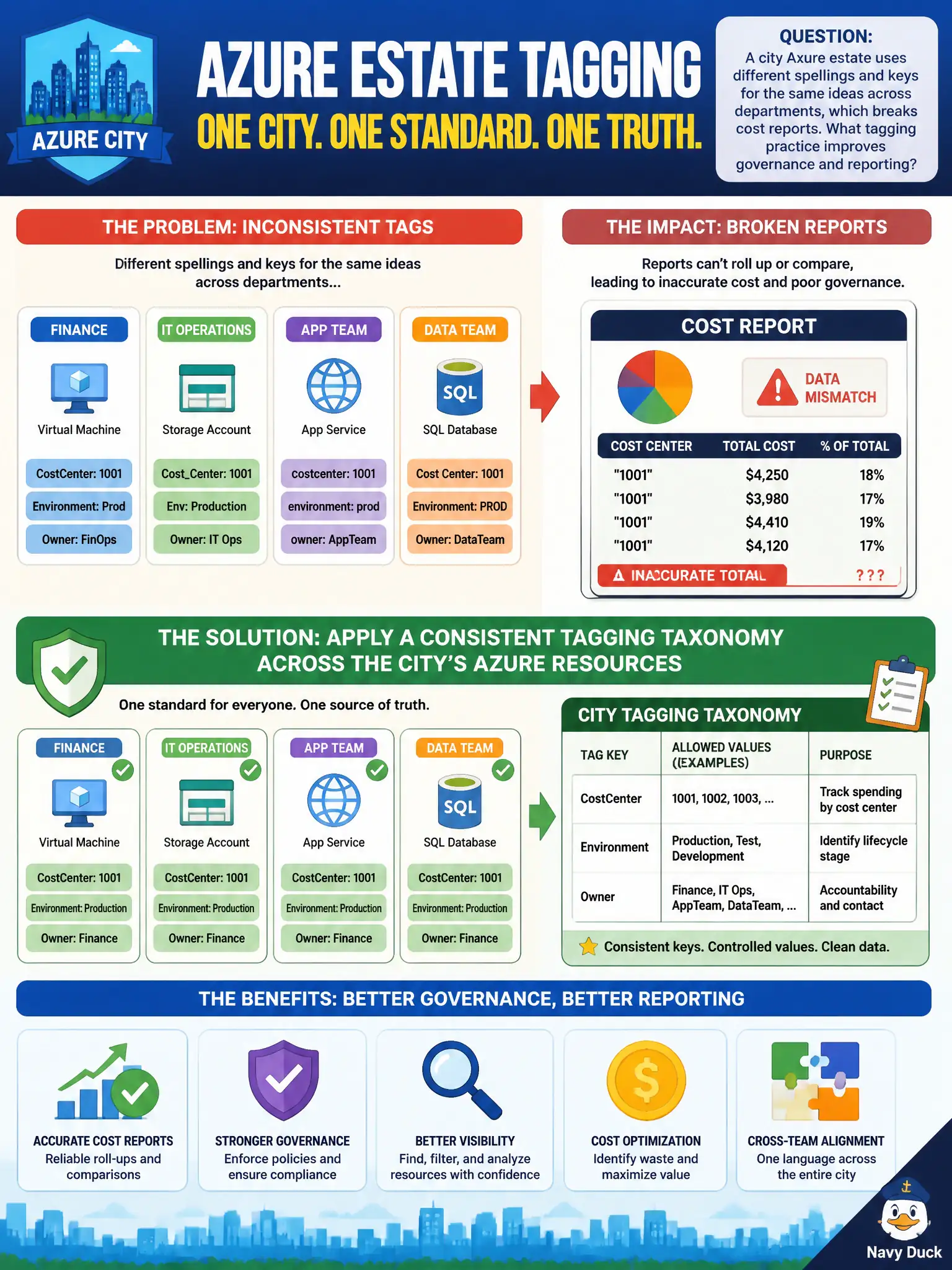
If one team writes Dept and another writes Department, the reports fall apart. Agree on a shared tagging taxonomy and stick to it citywide. Consistency is what makes tags useful for governance and cost rollups.
Full Explanation
A consistent tagging taxonomy—agreed keys and allowed values applied across the city's Azure resources—improves governance, searchability, and cost reporting. When departments invent different spellings and keys for the same ideas (Dept versus Department, CostCenter versus Cost_Center), filters and chargeback rollups break because Cost Management and queries treat those as distinct metadata. Standardization is the tagging practice that makes enterprise reporting trustworthy for municipal finance and operations rather than a patchwork of local conventions.
Allowing every team to invent unique tag keys with no shared standard recreates the reporting breakage described in the scenario. Removing all tags so Cost Management ignores organizational metadata discards allocation signal rather than fixing inconsistency. Limiting tags to classic deployment-model resources ignores modern Resource Manager estates where tagging is most useful for governance.
Exam caveat: taxonomy alone is insufficient without enforcement—Policy can require specific keys, but ownership and a published dictionary still matter so teams know valid values and do not silently invent synonyms. Operational check: publish a short citywide tag dictionary (required keys, allowed values, examples), remediate divergent keys on existing resources, and re-run cost analysis groupings to confirm department and environment rollups consolidate cleanly for finance.