
City staff need a cloud identity directory so they can sign in to Microsoft 365 and Azure resources with organizational accounts. Which service fulfills that purpose?
Select an answer to reveal the explanation.
Short Explanation
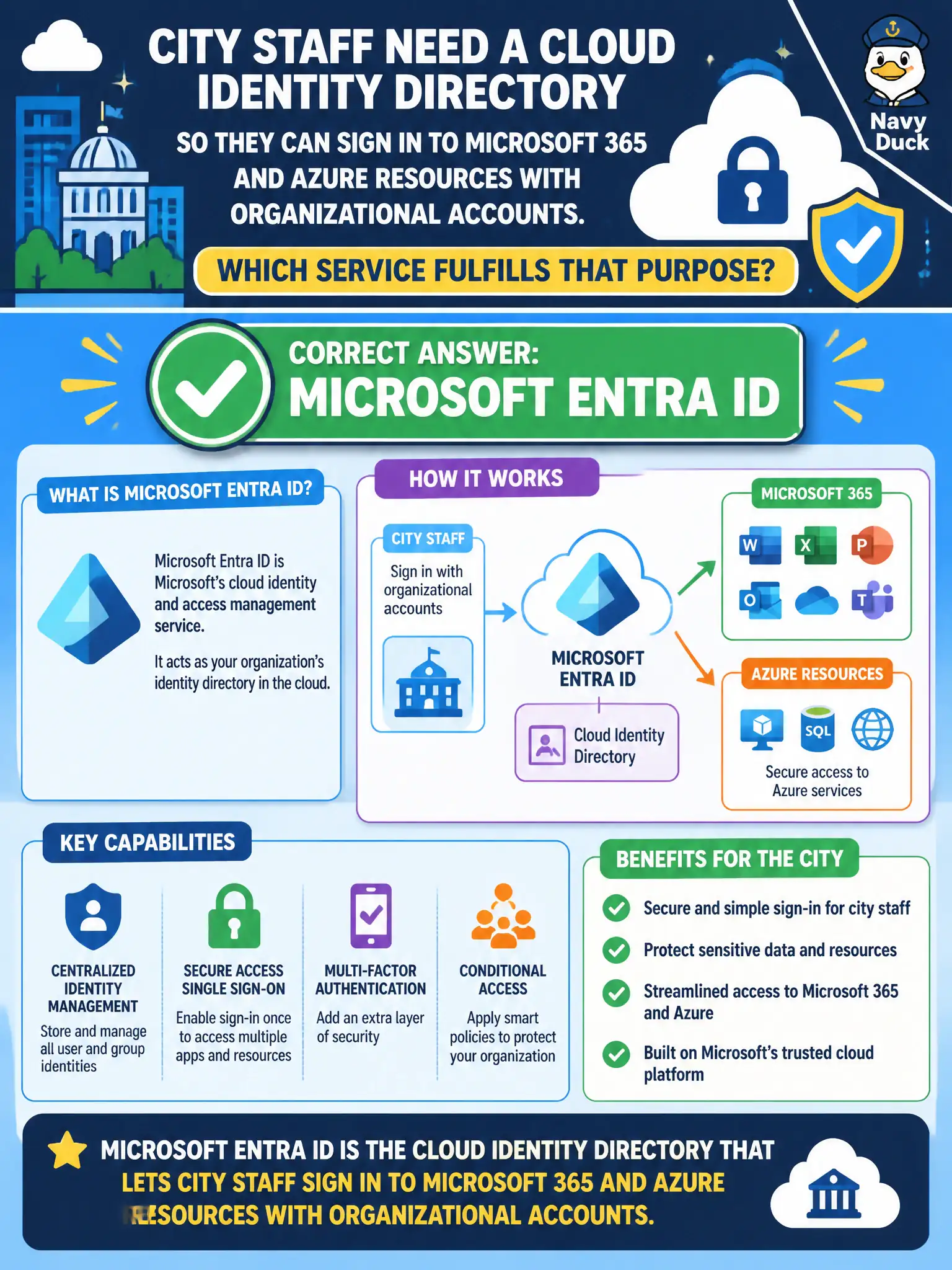
Microsoft Entra ID is the city’s cloud badge office—users, groups, and sign-ins for apps and Azure. Blob tiers and Data Box store or ship data; LRS copies disks. None of those replace a cloud identity directory.
Full Explanation
Microsoft Entra ID fulfills the need for a cloud identity directory so city staff can sign in to Microsoft 365 and Azure resources with organizational accounts. It is Microsoft’s cloud-based identity and access management directory for users, groups, and authentication to Microsoft cloud services and many applications. When the scenario asks for the cloud badge office for staff sign-in, Entra ID is the AZ-900 answer.
Azure Blob Hot tier as the staff identity provider confuses an access tier for frequently read blobs with a directory service—Hot stores data access patterns, not identities. Azure Data Box as a cloud directory service is wrong; Data Box ships large datasets offline. Locally redundant storage as an authentication directory confuses a storage redundancy option with authentication—LRS copies disks/blobs for durability, it does not authenticate users.
Exam caveat: directory presence alone does not equal good access governance; Conditional Access, MFA, and least-privilege role assignments still matter for municipal security baselines. Operational check: confirm staff accounts exist in Microsoft Entra ID, sign in to the Azure portal and Microsoft 365 with those accounts, and verify a non-directory storage setting was not mistakenly treated as the identity source.