
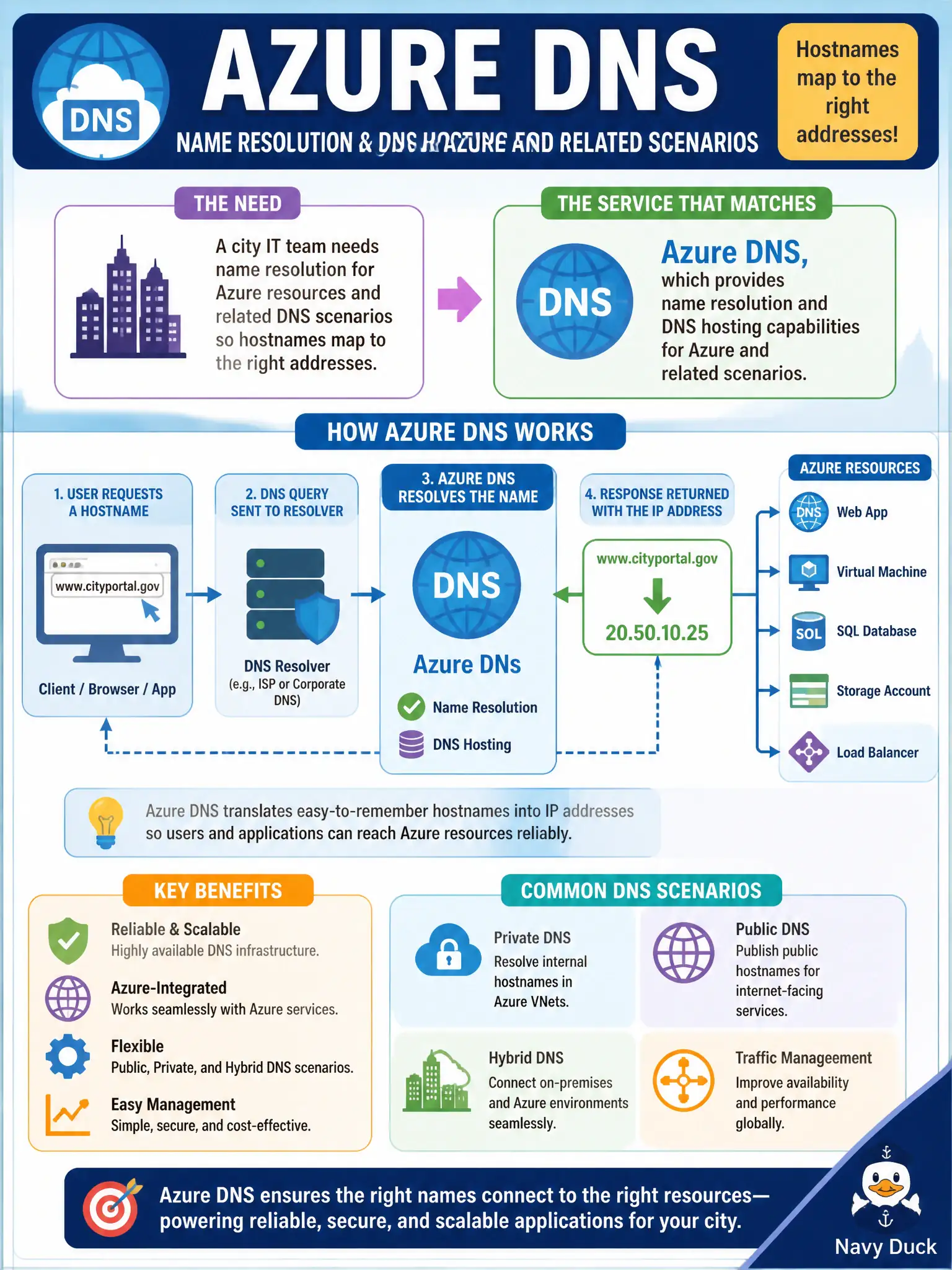
A city IT team needs name resolution for Azure resources and related DNS scenarios so hostnames map to the right addresses. Which service’s purpose matches that need at a describe level?
Select an answer to reveal the explanation.
Short Explanation
Names to addresses is DNS’s whole job — Azure DNS covers that name-resolution lane. Bastion is remote access, disks are storage, queues are messages. When hostnames must resolve, think Azure DNS.
Full Explanation
Azure DNS provides name resolution and DNS hosting capabilities so hostnames map to the correct addresses for Azure and related scenarios. City IT relying on reliable hostname-to-IP mapping for applications and for public or private zones is looking for that DNS purpose at AZ-900’s describe level. Azure Bastion offers secure RDP/SSH connectivity to VMs through the portal without exposing management ports on public IPs; it is not primarily an authoritative DNS zone service. Azure Disk Storage attaches managed disks to VMs for OS and data; disks do not resolve hostnames for resources. Azure Queue storage buffers messages between components; queues do not replace DNS for hostname-to-IP mapping across municipal systems. Correct DNS design reduces brittle hard-coded addresses in application configuration files. Exam caveat: Azure DNS can host public zones and integrate with private DNS patterns for VNets—pick the zone type that matches whether names are internet-facing or internal-only. Operational check: create or review a zone for a municipal hostname, add a record pointing to the intended public IP or private address, verify resolution from a client that should use that name, and document the chosen zone type in the city’s DNS runbook.