
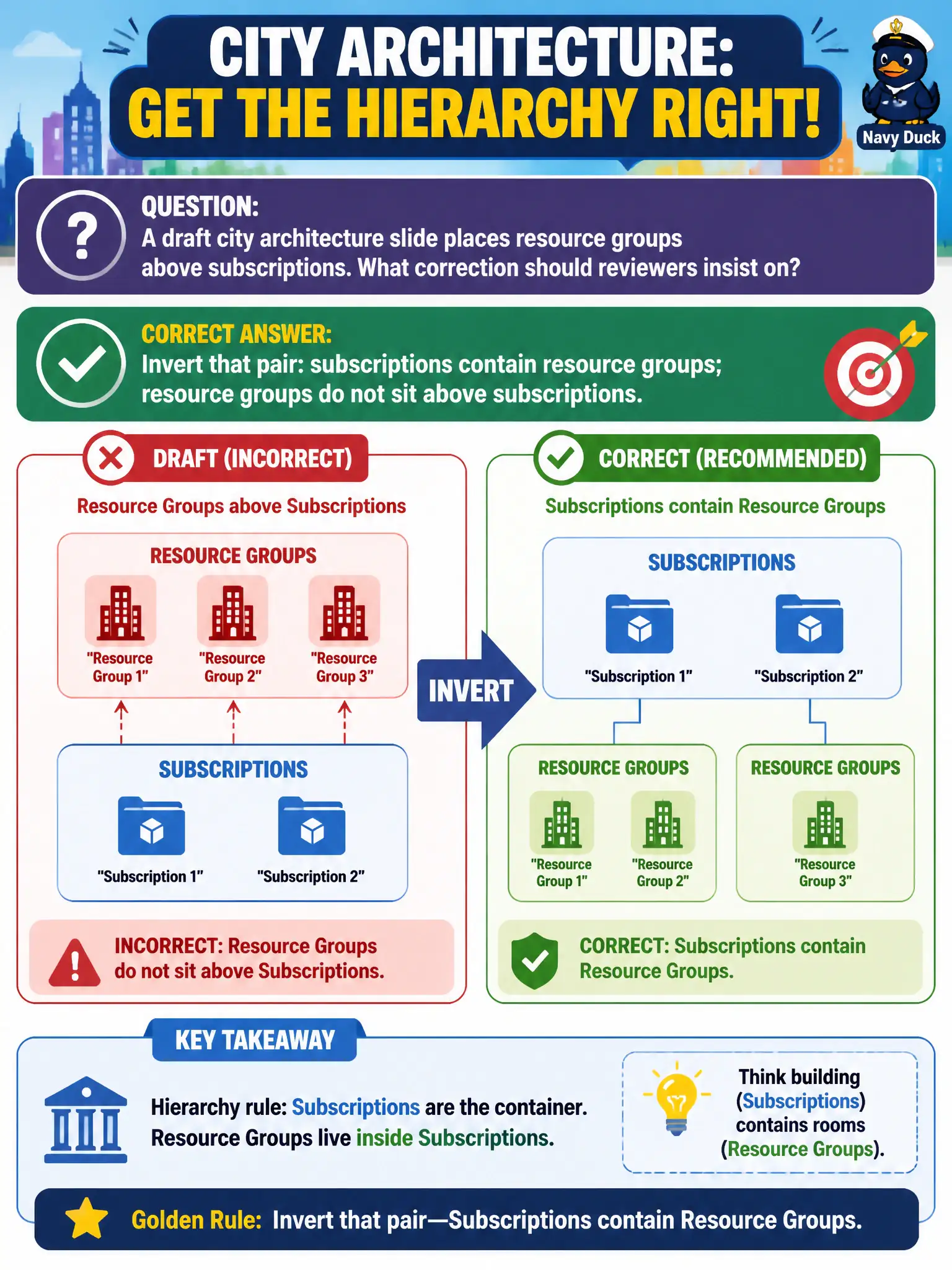
A draft city architecture slide places resource groups above subscriptions. What correction should reviewers insist on?
Select an answer to reveal the explanation.
Short Explanation
If the slide puts the tray above the cabinet, fix the picture. Subscriptions hold resource groups — never the other way around. Catching that flip early saves a lot of confused build-outs.
Full Explanation
If a draft city architecture slide places resource groups above subscriptions, reviewers should insist on inverting that pair. Subscriptions contain resource groups; resource groups do not sit above subscriptions. Correcting the slide prevents downstream mistakes in billing ownership, delete scope, and where to assign roles or policy for municipal workloads.
Leaving the slide unchanged because resource groups always own subscriptions endorses the error. Replacing both layers with only availability zones and deleting hierarchy talk abandons the management model entirely—zones address resiliency placement, not the subscription/group container relationship. Moving management groups under each NIC so the diagram “matches Azure networking” invents a false coupling; management groups are not NIC settings and do not belong under network interfaces.
Exam caveat: people sometimes confuse “a resource group can contain resources from multiple regions” with “a resource group can span subscriptions”—the former can be true, the latter is not. Operational check: pick any production resource ID from the city’s estate and parse the subscriptions and resourceGroups segments of the ID to prove the containment order on the whiteboard before the slide deck is published to other departments.