
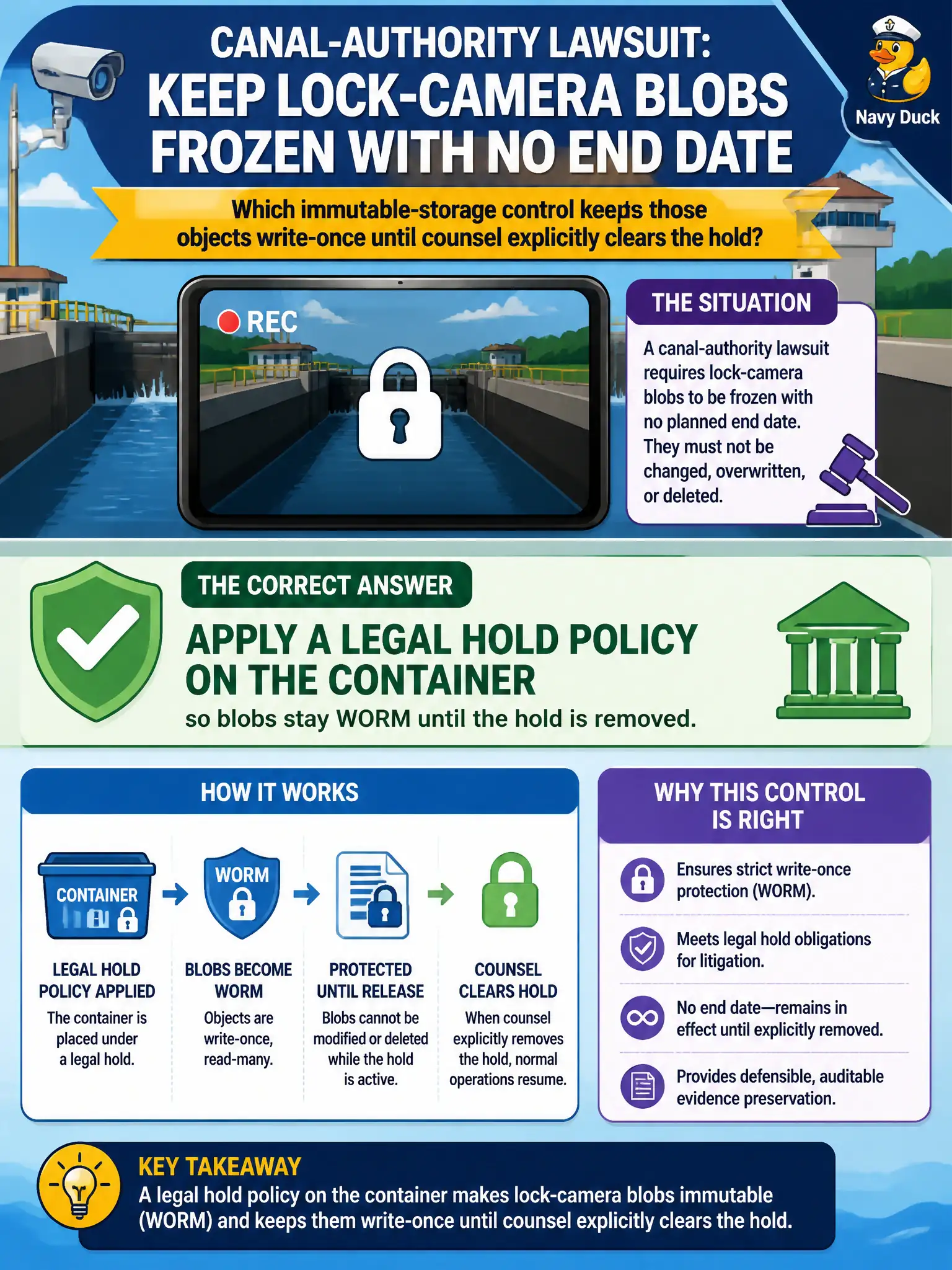
A canal-authority lawsuit needs lock-camera blobs frozen with no planned end date. Which immutable-storage control keeps those objects write-once until counsel explicitly clears the hold?
Select an answer to reveal the explanation.
Short Explanation
Think of a legal hold like a padlock the lawyers own—not a kitchen timer. You freeze the lock-camera blobs until counsel says unlock; you don’t guess how many days the lawsuit will last.
Full Explanation
Azure Blob immutable storage offers two complementary WORM modes: time-based retention and legal holds. A legal hold policy on the container (or versioned blobs under a version-level hold) keeps camera footage write-once and undeletable until every hold tag is cleared. That model matches litigation with no fixed end date—counsel, not a calendar, decides when the canal-authority lock-camera evidence can change again. Time-based retention fails the same requirement because you must pick an interval up front and renew it; a short weekly renewal creates operational risk if anyone forgets a renewal while the case is still open. Soft delete alone is a recoverable-delete safety net inside the same account; it does not make objects immutable, and privileged delete-plus-purge paths can still remove evidence before an auditor notices. Microsoft Purview retention labels govern information-protection and records lifecycle for content that Purview can classify; they are not the Azure Storage immutable-container legal-hold control that Domain 3 expects for blob WORM. Exam caveat: legal holds and time-based retention can coexist, but for open-ended cases the hold is the durable lock—do not treat a short retention timer as a substitute. Operational check: after applying the hold, attempt a test delete or overwrite on a non-production marker blob in the same policy scope and confirm the request is rejected until the hold is cleared; also verify immutability policy state in the portal or via Storage resource properties so counsel can attest that the camera share is locked.