
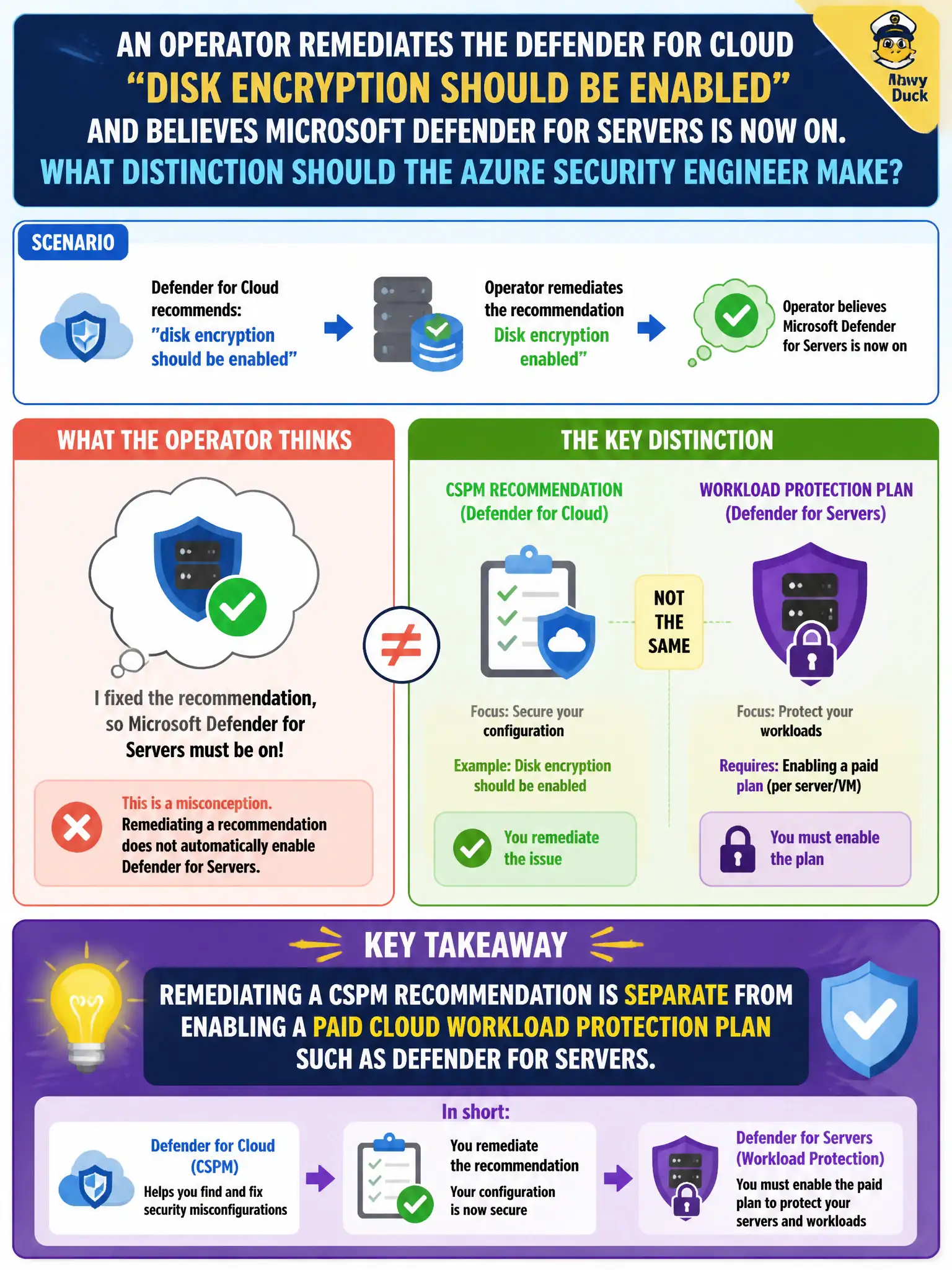
An operator remediates the Defender for Cloud recommendation “disk encryption should be enabled” and believes Microsoft Defender for Servers is now on. What distinction should the Azure security engineer make?
Select an answer to reveal the explanation.
Short Explanation
Fixing the disk-encryption checkbox is posture homework—it does not secretly subscribe you to Defender for Servers. Recommendations and paid workload plans are different switches.
Full Explanation
Remediating the Defender for Cloud recommendation “disk encryption should be enabled” improves CSPM posture; it does not purchase or enable a paid cloud workload protection plan such as Microsoft Defender for Servers. The Azure security engineer must keep CSPM recommendation remediation conceptually separate from CWPP plan enablement on the canal estate.
Assuming any CSPM remediation automatically purchases and enables every CWPP plan conflates free or foundational recommendations with paid workload protection. Treating disk encryption remediation as identical to enabling Defender for Storage malware scanning mixes a Domain 3 encryption control with a Storage threat-protection feature. Equating an Azure Policy disk-encryption initiative assignment with Defender for Servers Plan 2 confuses policy compliance for disks with the Servers CWPP plan tier.
Exam caveat: Secure Score and recommendations can improve while Defender for Servers remains off; civic operators should verify plan status explicitly after remediating encryption recommendations.
Operational check: after disk encryption is healthy, open Defender for Cloud environment settings and confirm whether Defender for Servers is enabled or still Disabled/Not enabled, documenting that recommendation remediation and plan enablement were separate actions.