
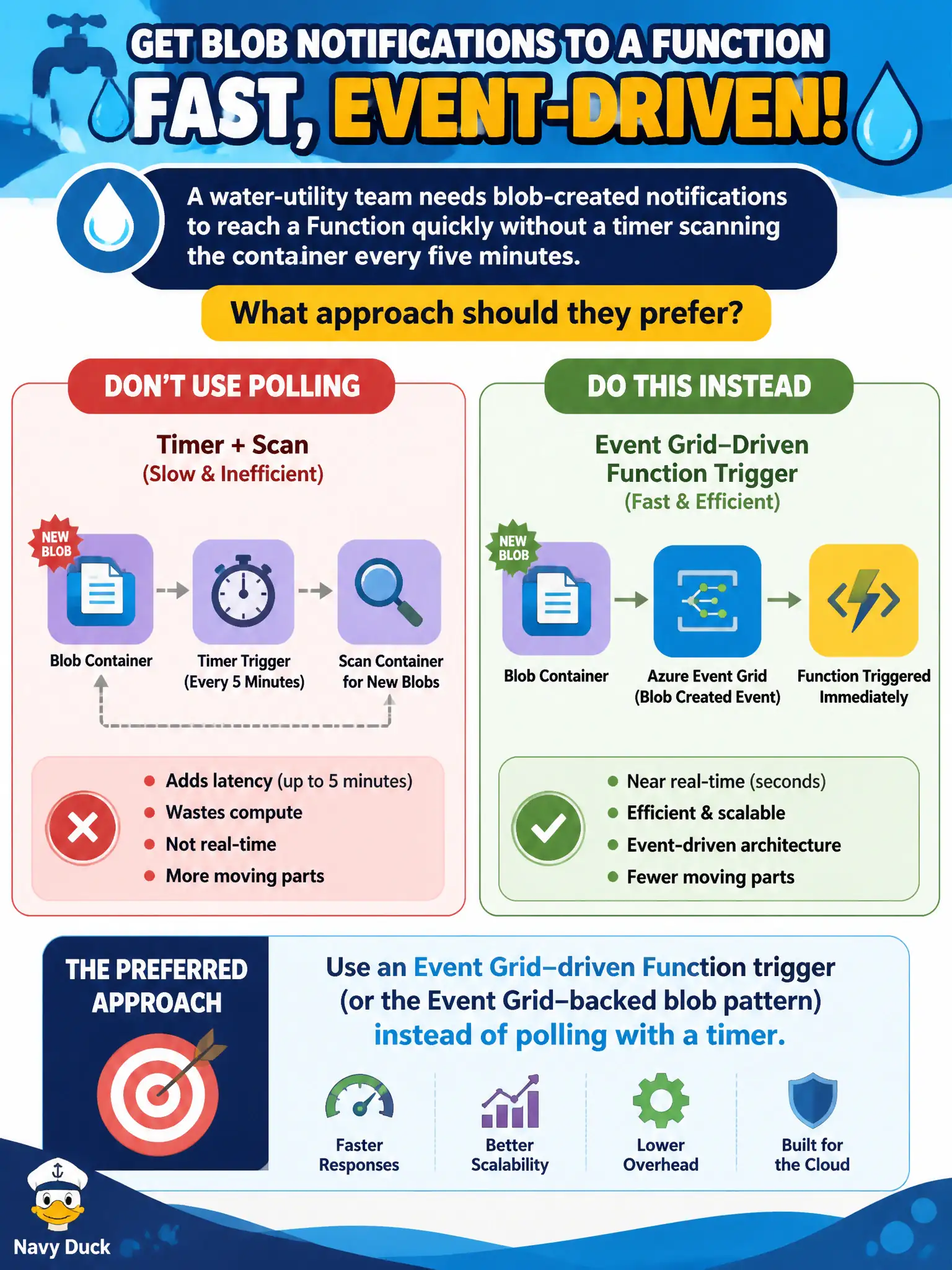
A water-utility team needs blob-created notifications to reach a Function quickly without a timer scanning the container every five minutes. What approach should they prefer?
Select an answer to reveal the explanation.
Short Explanation
Polling is walking the hallway every five minutes hoping for mail. Event Grid (or the Event Grid–backed blob pattern) rings you when the blob shows up—drop the timer scavenger hunt.
Full Explanation
A water-utility team that needs blob-created notifications quickly should prefer an Event Grid–driven Function trigger or the Event Grid–backed blob pattern instead of polling with a timer. Event Grid pushes blob create events to the function with low latency, eliminating periodic container scans and the idle cost and delay of timer-based listing.
Keeping a five-minute timer and increasing frequency to every five seconds still polls; it multiplies listing cost and still lags true create events while risking thundering-herd load. Disabling triggers so operators download blobs from the portal when free removes automation and cannot meet operational SLAs. Replacing Blob Storage with local disk on a single VM abandons durable cloud storage and shared access for a brittle single-host design.
Exam caveat: Event Grid subscriptions must filter to the correct storage account and event types (for example Blob Created); overly broad filters flood the function, while wrong subject filters silently drop events. Classic blob triggers versus Event Grid–backed patterns have different scaling characteristics—know which your app uses. Operational check: upload a test blob, confirm Event Grid delivery (or blob trigger) invokes the function within seconds, and verify dead-letter or retry behavior if the function returns a transient error.