
A dogwood-bend legacy origin still returns XML, but municipal mobile clients want JSON. Without rewriting the origin, what should the APIM developer apply?
Select an answer to reveal the explanation.
Short Explanation
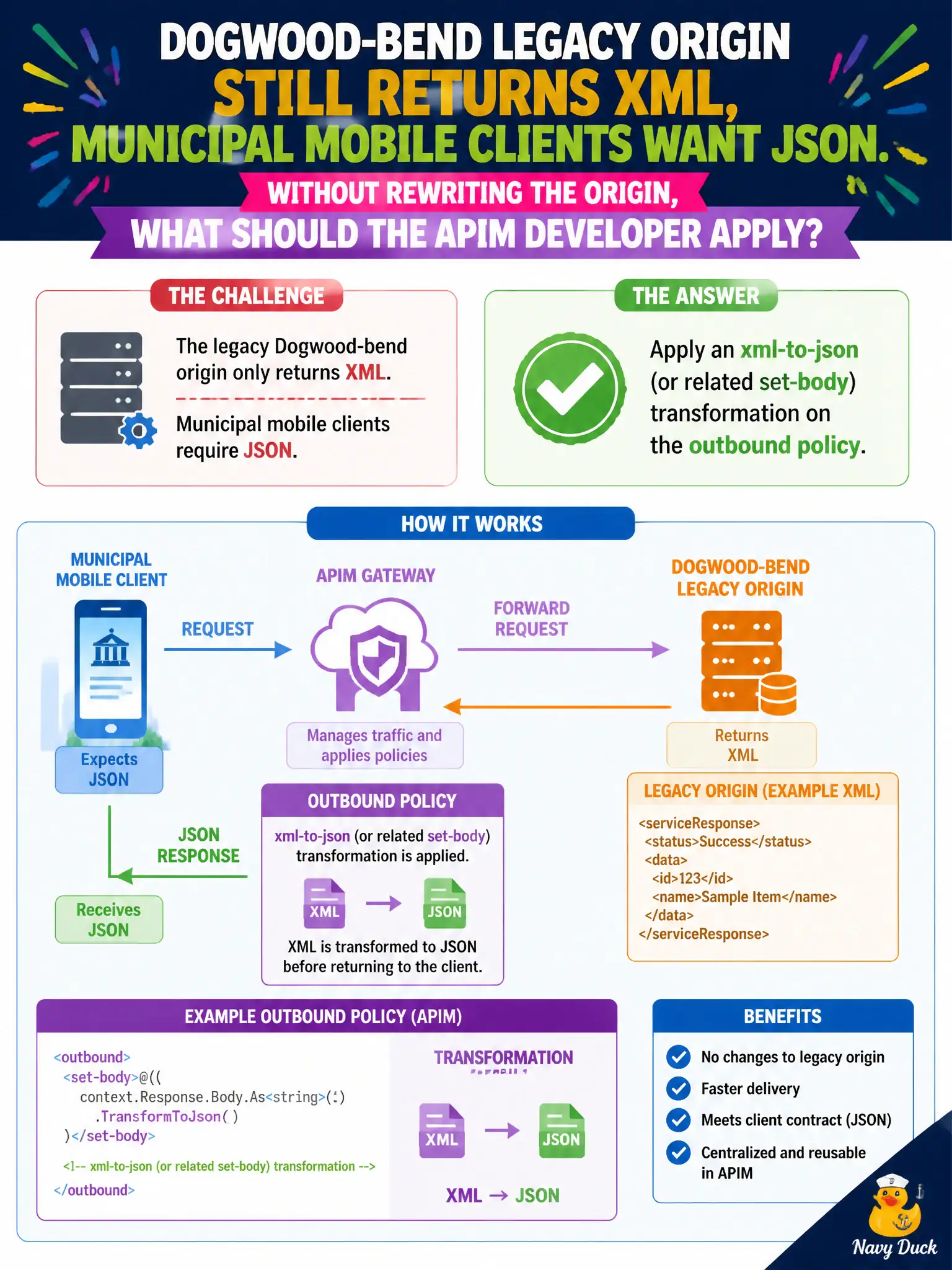
Leave the crusty origin alone and fix the wire format at the gateway. xml-to-json on outbound (or a set-body cousin) hands mobiles JSON without a rewrite of the backend.
Full Explanation
When a dogwood-bend legacy origin still returns XML but municipal mobile clients expect JSON, transform the response at the gateway instead of rewriting the origin. The xml-to-json policy (or a related outbound set-body transformation) converts the XML body after the backend responds so clients receive JSON while the crusty origin stays unchanged.
Forcing every client to parse XML in native code and skip the gateway fails because it pushes format debt onto every municipal app and abandons the APIM mediation skill the question tests.
Replacing the origin with Redis so XML becomes optional fails the concept: Redis is a cache or data store, not a substitute for an XML HTTP origin, and it does not perform outbound XML-to-JSON mediation.
Converting the API into a Logic Apps designer flowchart only fails because Logic Apps may orchestrate workflows, but the AZ-204 gateway answer for response shape conversion after import into APIM is an outbound transformation policy, not “redesign everything as a flowchart.”
Exam caveat: apply xml-to-json on outbound (after a body exists); inbound cannot convert a response that has not been produced yet. Operational check: call the operation through APIM with Accept preferences as needed, confirm Content-Type and body are JSON for clients, and verify the origin still emits XML when called directly.