
An analyst overwrote a pricing object in an S3 bucket that has never had versioning. No backup or replica of that object exists, and the previous contents are required for an audit. What is true about recovery, and what should change before the next overwrite?
Select an answer to reveal the explanation.
Short Explanation
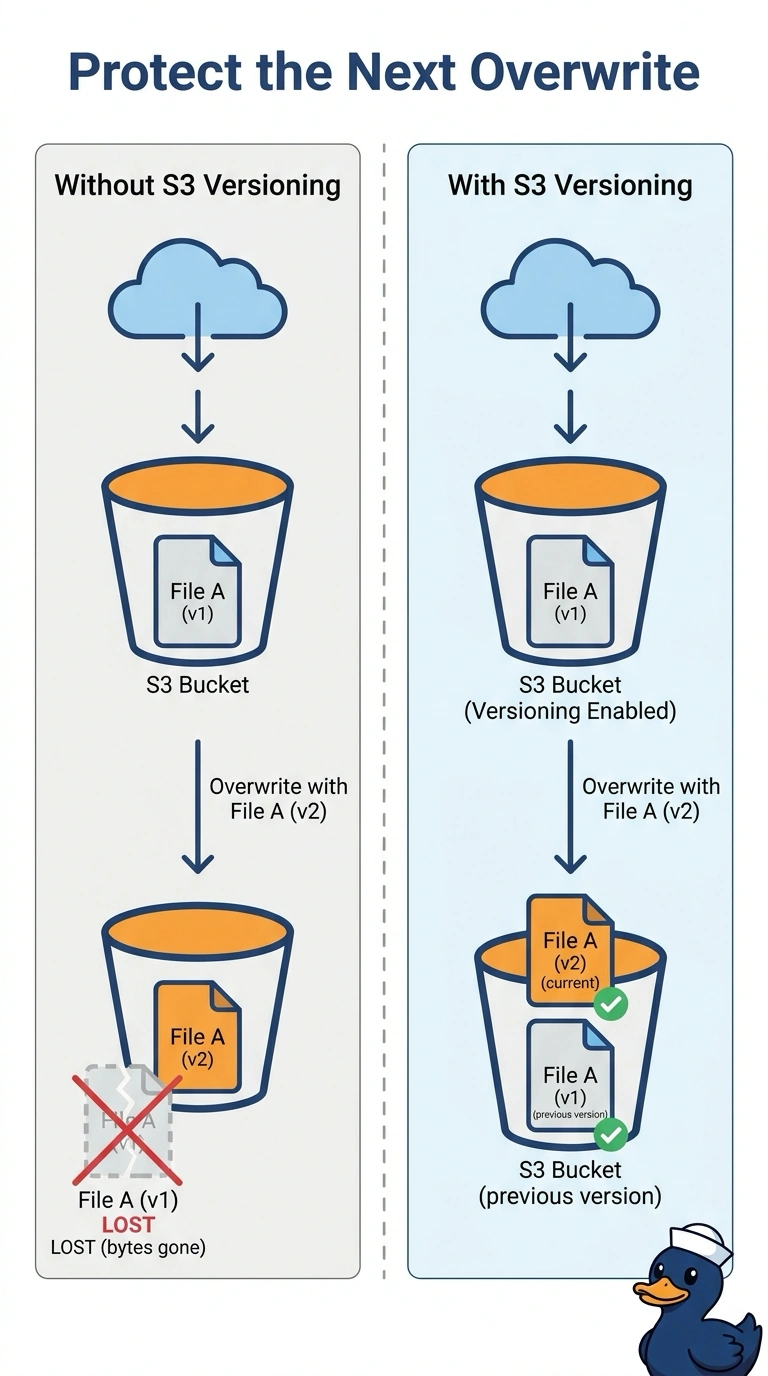
You cannot pull yesterday's page out of a notebook after someone wrote the new price on the same line. With versioning never enabled, the overwrite replaced the only copy, and no backup exists to put those bytes back. Enable versioning before the next overwrite so a later replacement keeps the prior object; turning on MFA Delete now does not bring the old bytes back.
Full Explanation
S3 keeps a single copy of an object when versioning has never been enabled. An overwrite replaces those bytes, and nothing in the bucket retains the previous body. No replica or backup was taken, so the audit copy cannot be reconstructed from S3. Enabling versioning now protects the next overwrite by storing the replaced object as a version. It does not recreate the bytes that were already replaced. A delete marker exists only on a bucket where versioning is enabled, and this overwrite was not a delete, so there is no marker history to restore. An incomplete multipart upload is an upload that never finished. It is not the previous completed object. MFA Delete is an extra confirmation on permanent deletes after versioning is on. Turning it on does not return an overwritten object, and it cannot be enabled on a bucket that still has versioning off. Caveat: versioning keeps later copies in the same bucket; a separate backup is what you still want if the bucket itself is lost. Operational check: after versioning is enabled, overwrite a test object and confirm the prior version is listed before anyone edits the pricing file again.