
Two Regional checkout endpoints already have Route 53 health checks, but the public name is still one simple record with a fixed address and no health check. DNS keeps answering when both Regions are down. How should that name follow both checks?
Select an answer to reveal the explanation.
Short Explanation
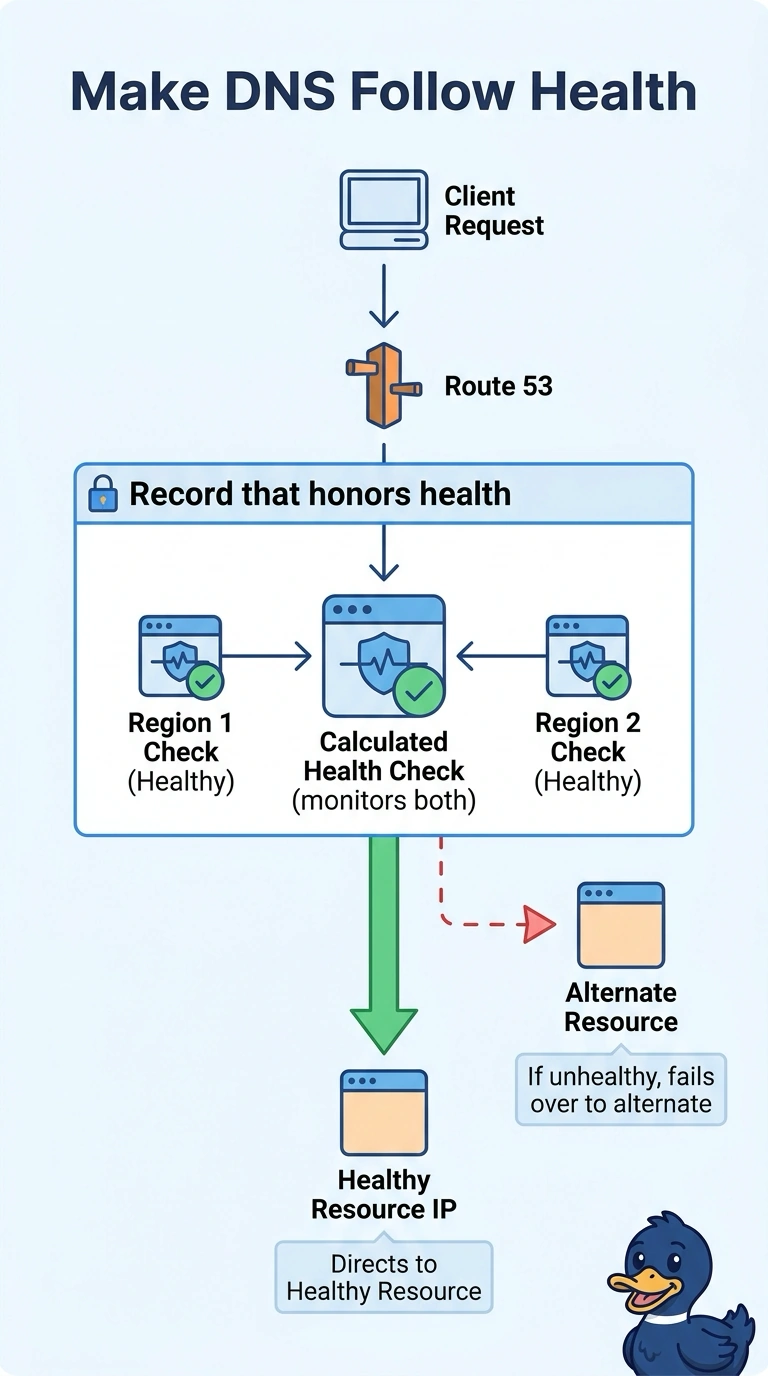
Two watchmen already call in, and your switchboard still ignores both phones. A calculated health check combines those Regional checks so DNS can follow them. A single static record with no health check keeps answering after both regions are dark.
Full Explanation
A calculated Route 53 health check does not probe an endpoint itself. It combines child health checks you already have and is healthy only when enough of those children are healthy. Pointing a record that honors health checks at that parent result lets DNS stop answering, or stop preferring a dead answer, from the combined status of both Regions. A simple record returns its fixed value and is not health checked, so it keeps answering after both Regions are down. Deleting the Regional checks removes the only probes you have, and a shorter TTL only makes resolvers pick up the same static answer sooner. A CloudWatch alarm on one Region does not feed DNS unless a health check is tied to routing, and an alarm on one Region ignores the other. Caveat: you still choose how many child checks must be healthy for the parent to pass, and a simple routing record cannot carry that health result. Operational check: mark both Regional checks unhealthy in a test, confirm the calculated check goes unhealthy, and confirm the public name no longer returns the dead address.