
A public marketing site serves images and CSS that rarely change. The team is about to cache those files in an ElastiCache node inside one VPC. What reaches viewers at the edge instead?
Select an answer to reveal the explanation.
Short Explanation
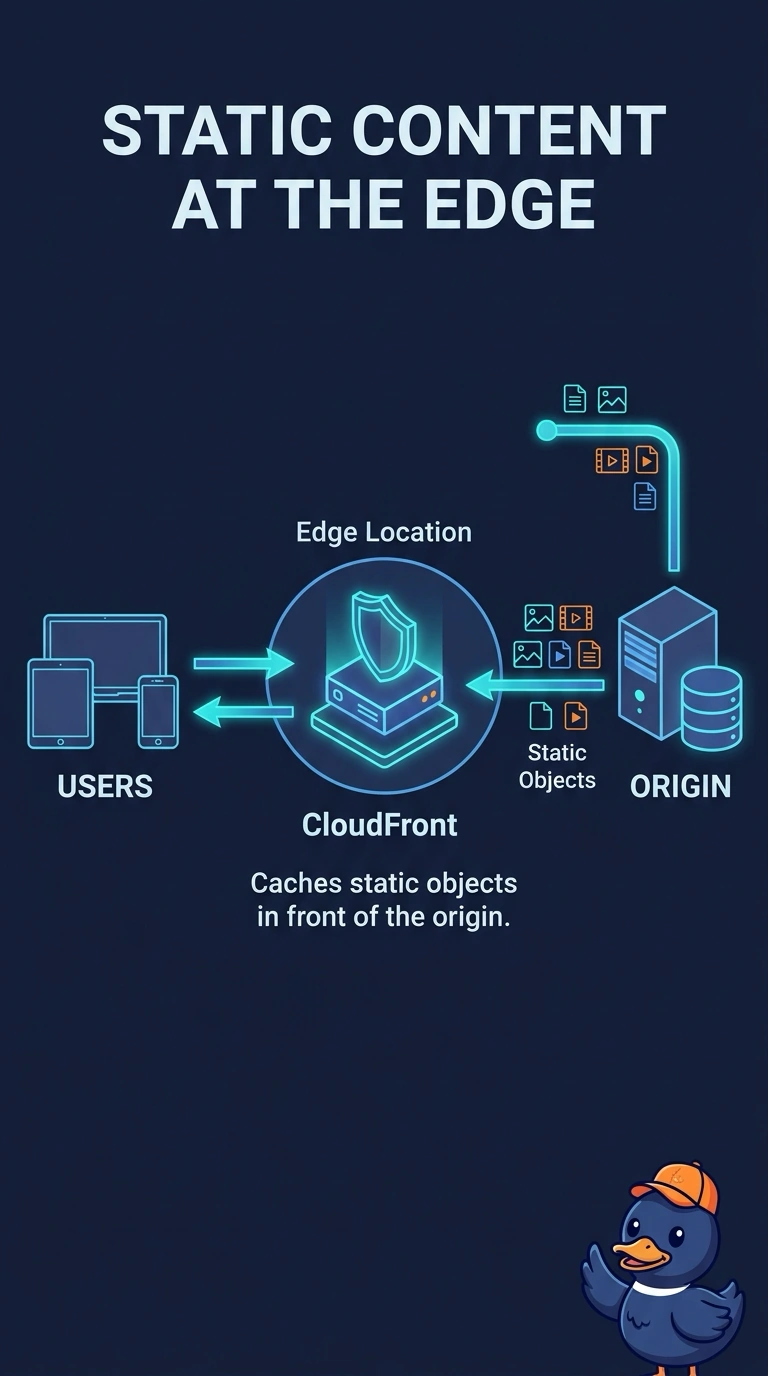
ElastiCache sits next to an application inside a VPC. Your viewers are on the public internet, and the bytes rarely change. You want CloudFront at the edge, and a NAT gateway does not cache a stylesheet for the world.
Full Explanation
CloudFront caches HTTP objects at edge locations and is the right place for a public site's images and CSS. ElastiCache is an in-VPC data cache for an application, not a public CDN, and a node in one VPC does not serve global viewers. A NAT gateway translates private egress. An RDS replica is a database, not a content network. Caveat: set a cache policy that matches these static paths, and forward cookies or query strings only if the object actually varies, or you will cache the wrong page. Operational check: a viewer far from the origin should receive the image from CloudFront, and the origin should see fewer requests for that object. Create a distribution with the site as the origin and a cache policy that caches the image and CSS paths. ElastiCache remains available for the application's own data and is not the public edge. A NAT gateway and a database replica do not cache objects for viewers. Check the cache-hit ratio after the distribution is live; the origin request count for those files should fall. Do not cache a path that varies by viewer unless the cache key includes that variation.