
A weather service's short-lived workers open a new RDS connection for each request, and the database is refusing connections. Which change addresses that connection pattern?
Select an answer to reveal the explanation.
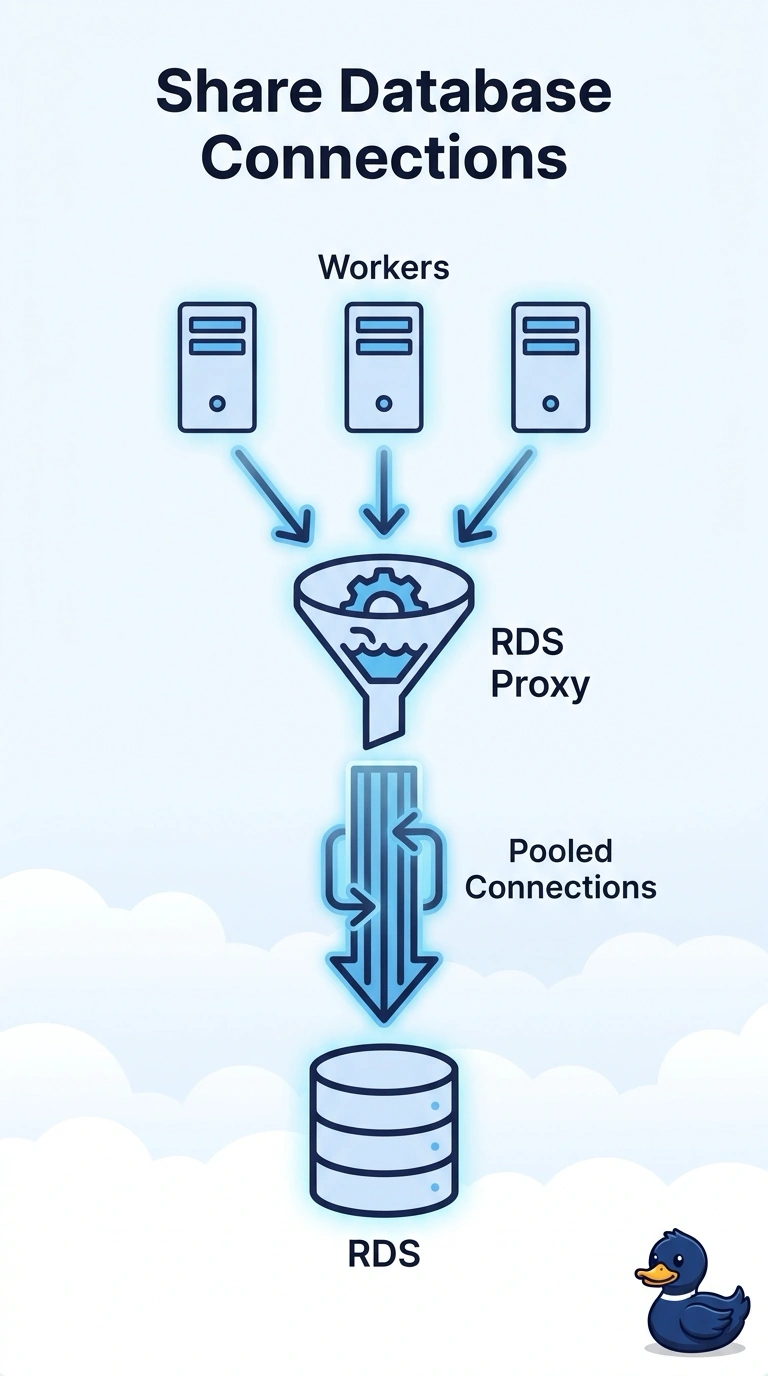
Short Explanation
A restaurant that seats every diner at a private table runs out of tables long before it runs out of food. You put RDS Proxy in front so the short-lived workers share a pool of database connections. A bigger instance only adds tables, and it does not stop each worker from taking one alone.
Full Explanation
RDS Proxy maintains a pool of connections to the database and lets many short-lived clients reuse them, which is the pattern exhausting this database. The workers connect to the proxy, and the proxy multiplexes that load onto fewer database sessions. A larger instance class can raise how many connections the database will accept, but each worker still opens its own connection, so the same churn can fill the new limit. Multi-AZ adds a standby for failover. Connections are served by the current primary, and the standby does not take the extra client sessions while the primary is healthy. A read replica rejects writes, so pointing the workers' writes at it fails those requests and does not pool connections on the primary. Caveat: the workers must use the proxy endpoint, and the proxy needs permission to authenticate to the database. Operational check: during a surge, compare client connections on the proxy with database connections on the instance and confirm the database count stays pooled.