
Security logs in an S3 bucket are rarely read after each investigation closes, and every object remains in the Standard storage class. Which change keeps the archives while storing them more cheaply?
Select an answer to reveal the explanation.
Short Explanation
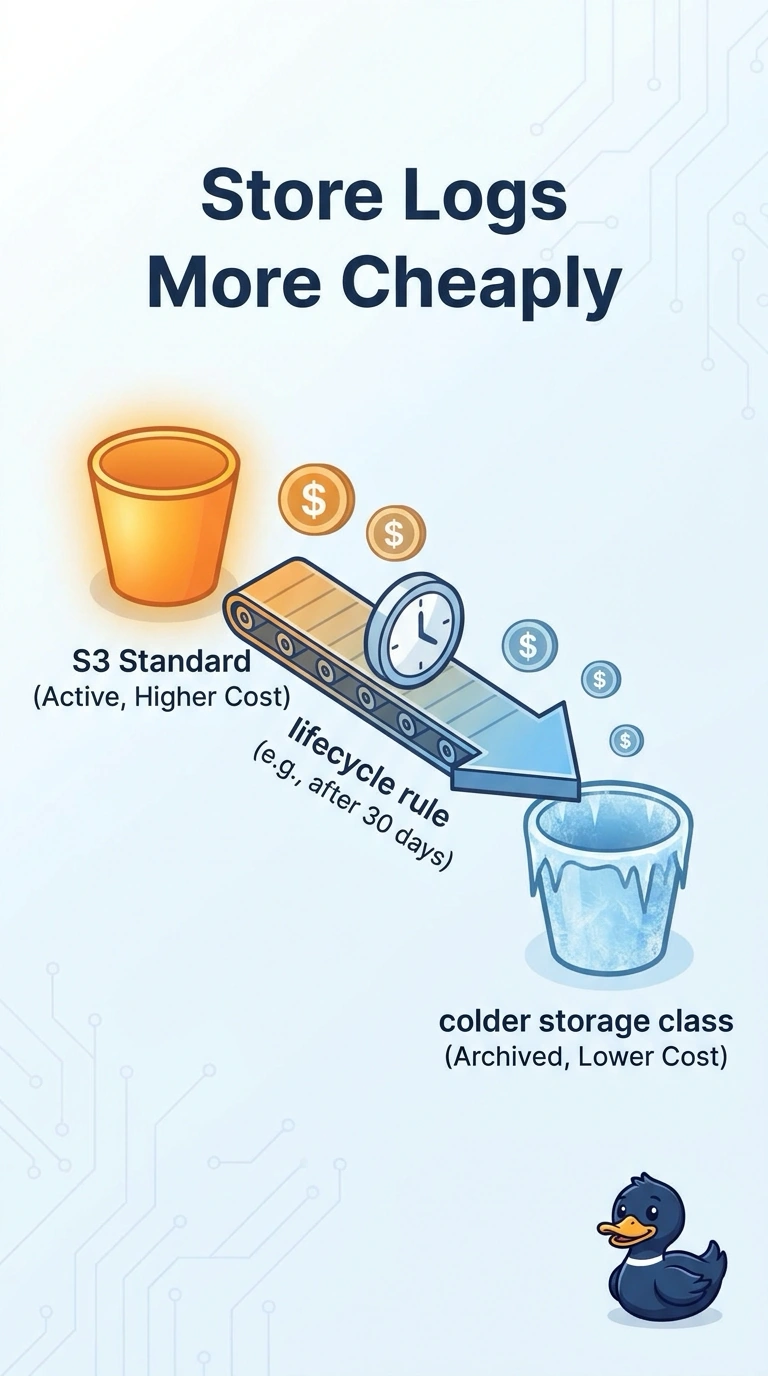
Cold logs are winter coats left in the front hall. You keep them and move them to a colder storage class with a lifecycle rule, instead of leaving every object in Standard. A rule that expires the logs would delete the archive your investigators still need.
Full Explanation
Objects stay in the storage class they were written to until a lifecycle action moves them or expires them. These logs are rarely read and are still in Standard. A lifecycle rule that transitions them to a colder storage class keeps the objects and places them in a class meant for infrequent retrieval, such as Glacier Flexible Retrieval. A rule that expires the logs deletes them. The requirement is to keep the archives. Renaming the bucket does not assign a storage class. The class is a property of each object, not of the bucket name. Transfer Acceleration improves transfer performance for distant uploads and downloads. It does not change the storage class of objects that are already in Standard, and it is not a price cut for unread data. Caveat: some colder classes are not immediate to read, so pick a class whose retrieval behavior matches how quickly an old investigation must be reopened. Set the transition from the real access pattern rather than from a guessed delay. Operational check: apply the rule to a test prefix, confirm a sample object's storage class changes to the colder class, and confirm investigators can still retrieve that object.