
A water utility's maintenance window patched the wrong instances. Its target is a tag those instances do not share with the group that should have been patched, and the window has not been widened. What should be fixed first?
Select an answer to reveal the explanation.
Short Explanation
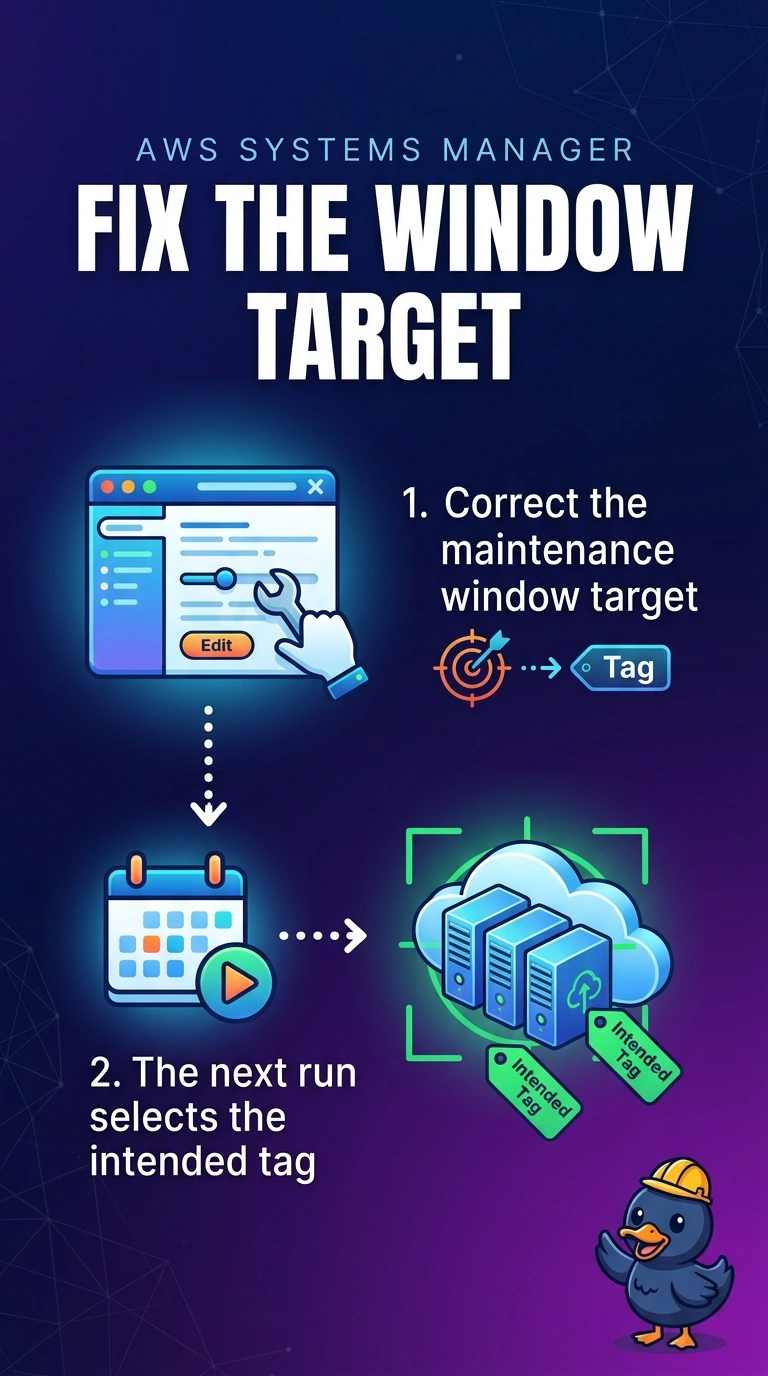
Painting the wrong houses brighter does not start painting the right street. You fix the maintenance window target so the next run selects the intended tag. A longer duration, a later cutoff, or higher concurrency still aims at the tag that was wrong.
Full Explanation
A maintenance window runs its tasks against its targets. This target is a tag the intended instances do not have, so the window selected the wrong fleet. Correcting the target, so it resolves to the intended tag, is what makes the next run patch the right instances. Duration controls how long the window lasts. Extending it gives the same wrong target more time. It does not discover a different tag. The cutoff stops tasks from starting late in the window. Moving it later changes when work may begin, not which instances match. Concurrency is how many targets are worked at once. Raising it patches more of the mistagged instances in parallel and widens the mistake. Widening the window before the target is corrected patches more of the wrong instances. Caveat: after the target is fixed, those instances still need to be managed nodes or the window will resolve the right tag and then skip them. Operational check: list the instances the corrected target resolves to and confirm they are the intended group before the next window runs.