
A clinical trial firm stores signed consent PDFs in S3, must prove no file was altered for seven years, allow legal holds during disputes, and still permit new versions for corrections. Which integrity mechanism should the engineer configure to preserve evidentiary records while allowing corrections?
Select an answer to reveal the explanation.
Short Explanation
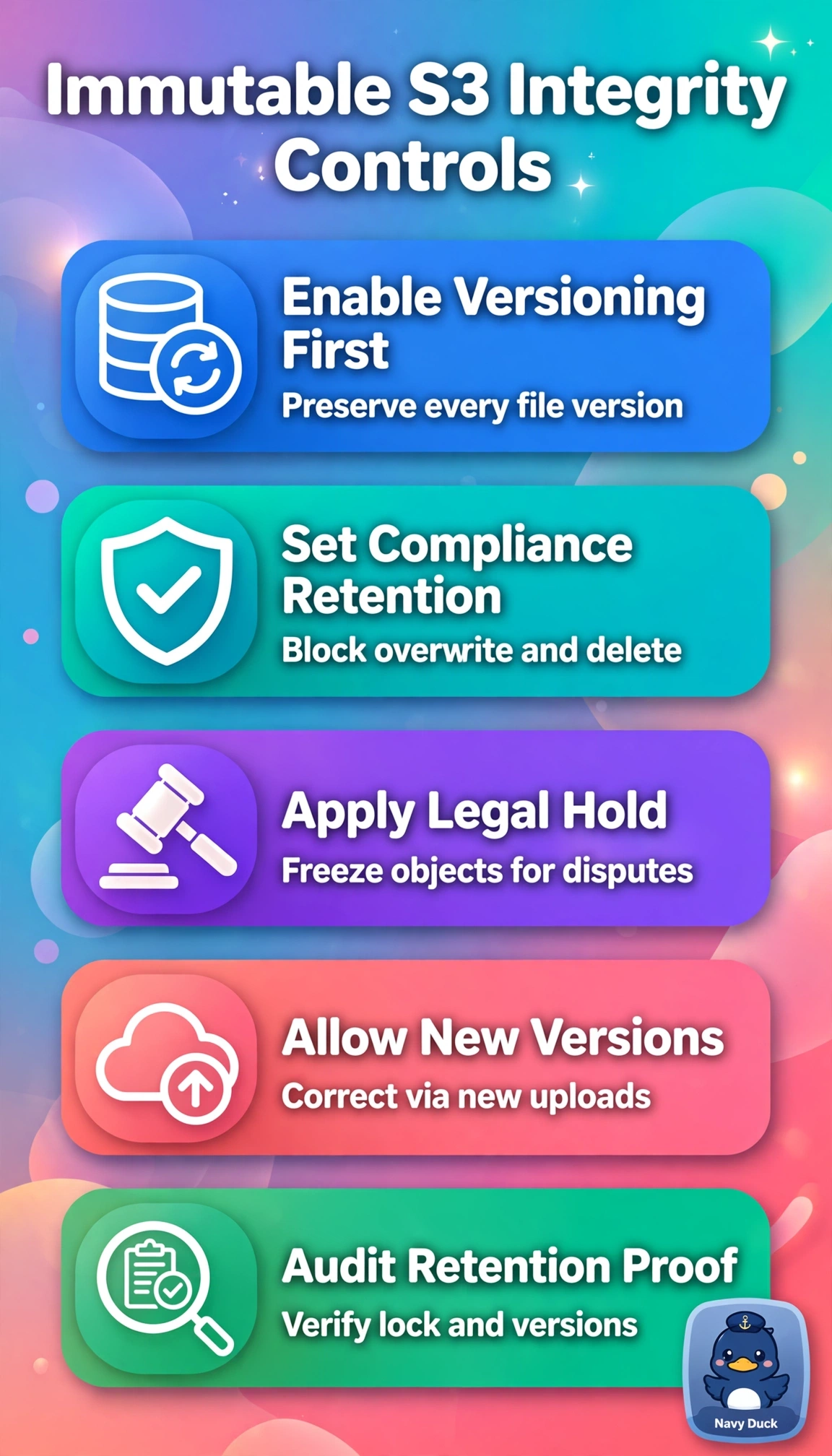
You'll lock each version in a tamper-proof vault while still filing new pages. Object Lock in Compliance mode blocks deletes and overwrites, even by admins. Legal holds flex on top when litigation hits.
Full Explanation
S3 Versioning preserves every iteration so corrections create new versions rather than overwriting evidence, while S3 Object Lock enforces write-once-read-many retention in Compliance mode which cannot be shortened or bypassed by any user including root, and Legal Hold provides indefinite litigation preservation independent of retention periods, satisfying multi-year immutability with auditability. Replication with Inventory and bucket policies fails because replication copies objects without preventing deletion and policies are mutable and bypassable. Lifecycle expiration with MFA Delete and CloudTrail fails because expiration actively deletes data, MFA Delete only prompts on version deletes, and CloudTrail is detective logging rather than preventive immutability. Access Points with KMS and EventBridge fails because encryption protects confidentiality not integrity retention, and alerts do not block modification. Exam caveat: Object Lock requires versioning (turned on automatically when you enable it, including on existing buckets) and Governance mode allows privileged bypass while Compliance does not. Practical check: confirm bucket Object Lock enabled, test retention periods and legal hold workflow, and validate version IDs in audit exports.