
A regional bank stores signed loan agreements in S3 and must keep every final version immutable for seven years for regulators, while allowing deletion of incomplete uploads. Legal holds are applied during disputes. Which integrity control should the engineer configure to enforce immutable retention with version protection?
Select an answer to reveal the explanation.
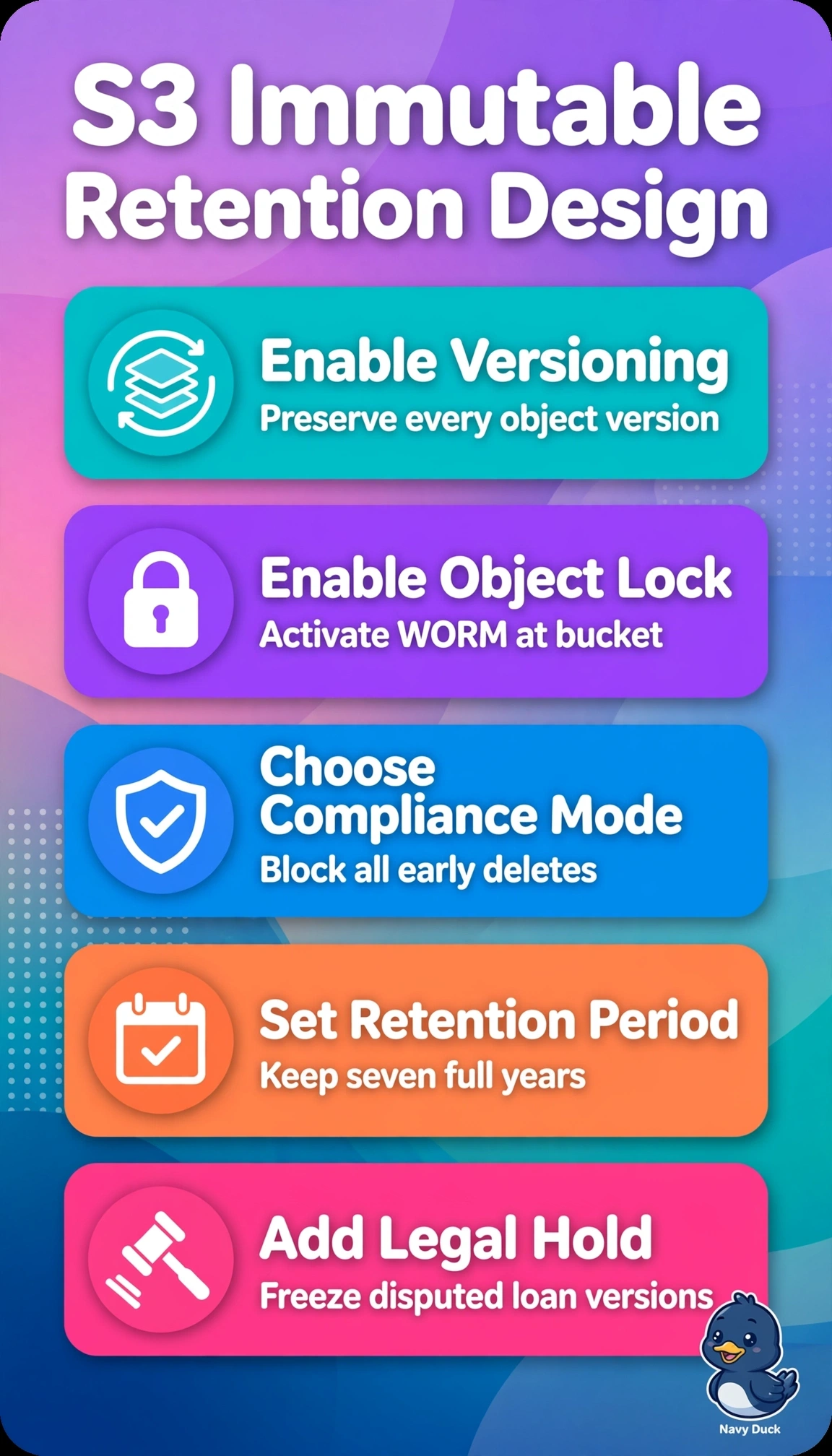
Short Explanation
You have got a vault requirement here, not just a lock. Compliance mode acts like a sealed time capsule nobody can open early, even admins.
Full Explanation
S3 Object Lock in Compliance mode provides WORM protection where protected versions cannot be overwritten or deleted by any user including the root user until retention expires, and versioning preserves each final version as an immutable object with legal hold support for disputes, which satisfies regulator-mandated immutability while incomplete multipart uploads without retention can still be cleaned up. Governance mode fails by concept because it permits users with special permission to bypass retention, which breaks strict regulatory immutability. Glacier Vault Lock fails by concept because it governs vault archives with separate workflows and does not provide S3 object-level version protection and legal holds. Server-side encryption with Lifecycle expiration fails by concept because encryption protects confidentiality and expiration deletes data rather than proving integrity and non-deletion. Exam caveat is to distinguish Governance for flexible internal controls from Compliance for external regulatory WORM, and practical check is to verify bucket versioning is enabled and Object Lock configuration shows Compliance retention before loading regulated data.