
A 200-person SaaS firm keeps customer PostgreSQL on EC2 and file assets in S3, and after a ransomware scare must ensure encrypted cross-Region backups with air-gapped recovery, point-in-time restore, and tested restores without managing scripts. Which backup and replication design gives resilient ransomware protection?
Select an answer to reveal the explanation.
Short Explanation
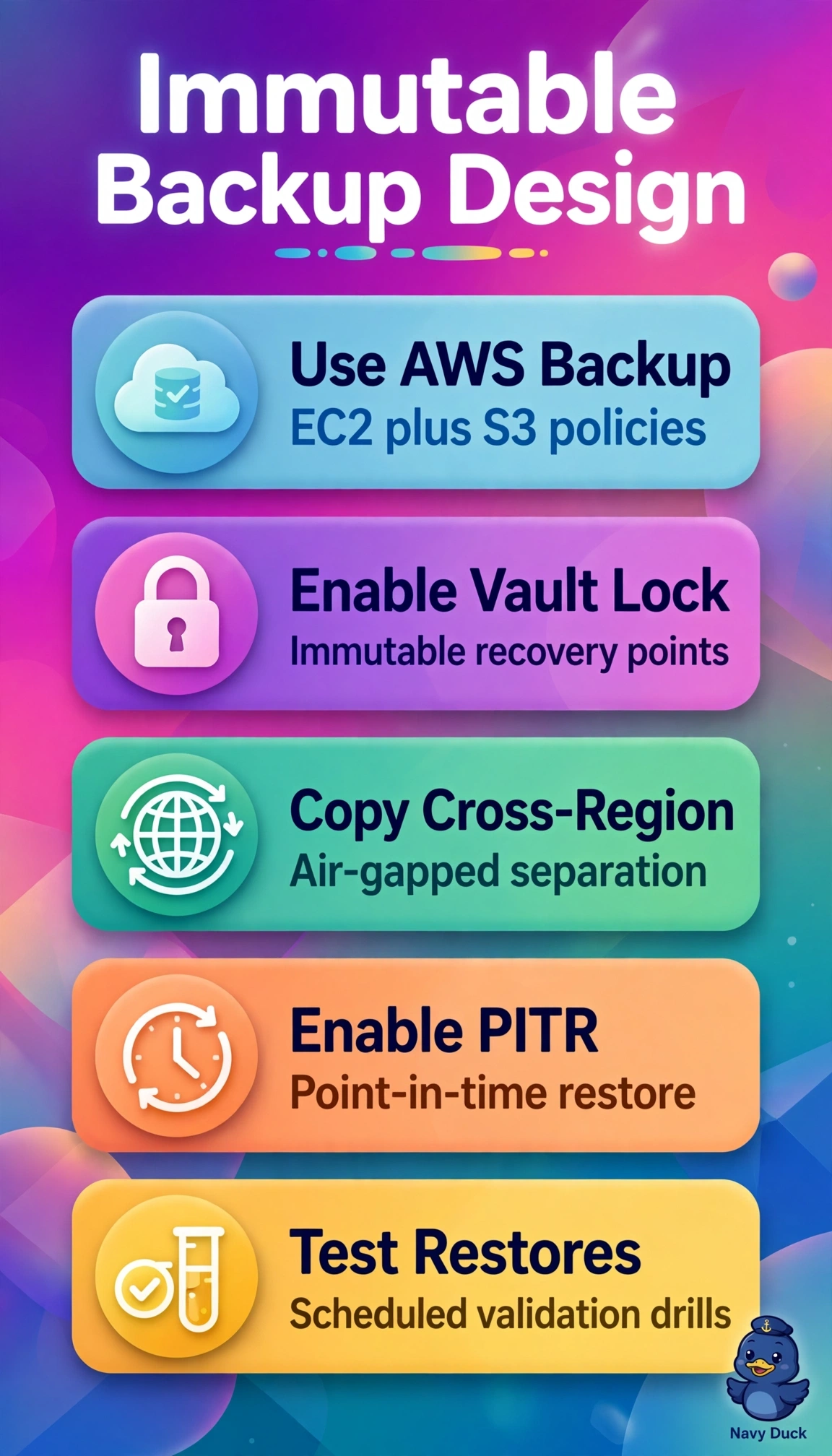
You’re looking for backups ransomware can’t rewrite, like a time-locked safe that stays protected even if credentials are compromised. Vault lock, encrypted cross-Region copies, PITR, and scheduled restore testing give you resilient recovery without managing scripts.
Full Explanation
The design using AWS Backup vault lock, encrypted cross-Region copies, PITR, and regular restore testing is the only listed design that combines immutability, regional isolation, point-in-time recovery, and tested restores without custom scripts. Vault lock provides WORM protection: in Compliance mode, even administrators cannot delete protected recovery points during the retention period. Encrypted copies in another Region add isolation from a regional ransomware event, and PITR supports recovery to a chosen point in time where the protected resource supports it. Built-in restore testing plans help verify that recovery works. The design with encrypted cross-Region copies, PITR, and scheduled tests but no vault lock lacks immutability; compromised credentials may still delete backups. The design with vault lock, encrypted cross-Region copies, and testing but no PITR lacks point-in-time granularity, leaving recovery limited to available backup points. The design with vault-locked same-Region copies, PITR, and tests lacks cross-Region isolation, so a regional compromise can affect both production and backups. Exam caveat: AWS Backup does not provide continuous-backup PITR for PostgreSQL running on EC2; EC2 volumes generally use snapshots, so database log archiving is needed to cover that PITR gap. Practical check: verify KMS encryption, cross-Region copy status, Compliance-mode lock, and recent restore-test reports in an isolated account before sign-off.