
A regional bank runs payment APIs in two Availability Zones and must prove its incident response runbook restores service within 15 minutes without causing data loss. Leadership wants controlled disruption testing plus a resilience score before the next audit. Which testing procedure best validates the incident response plan's effectiveness?
Select an answer to reveal the explanation.
Short Explanation
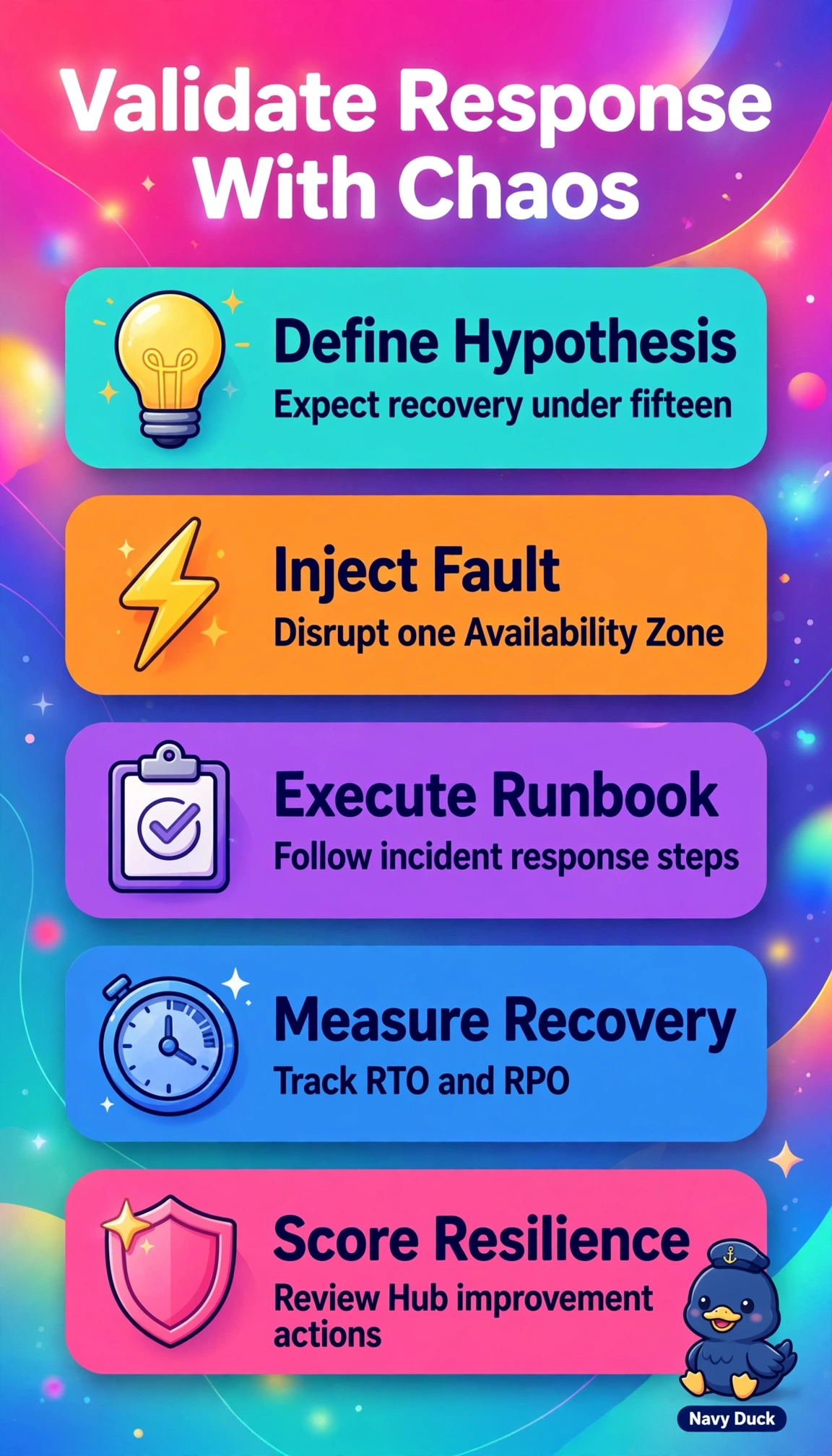
You're pressure-testing the playbook, not just the servers. Controlled chaos plus a resilience-score shows whether your team truly hits that 15-minute goal.
Full Explanation
Fault Injection Service safely injects real failure modes such as AZ impairment or process termination under guardrails and blast-radius controls, letting responders execute the documented runbook against realistic conditions while measuring time to detect, isolate, and recover. Resilience Hub consumes the architecture and test results to score RTO and RPO alignment and to surface missing SOPs or backup gaps, directly proving effectiveness for audit. Inspector with Security Hub identifies software vulnerabilities rather than validating human process timing under disruption. Chaos load testing with CloudWatch dashboards measures performance headroom but does not orchestrate scoped fault scenarios or produce a resilience compliance assessment. Systems Manager patching with Config rules improves hygiene and drift detection but never exercises the incident response workflow against failure. For the exam, remember Fault Injection Service validates response capability while Resilience Hub validates design resilience. In practice, run game days in a staging account first and require automatic rollback on alarm.