
A media company stores 800 TB of video masters, project files on EFS, and rarely viewed archives with unpredictable re-access. Storage costs rose 40% while retrieval must stay automatic without code changes. Which storage optimization implements intelligent tiering and lifecycle policies?
Select an answer to reveal the explanation.
Short Explanation
Paying prime rent for boxes you never open hurts, yet you still need them fetched instantly. Intelligent-Tiering moves objects to cheaper shelves automatically and still serves them in milliseconds.
Full Explanation
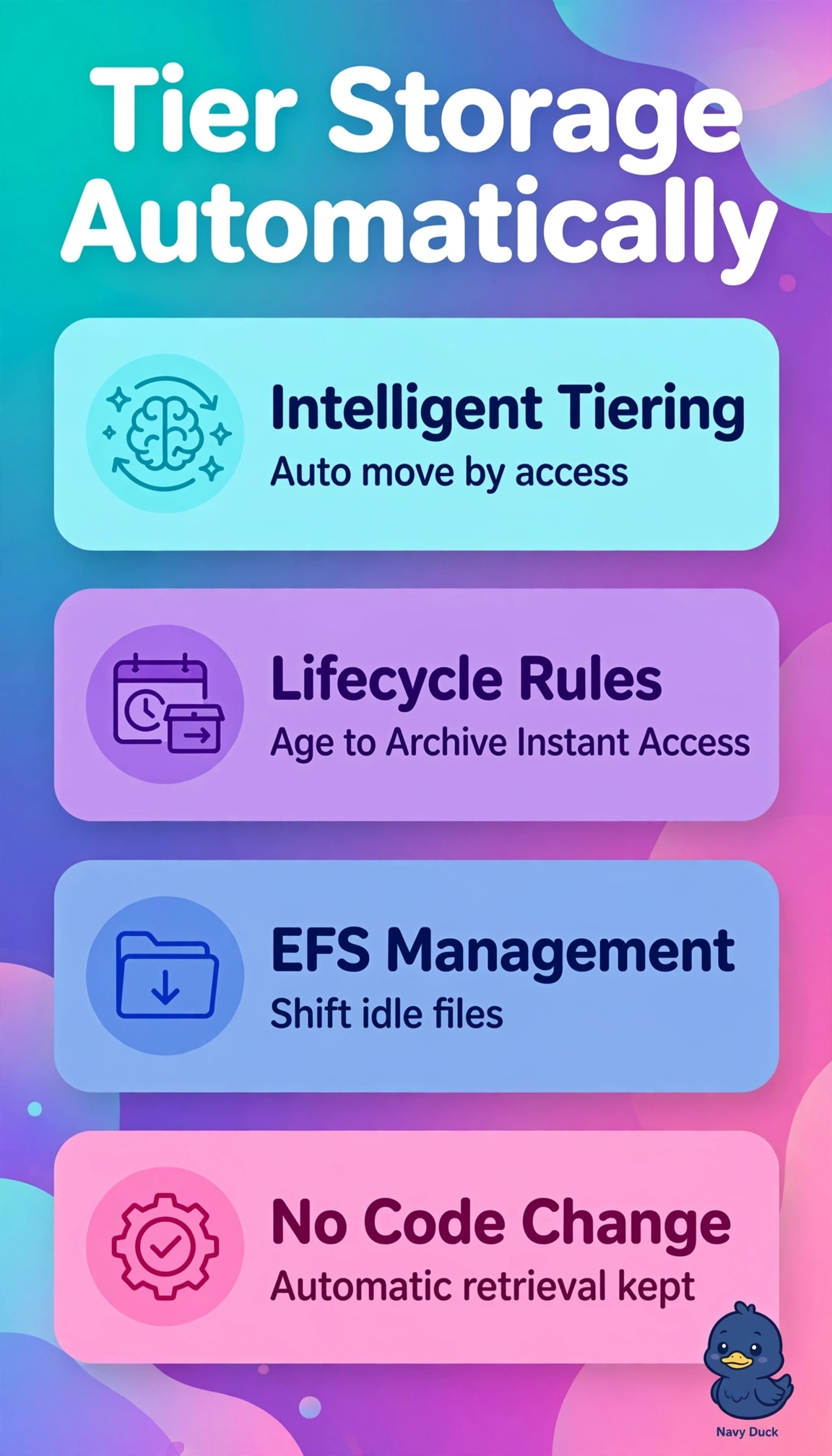
The correct design succeeds because S3 Intelligent-Tiering monitors unpredictable access and automatically moves objects between Frequent, Infrequent and Archive Instant Access tiers, all with millisecond retrieval through the normal GET API, so no application or restore changes are needed. S3 Lifecycle rules handle expiration, noncurrent version cleanup and prefix-based transitions, and EFS lifecycle management moves aging project files to Infrequent Access and Archive storage classes. Transitioning archives to Glacier Deep Archive sharply reduces cost but fails the requirement because those objects need explicit restore requests and hours of wait before reading, which breaks unpredictable re-access without code changes. Keeping project files on EFS Standard fails cost control because aging files never move to cheaper EFS classes. Enabling the optional Archive Access and Deep Archive Access tiers of Intelligent-Tiering gives the lowest prices, but objects in those tiers must be restored asynchronously before they can be read, so they do not meet automatic retrieval without code changes. Exam caveat: the optional Intelligent-Tiering archive tiers behave like Glacier restores, while Archive Instant Access is automatic and immediate. Practically, validate with Storage Lens that objects shift tiers, confirm EFS Infrequent Access bytes grow, and run an application read test with no restore calls.