
A bank must prove its multi-Region loan system meets RTO and RPO targets, needs quarterly non-disruptive recovery validation, gap reports, and tracked improvements across application stacks. Which disaster recovery testing design provides continuous validation and audit evidence?
Select an answer to reveal the explanation.
Short Explanation
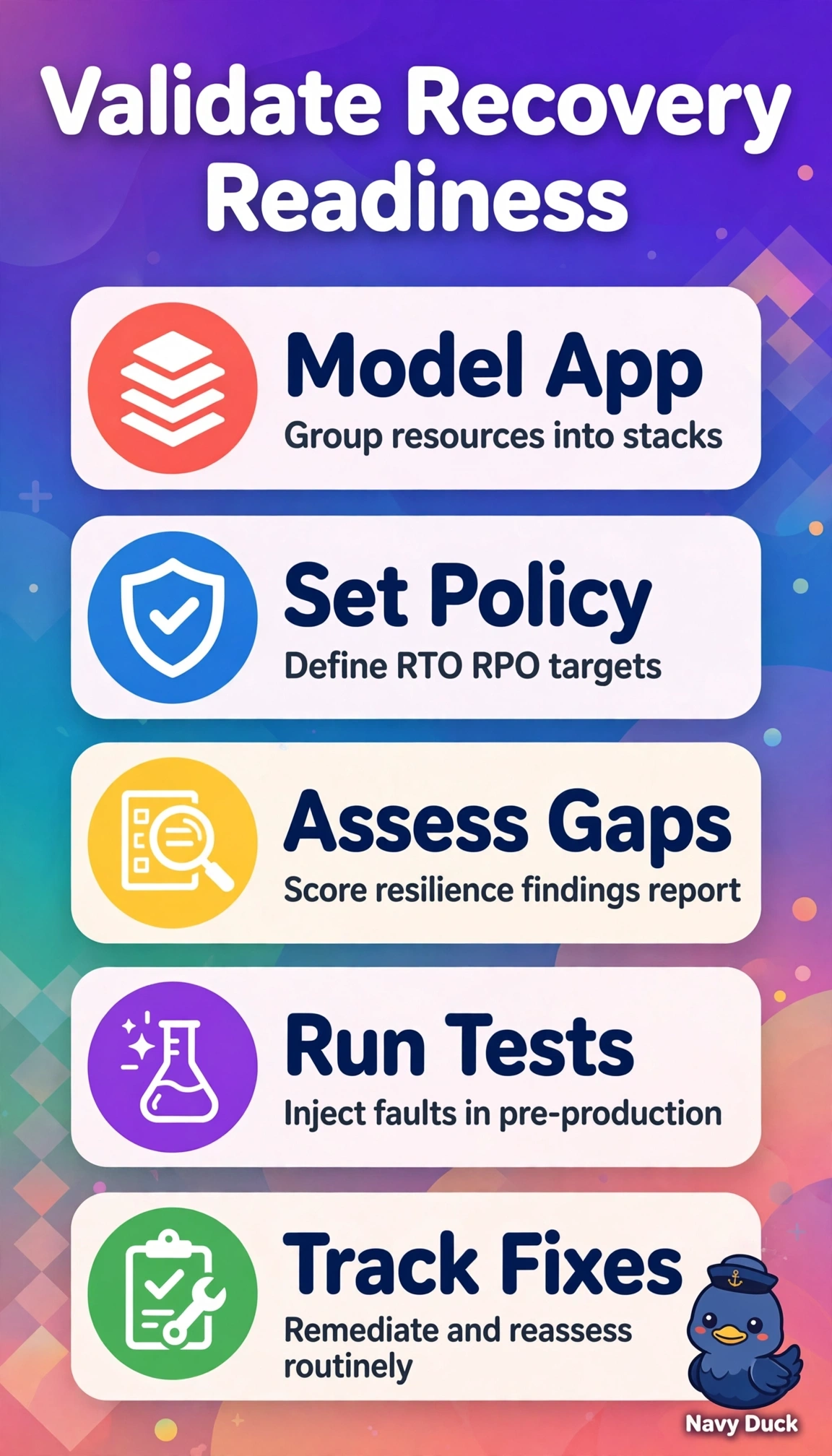
Auditors love receipts, not heroic war stories, so you want evidence that shows how your recovery plans perform. Resilience Hub assesses your stacks against your RTO and RPO policies, finds gaps, and supports resilience testing. You get a fire drill with a graded report card.
Full Explanation
AWS Resilience Hub is the right design because it assesses application stacks against defined RTO and RPO recovery policies, analyzes resources and configuration for gaps, provides findings and recommendations, tracks improvements over time, and supports resilience tests for quarterly, non-disruptive validation and audit evidence across multi-Region requirements. Quarterly AWS Backup restores in isolated VPCs can measure restore timing and retain audit logs without disrupting production, but they validate backup data rather than whole application stacks against recovery policies or track broader resilience findings. CloudWatch alarms and Config rules can detect drift and preserve compliance history, but monitoring alone does not execute recovery workflows or prove that RTO and RPO targets are achievable. Elastic Disaster Recovery drills in staging can rehearse multi-Region failover without affecting production, but they do not by themselves assess policy gaps or provide tracked improvement findings. For the exam, distinguish monitoring or testing components from policy-based resilience assessment, which combines findings, recommendations, and tests. As a practical check, onboard the stack in Resilience Hub, set its RTO and RPO policies, review findings and recommendations, verify test history, and retain assessment reports for auditors.