
A SaaS analytics company runs a dashboard fleet on overprovisioned On-Demand EC2 instances behind an ALB. Traffic peaks 9am-5pm weekdays and is near idle nights and weekends. CPU averages 18% and Compute Optimizer flags overprovisioning. Which rightsizing and scaling strategy lowers cost while preserving daytime responsiveness?
Select an answer to reveal the explanation.
Short Explanation
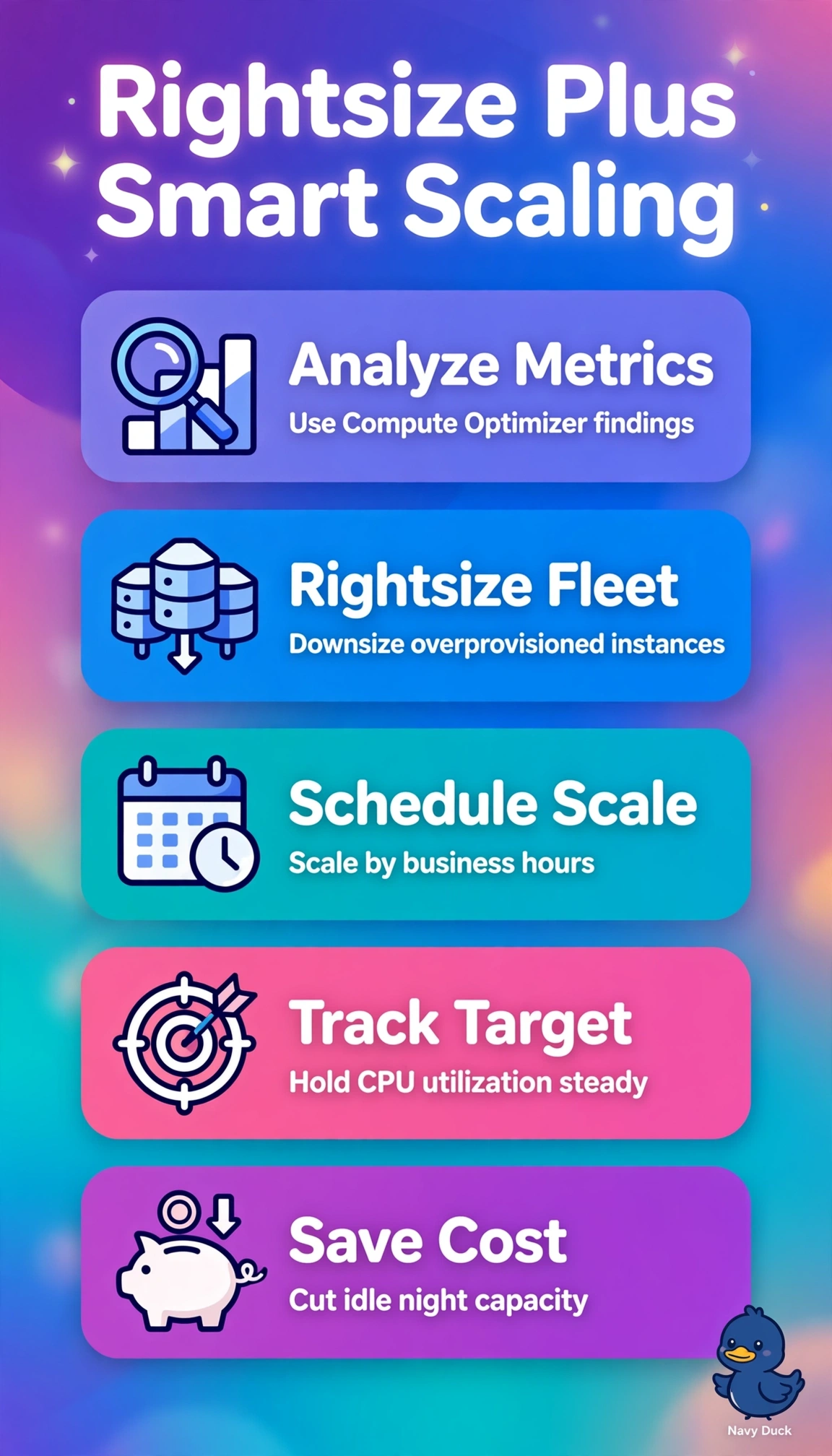
You’re paying for rush-hour buses running empty at midnight. Scheduled scaling handles your calendar, target tracking handles surprises, and rightsizing trims the waste.
Full Explanation
The correct approach addresses both waste dimensions because Compute Optimizer analyzes CloudWatch metrics to recommend a smaller instance family that still meets performance needs, scheduled scaling proactively scales out before the 9am surge and scales in at night to avoid paying for idle capacity on a predictable timetable, and target tracking maintains a CPU utilization target to absorb intraday variance automatically. Migrating entirely to Fargate Spot fails by concept because Spot tasks can be interrupted and are unsuitable for the primary latency-sensitive dashboard availability requirement despite low price. Keeping current types with only scheduled scaling fails by concept because it preserves overprovisioning and cannot react to unexpected spikes outside the fixed schedule. Purchasing reservations for peak and running continuously fails by concept because it locks in peak price around the clock and eliminates elasticity, which increases cost for a workload with clear idle periods. For the exam remember scheduled scaling suits predictable patterns while target tracking suits dynamic load, and in practice verify Compute Optimizer recommendations against p95 latency before applying them.