
A ticketing platform must process seat holds in strict order per event, handle duplicate webhook deliveries safely, and fan out confirmations to email, SMS, and analytics with at-least-once delivery. Which event-driven messaging pattern meets ordering and delivery guarantees?
Select an answer to reveal the explanation.
Short Explanation
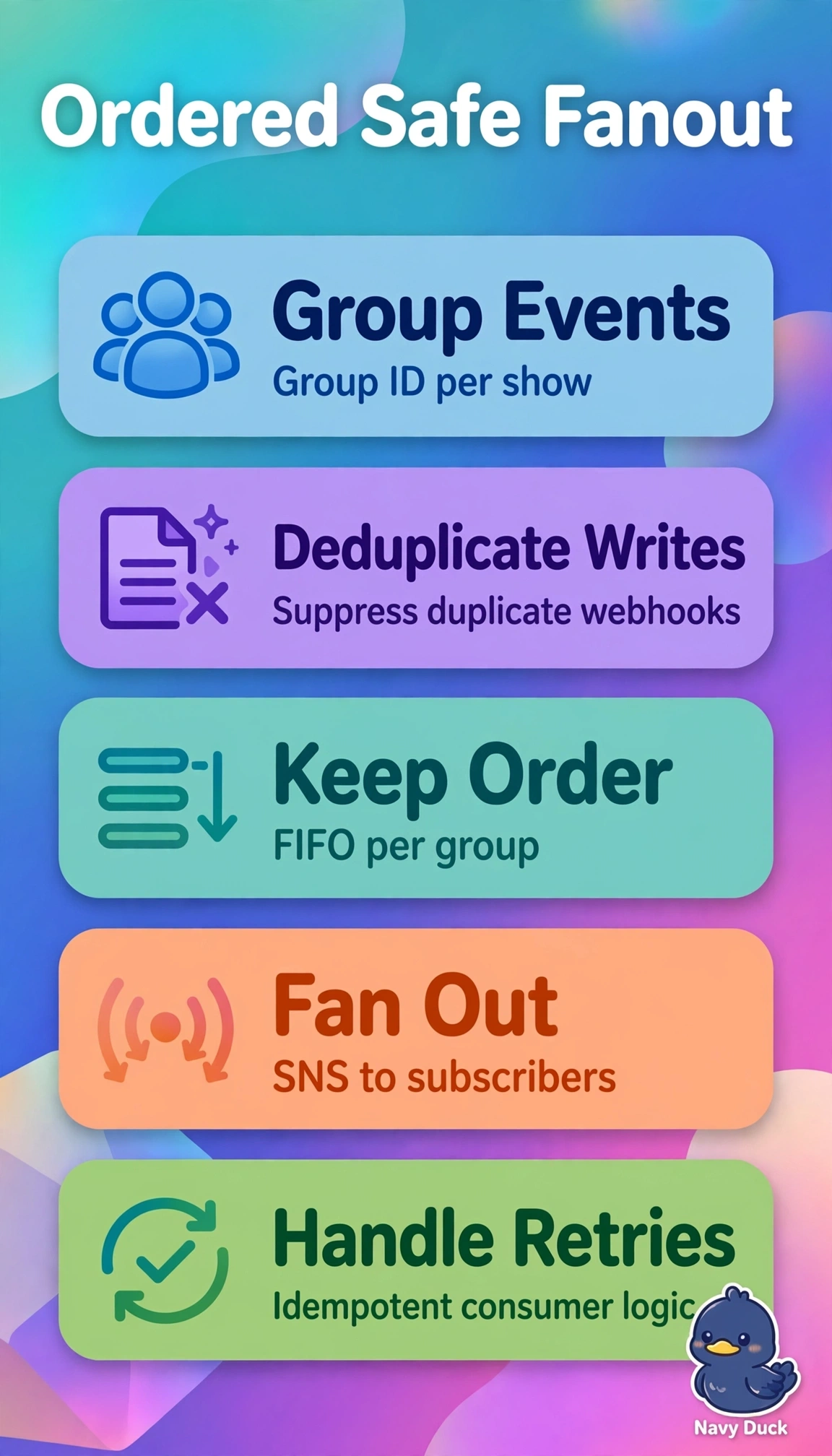
You’ll keep your seat holds in line like fans at a concert gate when you use FIFO groups per event, so duplicates can’t cut ahead. Deduplication plus SNS fan-out then spreads confirmations safely, and idempotency makes retries harmless.
Full Explanation
SQS FIFO queues provide ordered delivery within a message group ID paired to the event identifier, while content-based deduplication or explicit deduplication IDs suppress duplicate webhook effects, and consumer-side idempotency keys make reprocessing safe. Fanning out via SNS to email, SMS, and analytics subscriptions delivers at-least-once notifications without coupling producers to each consumer. Standard queues with synchronous invokes fail by concept because standard ordering is best-effort and direct invocation loses durable buffering and retry. EventBridge with standard topics and keyless Kinesis fails by concept because default routing lacks strict per-event ordering guarantees. Random Kinesis partitions without deduplication fail by concept because scattering related records breaks ordering and permits duplicates. For the exam, link FIFO group ID to ordering and deduplication ID to idempotency, and in practice replay duplicate group messages in staging to confirm no double seat hold.