
A fintech startup needs public HTTPS APIs with path-based routing to microservices, sudden 10x burst traffic, plus a separate low-latency TCP feed for market data with static IPs for allowlisting. Which ingress pattern optimizes resources for both usage patterns?
Select an answer to reveal the explanation.
Short Explanation
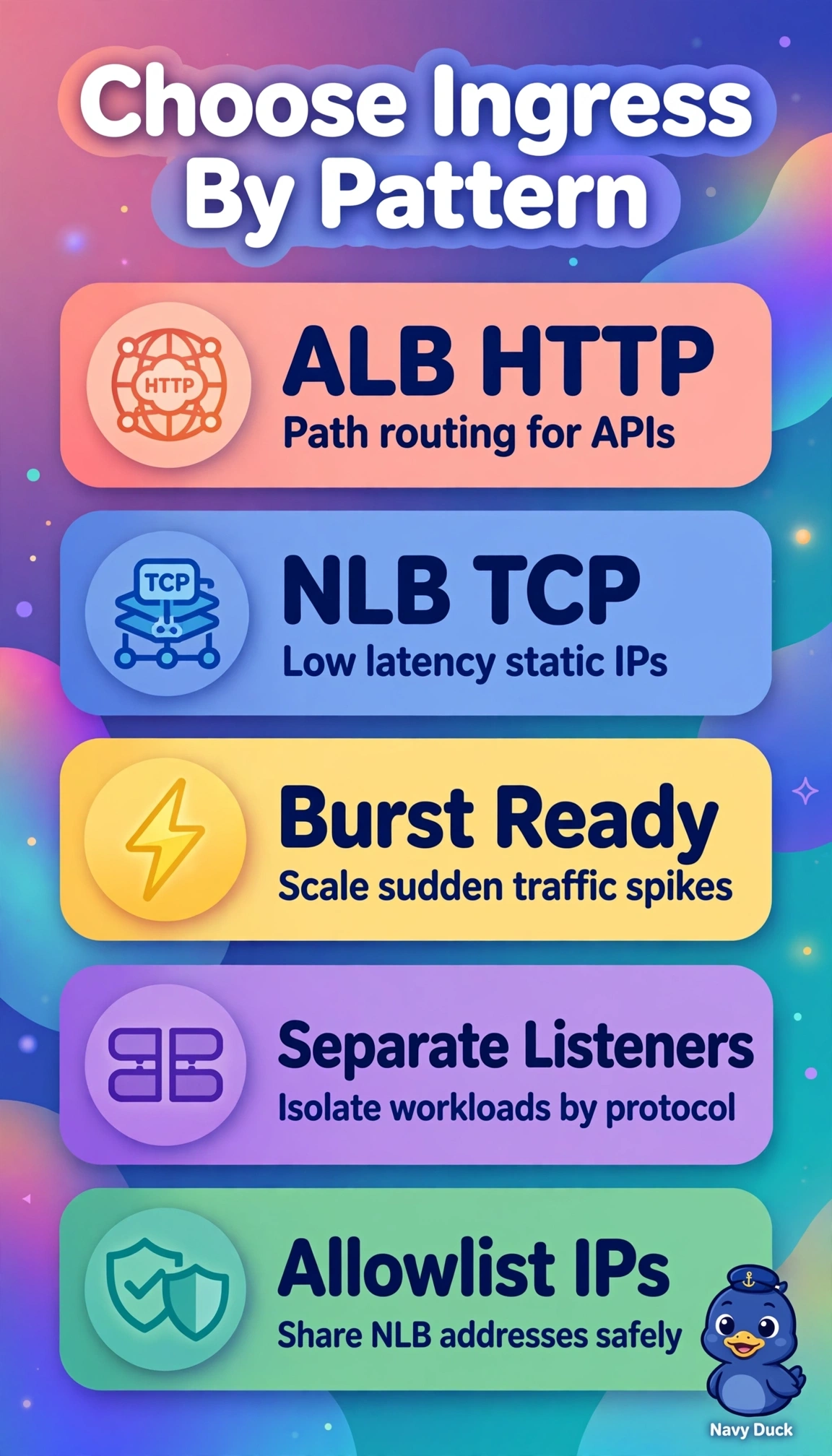
You're sorting mail and express freight through different docks for a reason. Split ingress sends smart HTTP routing to ALB and raw TCP speed with fixed addresses to NLB.
Full Explanation
Application Load Balancer operates at Layer 7 and provides path and host-based routing, authentication, and burst-friendly HTTP handling ideal for microservice APIs, while Network Load Balancer operates at Layer 4 with ultra-low latency and static Elastic IPs ideal for TCP market data requiring allowlisting. A single Network Load Balancer cannot perform Layer 7 path inspection, so it fails HTTP routing needs despite handling TCP well. API Gateway WebSockets alone lacks static IPs and is optimized for persistent socket APIs rather than general path-routed REST plus raw TCP ingestion. An Application Load Balancer cannot provide static IPs nor optimal raw TCP performance for the market feed, missing the allowlisting and latency facts. Exam caveat is to match ALB to HTTP routing needs and NLB to TCP/UDP with static IP needs, and practical check is to verify target health checks, TLS termination points, and allowlisted Elastic IPs.