
A logistics company lets a Bedrock agent automatically reroute shipments, must pause before costly reroutes for manager approval via email with timeout and full audit trail, then resume or cancel safely. Which human oversight workflow enforces approval for AI operations?
Select an answer to reveal the explanation.
Short Explanation
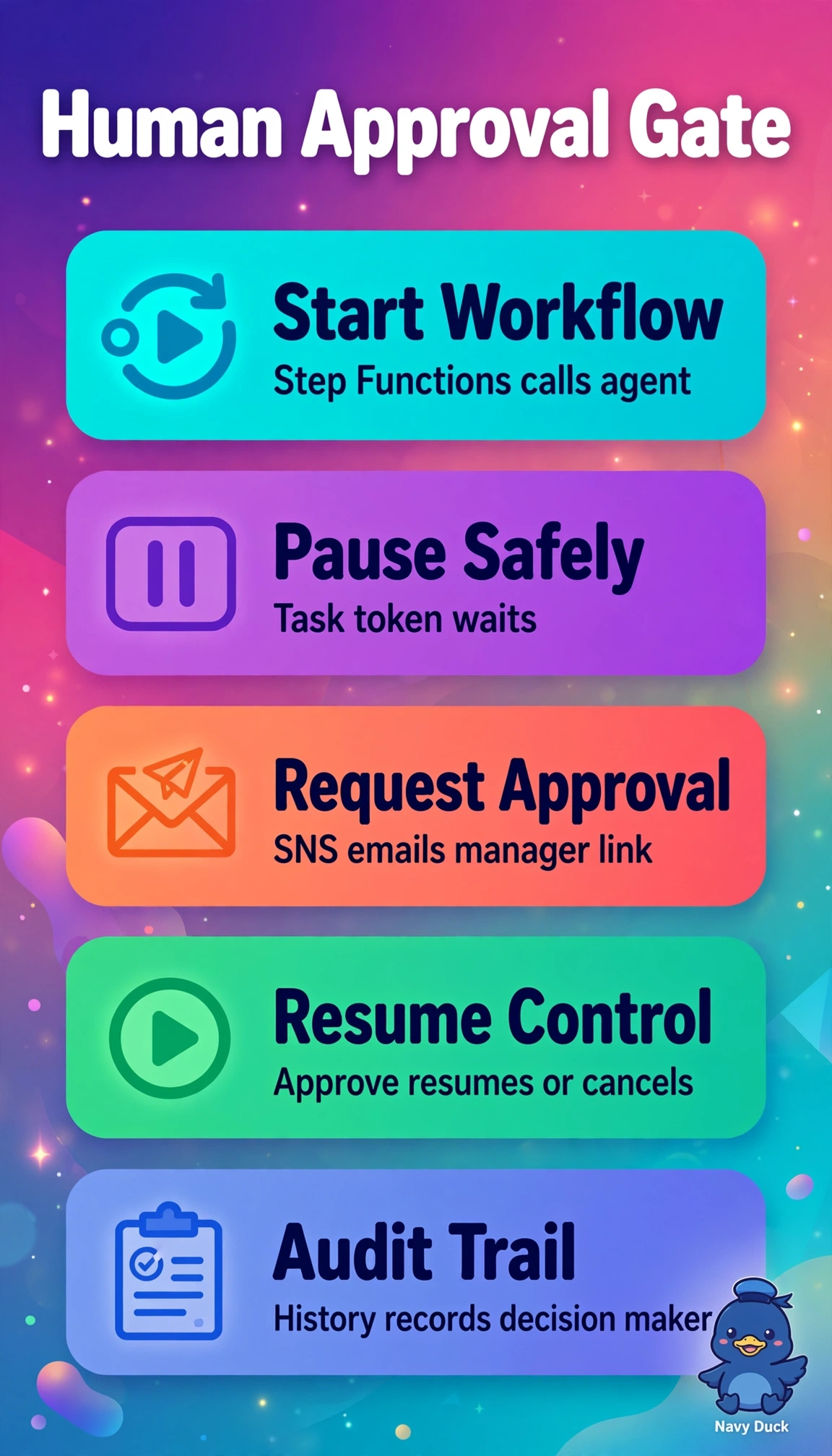
Letting AI spend your money unchecked is nerve-wracking, so add a pause button with teeth. A token-based approval holds the workflow mid-step like a checkout requiring a manager key.
Full Explanation
The correct workflow is right because Step Functions with a callback task token creates a durable human-in-the-loop gate where the execution starts the Bedrock agent, sends manager approval via Amazon SNS email with the task token, pauses securely, enforces timeout to avoid stuck shipments, and resumes with SendTaskSuccess or cancels with SendTaskFailure while retaining complete execution history for audit. The Lambda SNS notify-and-continue pattern fails on enforcement because it delivers email and records outcomes in DynamoDB with retries yet never blocks the workflow, so costly reroutes proceed before approval and the pause requirement is lost. The console callback pattern fails on channel because it correctly pauses with a task token, timeout, and history but requires managers to act inside the Step Functions console instead of email, missing the stated distribution mechanism. The prompt interception pattern fails on auditability because handling approval inside Bedrock prompts with SNS and resume logic can pause and time out but provides no centralized immutable orchestrator history, making safe retry and compliance verification unreliable. On the exam, distinguish waitForTaskToken gates that block from notifications that merely inform, even when timeouts and logs are mentioned. To validate practically, inspect a test execution paused at the approval state, confirm the SNS email approval link maps to the token, and verify timeout and approve and reject paths emit distinct audited events.