
A manufacturer must move a 4 TB Oracle database with continuous plant writes and 80 TB of NFS engineering files to AWS with minimal downtime, preserving permissions and enabling validation before cutover. Which database and data migration strategy best fits this workload?
Select an answer to reveal the explanation.
Short Explanation
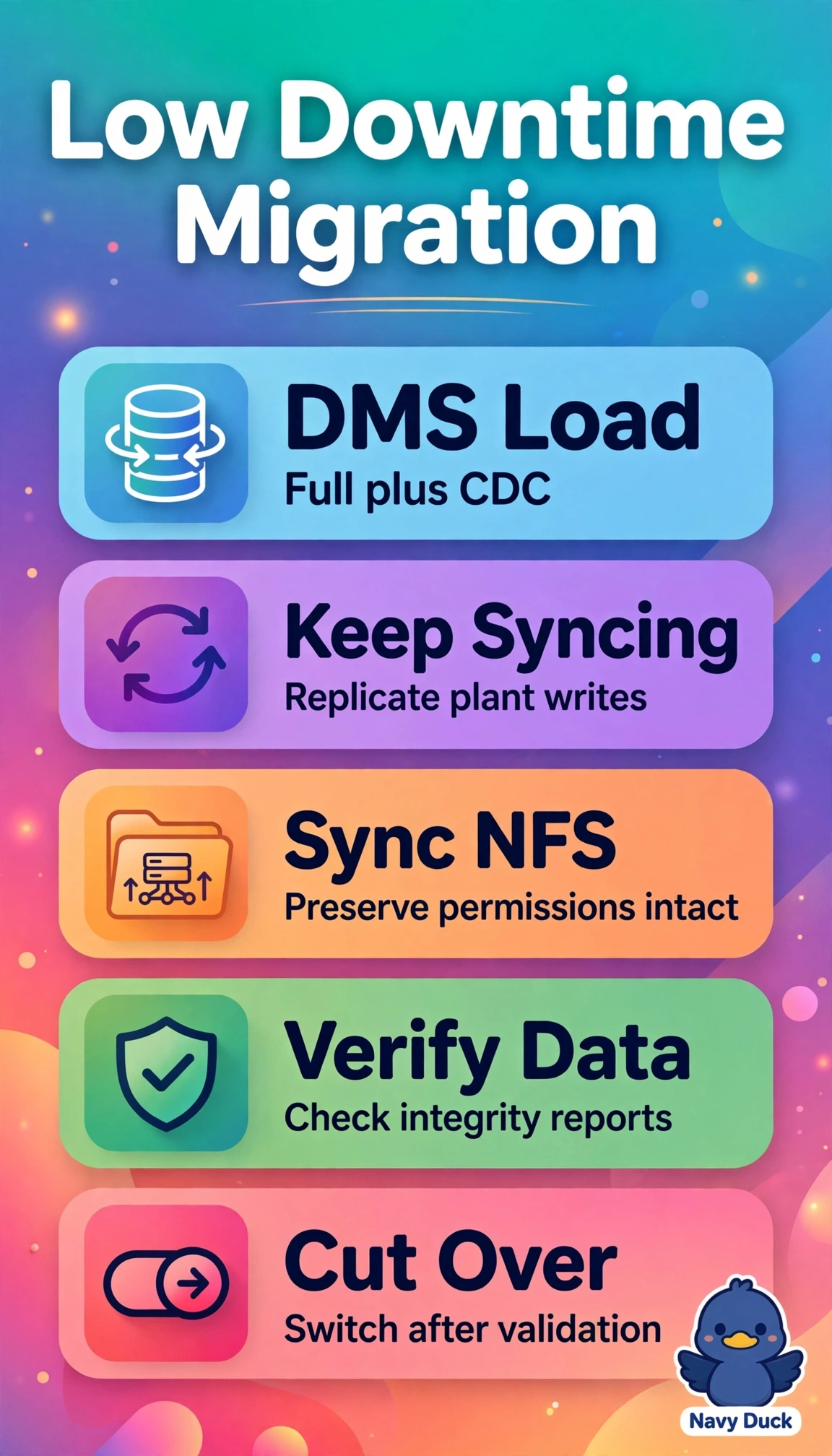
You can keep plant writes running while the database catches up and the NFS files are checked before cutover. Ongoing replication and verified file sync support minimal downtime and a confident validation step.
Full Explanation
AWS Database Migration Service (DMS) ongoing replication captures source redo changes after an initial full load, keeping the target synchronized until a planned cutover. It supports homogeneous or heterogeneous migration validation through table statistics and data comparison. AWS DataSync handles large NFS transfers with metadata, permission, and timestamp preservation, built-in integrity verification, and incremental sync for later changes. Exporting Oracle with Data Pump to S3 and copying NFS files with S3 Sync CLI fails conceptually because manual dumping and CLI copying do not provide managed change data capture or verified permission fidelity at scale. Converting files with DataSync before a one-time DMS full load also fails because a load without ongoing replication requires writes to be quiesced for an extended outage. Exporting Oracle schemas offline and moving NFS files with Snowball Edge suits disconnected sites, but adds handling delay when continuous network synchronization is available. Exam caveat: match DMS ongoing replication to low-downtime database needs and DataSync to NAS file fidelity. In practice, run a test cutover with checksum validation before the production window.