
A startup launching an AI photo app on S3, Lambda and DynamoDB needs structured threat modeling before launch, prioritizing spoofing and data exfiltration mitigations. Leadership wants documented risks and controls. Which risk assessment solution for cloud architectures using threat modeling and mitigation strategies fits early design?
Select an answer to reveal the explanation.
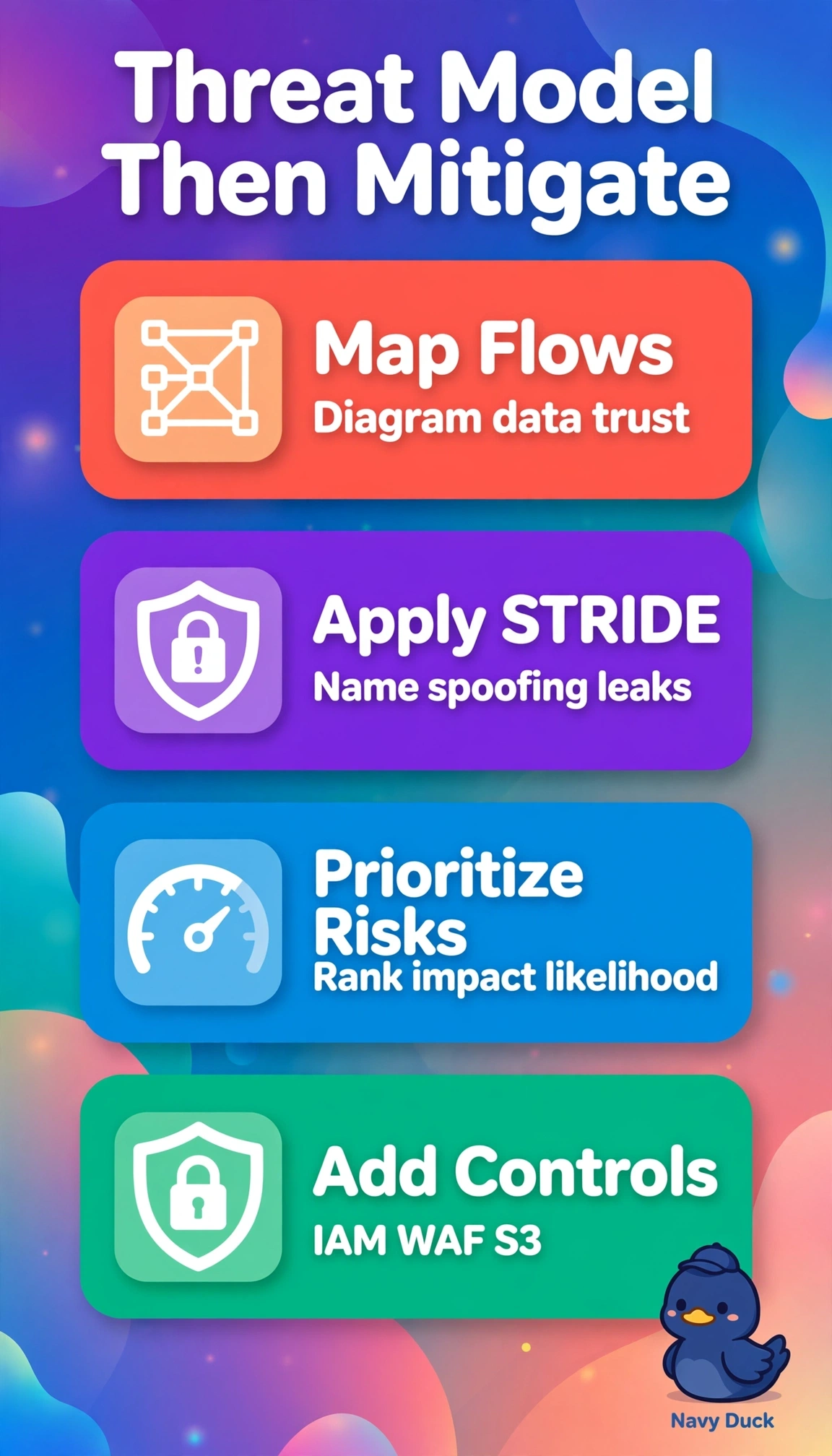
Short Explanation
You're sketching burglar routes before building doors. STRIDE names spoofing and leaks early so controls land where they matter, and foresight is cheaper than breach cleanup.
Full Explanation
Structured threat modeling such as STRIDE systematically identifies spoofing, tampering, repudiation, information disclosure, denial of service, and elevation risks during design, then maps each to mitigations like least-privilege IAM against elevation, WAF against injection and bots, and S3 Block Public Access against exfiltration for documented risk decisions. Open buckets with wildcard IAM and disabled logging actively create the exact exfiltration and privilege risks the assessment must mitigate. Penetration tests alone validate after build without systematic design coverage and miss early architectural flaws that workshops catch. Cost Explorer forecasts address spend, not security threats, so they cannot produce threat models or mitigation priorities. For the exam, remember threat modeling precedes controls and evidence, and in practice record data flows, trust boundaries, and accepted versus mitigated risks for audit review.