
A logistics firm runs 80 Windows and Linux servers on VMware on-premises needing sub-5-minute RPO and under 1-hour RTO to eu-west-1 after ransomware. Bandwidth is limited and cutover must be tested non-disruptively. Which continuous replication design enables rapid tested recovery?
Select an answer to reveal the explanation.
Short Explanation
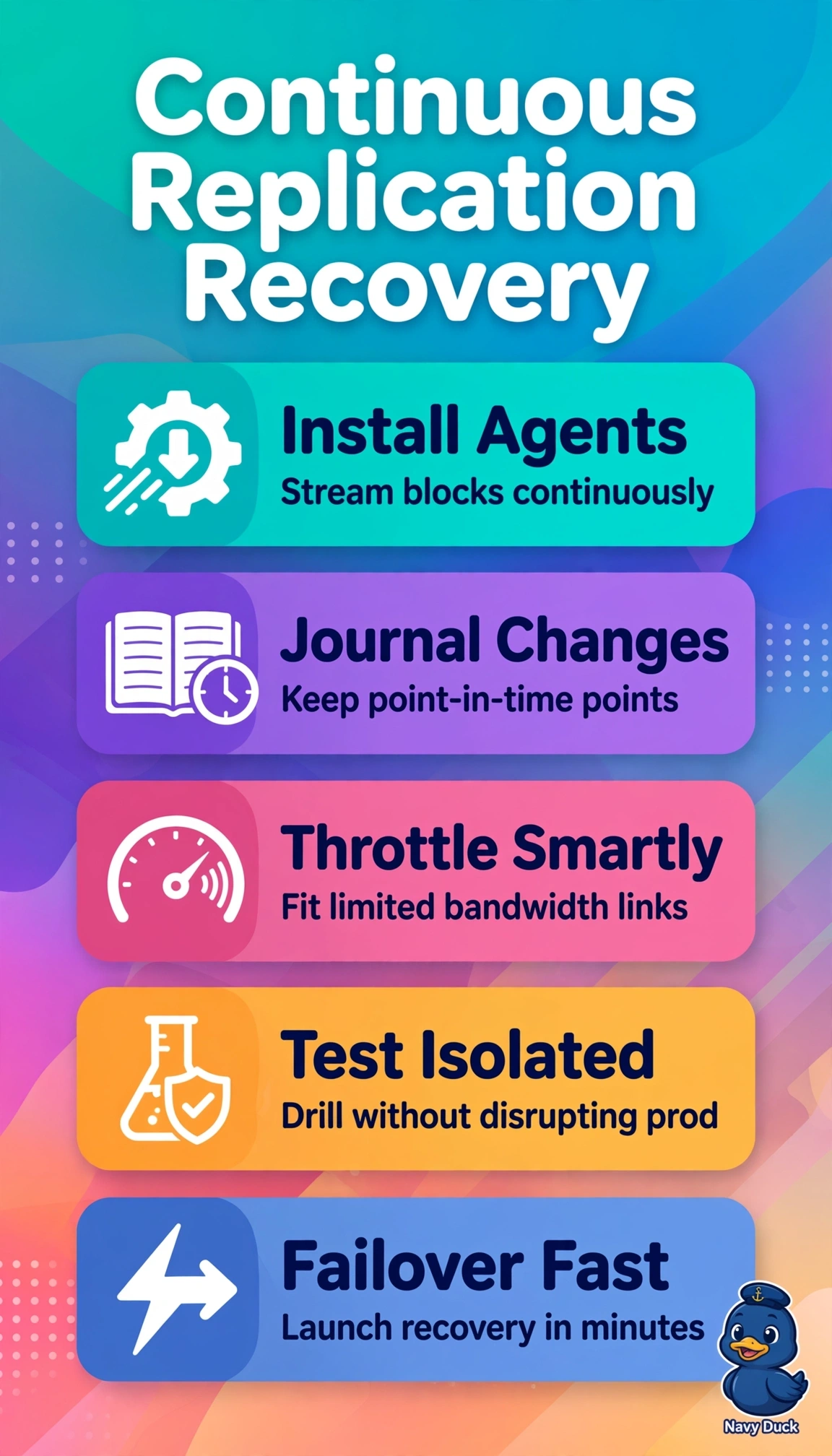
Ransomware doesn't wait for your next backup window to hit. Elastic Disaster Recovery streams every change so you can rewind and rehearse without drama.
Full Explanation
Elastic Disaster Recovery is correct because lightweight agents provide continuous asynchronous block-level replication with compression and bandwidth throttling, journaling every write to enable sub-minute RPO and point-in-time recovery to seconds before ransomware encryption, while the staging area in eu-west-1 allows isolated drill launches in separate subnets and orchestrated failover that meets sub-hour RTO without impacting production. The migration-service design also replicates continuously and supports test launches, yet it is architected for permanent relocation rather than disaster recovery, lacking journaled point-in-time rollback and automated failback essential after ransomware. The centralized backup vault design offers durable cross-Region copies and isolated restore testing, yet restore-based recovery depends on backup windows and full data rehydration plus EC2 rebuild, which cannot reliably guarantee sub-five-minute RPO or sub-hour RTO for eighty running servers. The pilot-light database design efficiently keeps critical data synchronized and validates scale-up procedures, yet it protects only the data tier while leaving operating systems, applications, and system state unreplicated, requiring lengthy rebuilds after full-server encryption. For exams, distinguish disaster recovery services optimized for time-based failover from migration and backup services that share replication vocabulary but differ in recovery objectives. Practically, verify drill launches use isolated networking, confirm journal retention covers dwell time, and test actual RTO with throttled bandwidth to ensure objectives hold under constraint.