
A health startup is launching a patient portal on AWS with PHI in RDS, public APIs via API Gateway, and CI/CD with broad IAM roles. Leadership wants structured threat identification and prioritized mitigations before launch. Which risk assessment solution best delivers threat modeling and mitigation planning?
Select an answer to reveal the explanation.
Short Explanation
You need to think like an attacker before they do, not just scan for bugs. STRIDE modeling maps how data could be spoofed or leaked so defenses land first.
Full Explanation
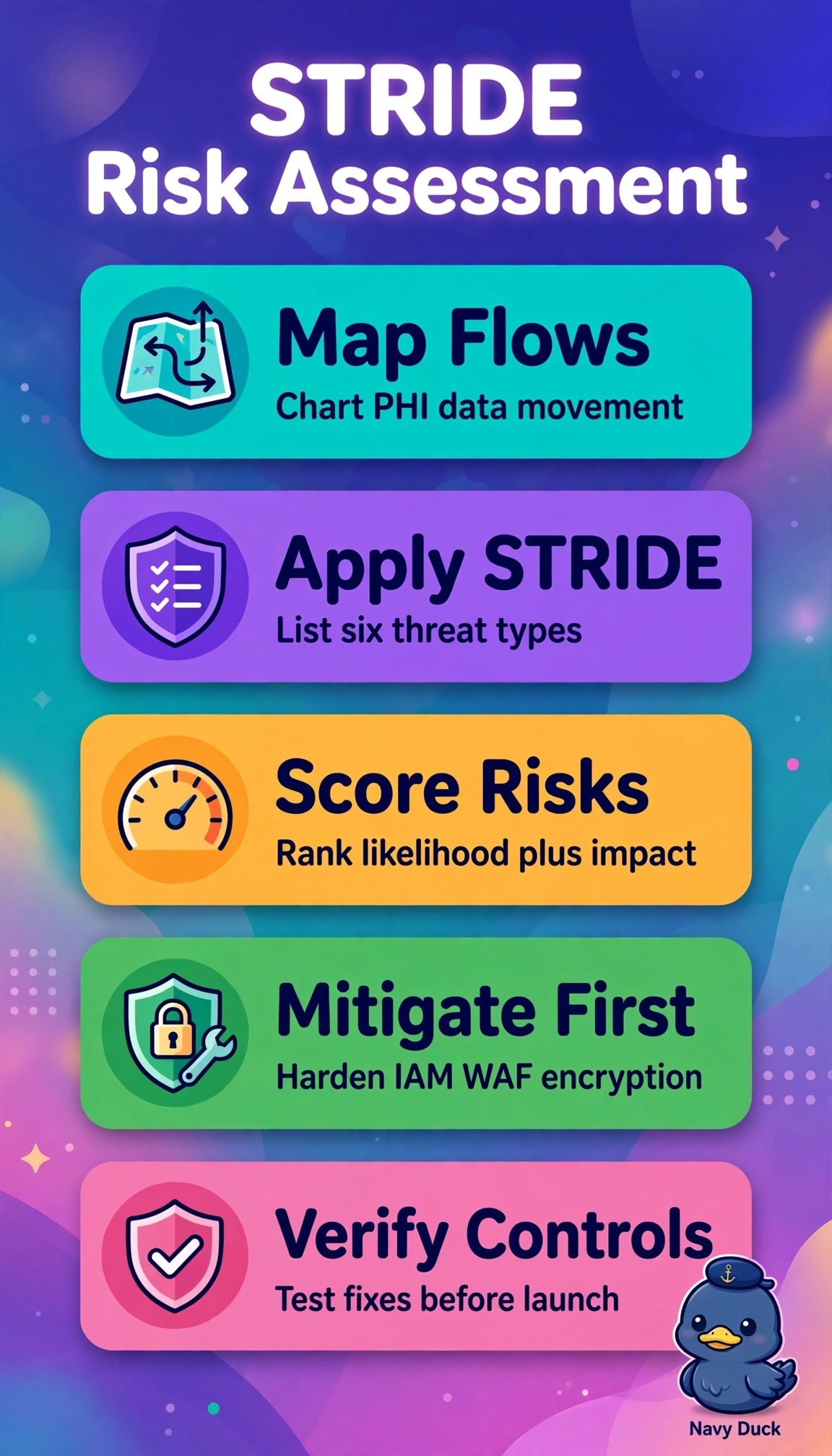
Structured STRIDE threat modeling decomposes the portal into trust boundaries and data flows for spoofing, tampering, repudiation, disclosure, denial of service, and elevation, enabling scored risks tied to concrete mitigations like IAM least privilege, API authorization, WAF rules, KMS encryption, and logging. Inspector scans plus GuardDuty detect known vulnerabilities and runtime anomalies but do not systematically model design-level abuse cases or produce prioritized mitigation plans. Shield Advanced plus Macie protect network and classify sensitive data yet neither performs architectural threat enumeration across APIs, roles, and pipelines. Audit Manager with HIPAA framework collects compliance evidence from Config but does not simulate attacker paths or generate threat-driven mitigations. For the exam distinguish assessment that reasons about design from services that detect issues, and in practice record assumptions, update models per sprint, and link each threat to an owner and verification test.