
A manufacturing company runs computer-vision quality inspection on its factory floor requiring single-digit millisecond latency to on-premises machines, must keep sensor data resident on-site for compliance, and wants the same Kubernetes APIs and ECR images as its AWS cloud workloads. Which hybrid compute pattern provides AWS-managed infrastructure on-premises for this workload?
Select an answer to reveal the explanation.
Short Explanation
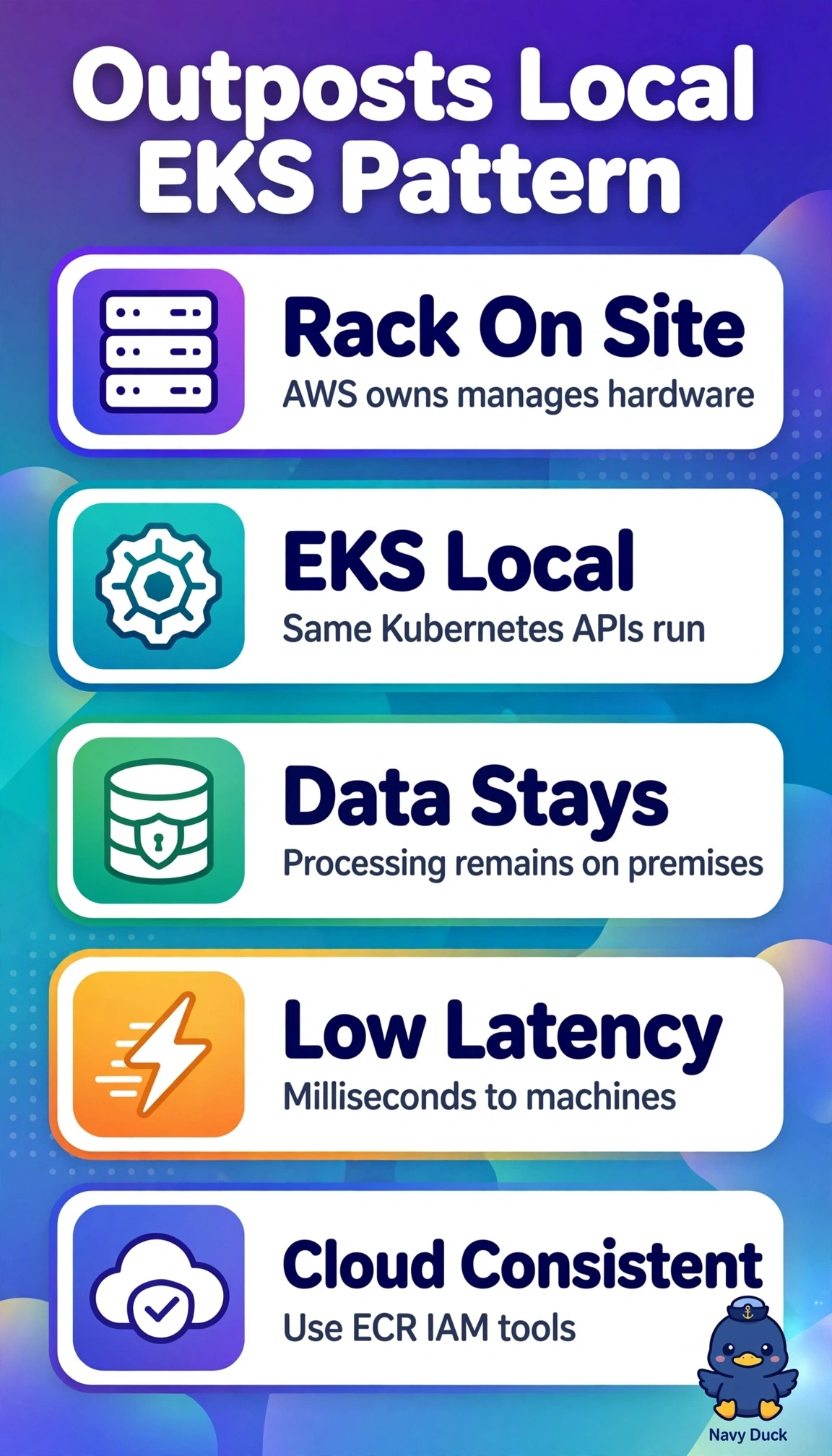
You've got to run AWS itself where the machines live to hit that latency. Outposts brings managed racks on-site so you keep Kubernetes consistency without owning hardware headaches.
Full Explanation
AWS Outposts extends the AWS control plane with AWS-owned racks installed on premises, allowing Amazon EKS, EC2, and storage to run locally for single-digit millisecond access to factory equipment while using standard EKS APIs and ECR images, and it satisfies data-residency by keeping processing on site. Deploying EKS Anywhere on customer hardware provides software consistency but leaves hardware procurement, maintenance, and support to the customer and does not deliver AWS-managed infrastructure. Using a Local Zone keeps compute in an AWS-managed metro location that still requires WAN transit and cannot guarantee on-premises latency or on-site residency. Running ECS Anywhere orchestrates customer-managed on-premises VMs from ECS control plane, which helps with hybrid orchestration but lacks AWS-managed infrastructure and native EKS API parity for the stated Kubernetes requirement. For the exam, distinguish Outposts as managed hardware versus Anywhere as managed software on customer hardware, and verify latency, residency, and managed-responsibility requirements before choosing.