
A regional bank runs a three-tier app on EC2, RDS and ALB in eu-west-1 with RTO 1 hour and RPO 15 minutes. Auditors require a scored resiliency assessment and tested recovery steps before go-live. Which disaster recovery assessment procedure using Resilience Hub and Systems Manager delivers both proof and automation?
Select an answer to reveal the explanation.
Short Explanation
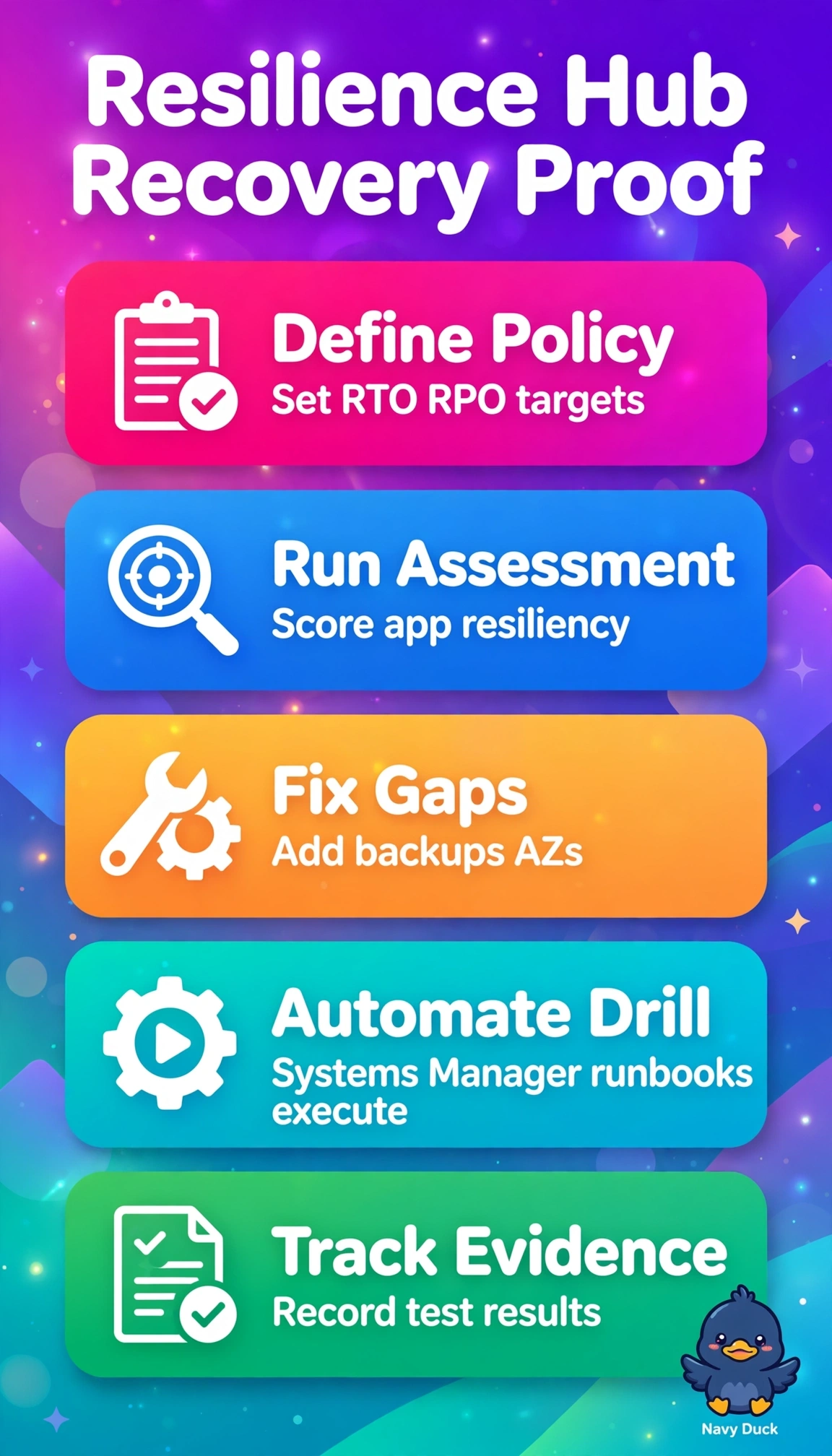
You've got both homework and fire drill covered here. Resilience Hub grades your plan against RTO/RPO while runbooks run the recovery, and automation keeps proof audit-ready.
Full Explanation
Resilience Hub evaluates the application stack against a defined resiliency policy for RTO and RPO, generates a resiliency score, identifies gaps such as missing cross-Region backups or AZ spread, and integrates with operational recovery through Systems Manager Automation runbooks that codify assessment and failover steps for repeatable drills and evidence. Manual AMI copying after assessment provides no orchestrated recovery workflow, version tracking, or test reporting and breaks the procedure requirement. AWS Backup with State Manager provides durable copies and configuration enforcement but does not score resiliency against RTO/RPO or orchestrate ordered failover tasks. Amazon Inspector with Run Command focuses on vulnerability findings and ad hoc commands rather than resiliency policy assessment and structured recovery automation. For the exam, remember Resilience Hub measures and recommends while Systems Manager Automation executes recovery, and in practice verify the policy, app inputs, and runbook execution roles before scheduling drills.