
A university research lab runs a 2 TB on-premises MySQL database for enrollments that must stay writable during term plus 12 TB of genomics datasets on an SMB share that must move with checksum validation. Leadership requires near-zero downtime cutover and post-migration integrity verification. Which database and data migration strategy using DMS and DataSync meets these needs?
Select an answer to reveal the explanation.
Short Explanation
You get the best of both movers here — continuous replication keeps classes online while verified file sync protects research data. Your continuous-replication combo is like moving labs without closing them for a day.
Full Explanation
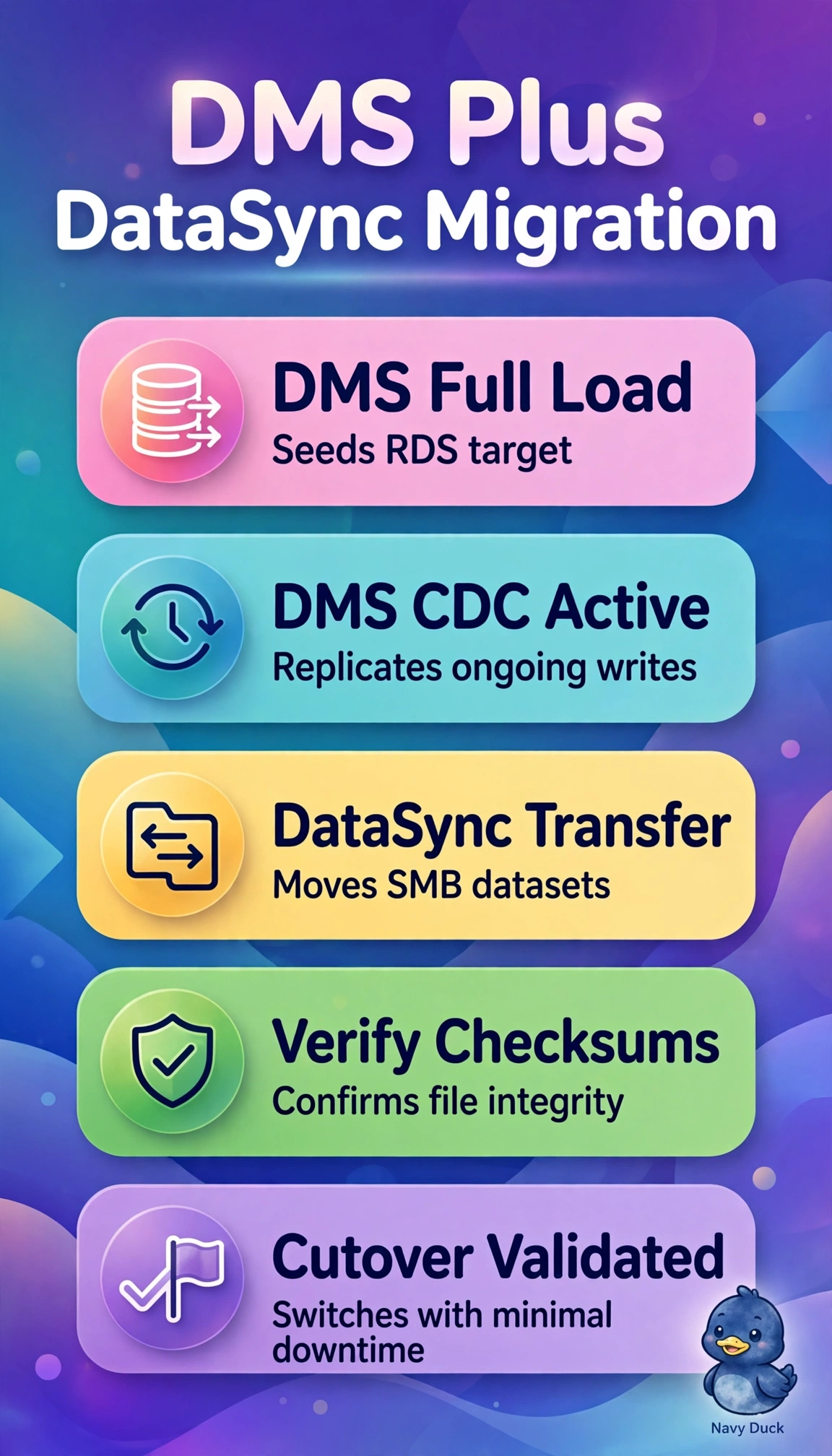
AWS DMS with full load plus change data capture continuously replicates ongoing writes from the source MySQL to Amazon RDS, enabling a low-downtime cutover after validation, while AWS DataSync natively migrates SMB file data with scheduling, bandwidth control, and built-in integrity verification through checksums. A one-time DMS full load fails the continuity concept because it stops capturing writes and forces extended downtime for cutover. Copying SMB data with manual rsync over NFS fails the managed-transfer concept because it lacks DataSync orchestration, verification, and resume capabilities required for large datasets. Exporting the database via DataSync to S3 and restoring fails the database-replication concept because DataSync moves files rather than providing transactional DMS replication and CDC for homogeneous MySQL migration. For the exam remember DMS handles database replication and DataSync handles file transfers, and in practice confirm CDC latency, DataSync verification reports, and cutover windows before switching endpoints.