
A media company with 60 cost centers exceeds its quarterly cloud budget due to overnight transcoding spikes and needs team-level visibility, alerts at 80% spend, and detection of unusual service surges. Which cost monitoring and alerting solution provides budget thresholds and anomaly detection?
Select an answer to reveal the explanation.
Short Explanation
You need both a speed-limit warning and a fraud alert. Proactive monitoring pairs Budgets for threshold pings with anomaly detection that spots weird spikes early.
Full Explanation
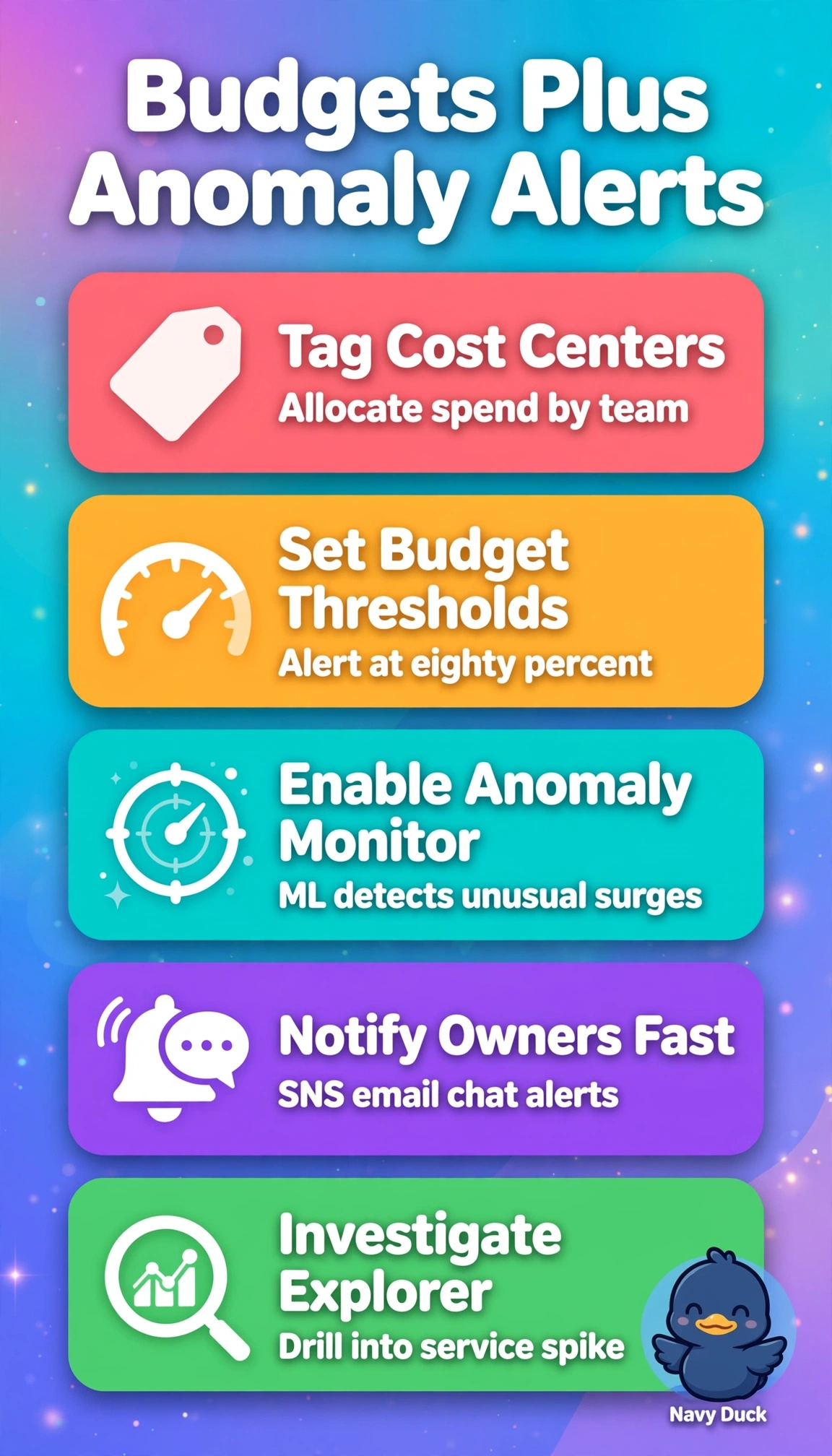
The correct solution is right because AWS Budgets with cost-center filters enforces the quarterly 80% threshold with proactive actual or forecasted alerts per team, while Cost Anomaly Detection continuously learns expected spend by service to flag overnight transcoding surges and notifies subscribers, jointly delivering visibility, threshold governance, and surge detection. The filtered-budgets-only alternative fails on detection concept because fixed thresholds track progress toward a known limit but cannot model seasonality or identify anomalous service behavior outside budget progression. The categories-plus-anomaly alternative fails on governance concept because Cost Categories and Cost Explorer enable accurate allocation and retrospective analysis for 60 centers and anomaly monitors catch surges, yet without Budgets there is no proactive 80% threshold evaluation or forecast alerting. The account-level budgets-plus-anomaly alternative fails on granularity concept because aggregate quarterly monitoring and anomaly detection cover thresholds and surges but cannot attribute spend or alert per cost center, leaving team-level accountability unmet despite correct services. An exam caveat is to distinguish reporting and organization from control: Cost Explorer, Cost Categories, and consolidated billing organize and visualize spend, CloudWatch monitors operational metrics, while only Budgets creates budget thresholds and only Anomaly Detection creates learned anomaly monitors. A practical check is to audit tag-based allocation coverage for all centers, test budget subscriber delivery at 80%, and validate anomaly monitor scope, threshold, and daily summaries before peak transcoding.