
A SaaS provider runs production EC2 reporting servers with EBS volumes plus ephemeral dev EC2 instances. Finance requires 3-year audit retention for production only, monthly restore validation, and lower backup spend by moving old recovery points to cold tier while deleting dev backups after 14 days. Which backup retention design delivers cost-optimized recovery for this workload?
Select an answer to reveal the explanation.
Short Explanation
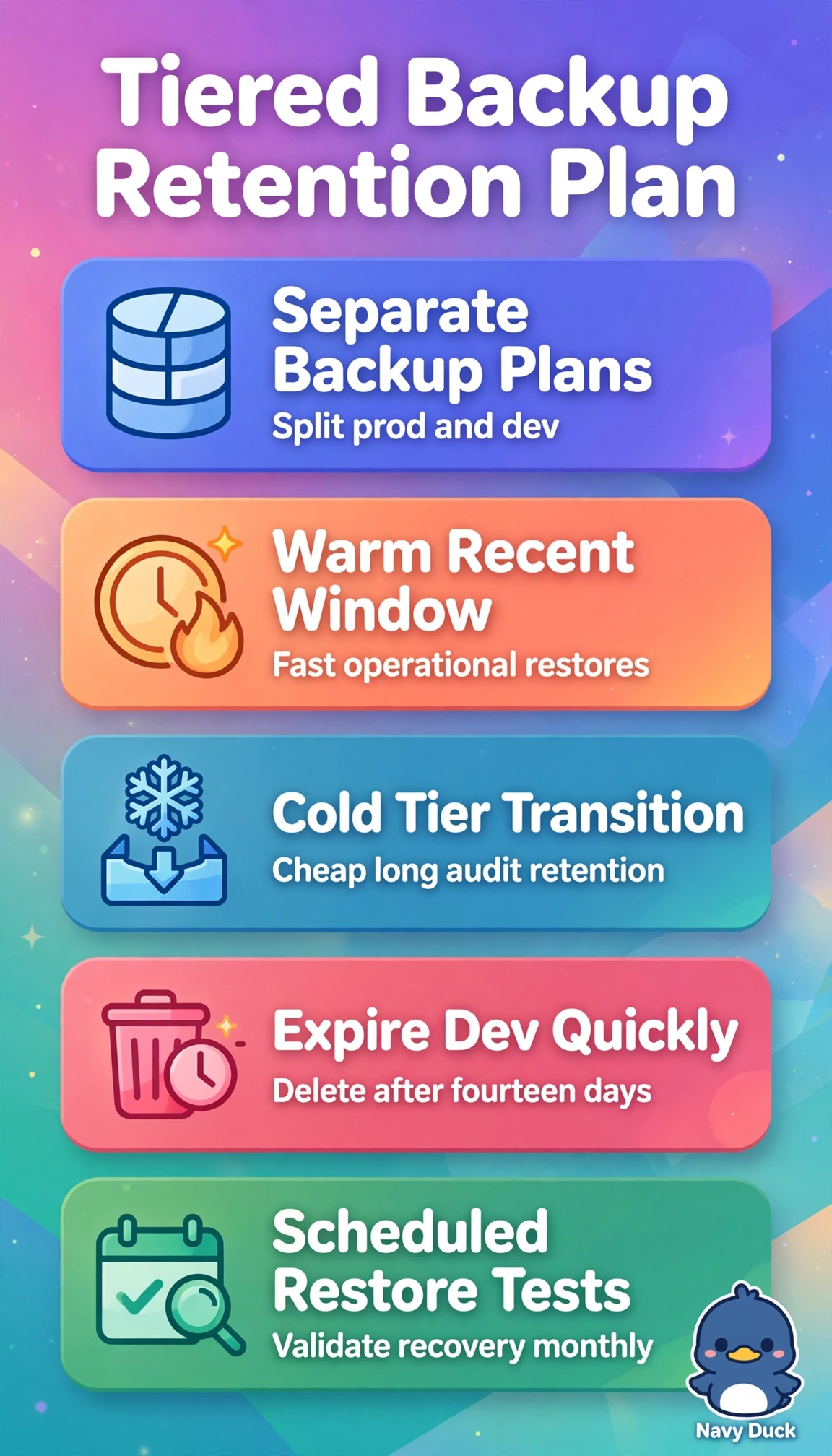
You're paying heated storage for old tax boxes you rarely open. Lifecycle rules keep recent restores warm then shift audit copies cold while dev clutter expires fast.
Full Explanation
The correct design works because separate vaults enforce differentiated retention for audit versus ephemeral data, lifecycle rules retain production EC2 and EBS recovery points for three years while transitioning aged points to cold storage to cut spend, short expiry for dev honors the fourteen-day rule, and centralized AWS Backup management enables consistent monthly restore validation. The alternative that retains both production and dev for three years in cold storage with monthly validation fails on scope precision because preserving disposable dev snapshots as long-term audit records inflates storage and management cost without compliance value. The alternative that keeps production for three years in warm storage with correct dev expiry and monthly validation fails on storage tiering because never moving aged points to cold directly violates the cost-optimization mandate despite correct durations and testing. The alternative that correctly tiers production to cold and expires dev after fourteen days but validates only annually fails on operational assurance because infrequent testing cannot prove monthly recoverability demanded by finance and auditors. Exam caveat is to treat retention duration, cold transition, resource coverage, and restore-testing frequency as separate scored requirements and check each distractor for the single mismatched control. Practical check is to inspect backup plans for production three-year retention with cold transition after thirty to ninety days, dev fourteen-day expiry, EBS volume coverage (cold tiering is supported for EBS but not for Aurora or RDS snapshots), and successful restore-test jobs each month.