
A 400-person SaaS company runs 60 AWS accounts for three business units, 40 client projects, and dev, test, and prod environments, but finance cannot map spend and unallocated charges keep growing. Engineers forget tags and names vary by team. Which tagging strategy best establishes consistent cost allocation by business unit, project, and environment?
Select an answer to reveal the explanation.
Short Explanation
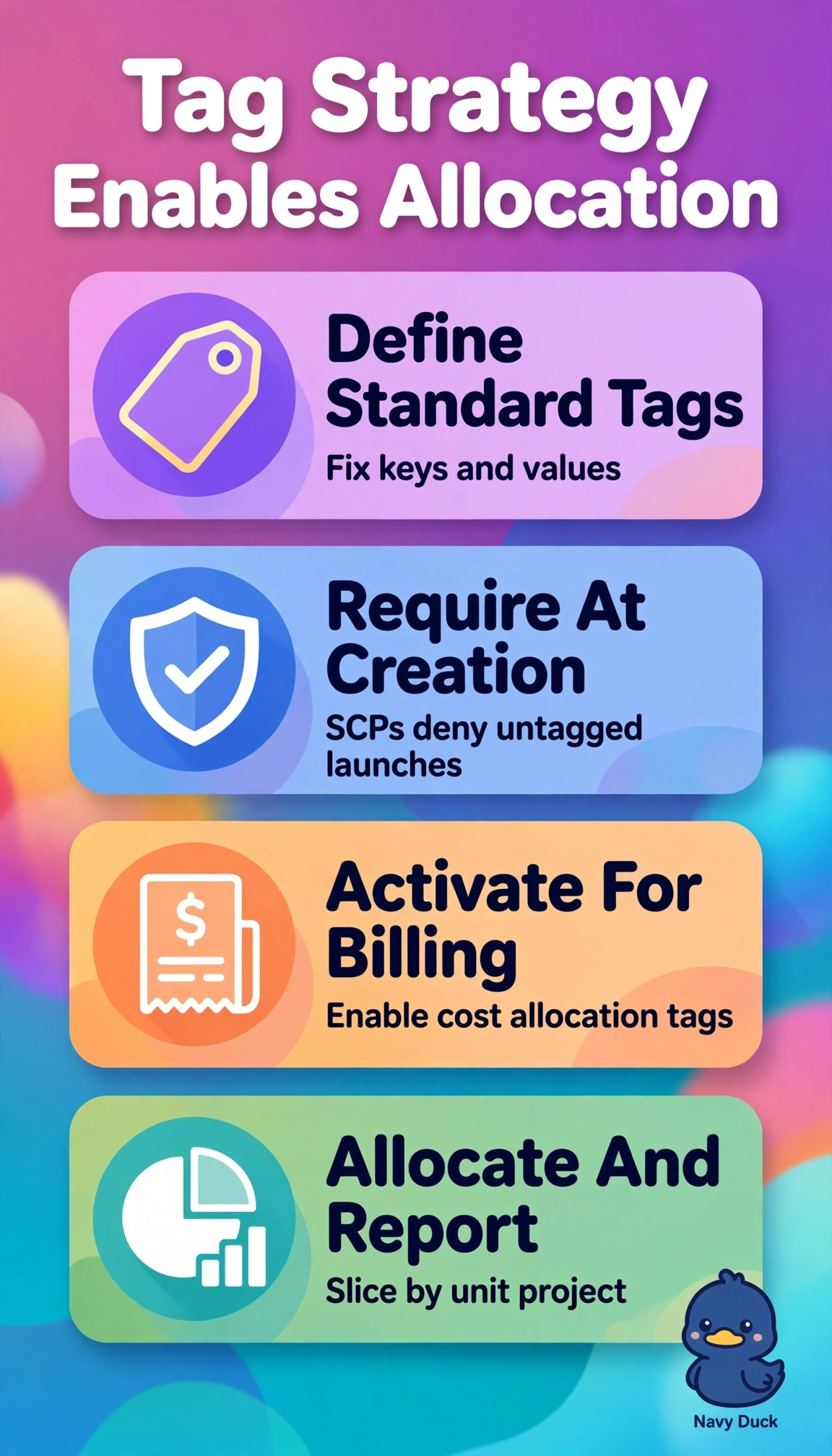
You can make shared costs easier to sort, like labeled bins making cleanup fair for everyone. Tag Policies standardize tag keys and values, SCPs block launches missing required tags, and activation makes the tags available for cost allocation.
Full Explanation
Tag Policies in AWS Organizations standardize tag keys, allowed values, and capitalization across accounts, but they do not by themselves make tags mandatory when a resource is created. Pairing them with SCPs that deny creation when required tags are missing addresses the problem of engineers forgetting tags. Activating the user-defined tags for cost allocation in Billing makes them available in Cost Explorer and Cost and Usage Reports, so finance can allocate spend by business unit, project, and environment. A single manually applied CostCenter tag lacks those separate dimensions and enforcement, so inconsistent tagging can persist and finance cannot accurately split costs. AWS generated Creator tags identify who created a resource, not its business unit, project, or environment, so they cannot provide the needed allocation dimensions. Resource names containing codes are not cost allocation tags that can be activated for billing, and inconsistent naming can undermine reporting. For the exam, distinguish tag standardization from enforcement and billing activation: the strategy needs all three. In practice, check Tag Policies compliance reports and the Cost Allocation Tags status regularly to confirm tags are being applied and used for billing.