
A regional bank must evacuate 120 VMware VMs running branch teller systems to AWS within 8 weeks with minimal downtime and no application rewrites. Regulators require pilot testing of critical ledgers, staged cutovers by branch, and rollback ability if transactions fail. What migration strategy meets the deadline?
Select an answer to reveal the explanation.
Short Explanation
Need to move house without repacking every box? You mirror everything live then flip rooms over branch by branch with rehosting. Replication keeps downtime tiny and rollback stays simple.
Full Explanation
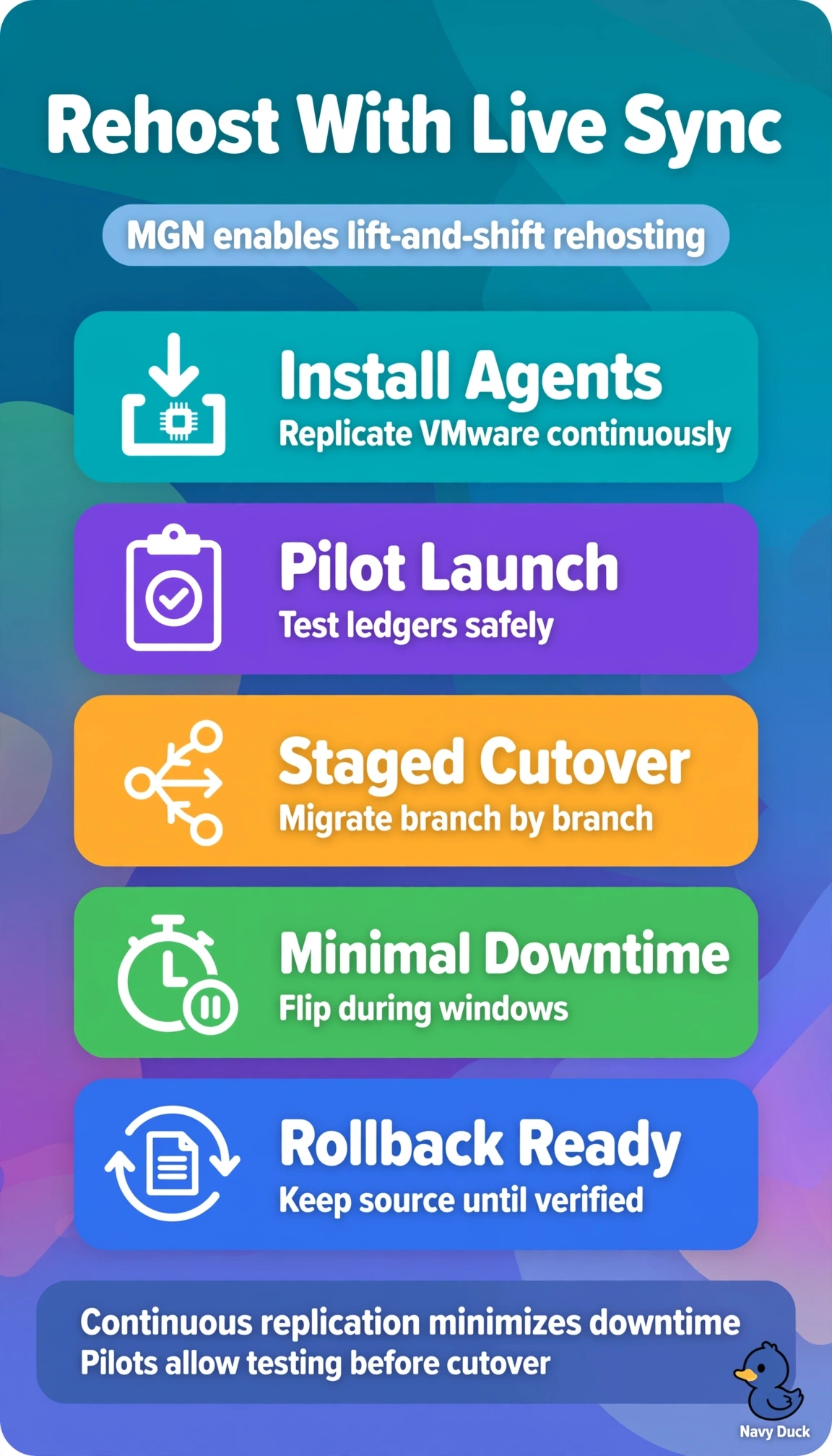
The correct strategy succeeds because rehosting with AWS Transform MGN (formerly AWS Application Migration Service) preserves VM images and operating system configuration, which meets the no-rewrite constraint and aggressive 8-week timeline, while continuous block-level replication keeps source teller systems online until cutover to deliver minimal downtime, phased branch waves satisfy the regulator demand for staged cutovers and allow critical-ledger pilots to validate real transactions before wider promotion, and integrated testing with rollback preserves transaction integrity if failures occur. The single coordinated cutover approach fails on deployment control because consolidating all branches into one event removes staged risk isolation and magnifies blast radius despite efficient replication. The container replatforming approach fails on architecture constraint because moving to ECS requires refactoring, rebuilding data layers, and extensive regression testing incompatible with no rewrites and eight weeks. The snapshot restore approach fails on continuity because periodic backups enforce outage windows and data-loss exposure with no continuous sync or reliable rollback point compared to replication. Exam caveat: distinguish replication for migration from database replication or backup, focusing on pilot scope, phasing, and reversibility cues rather than tool familiarity alone. Practical check: confirm pilot scope includes production-like ledger transactions, branch wave sequencing with success criteria, replication lag metrics, and a tested rollback runbook before committing any branch cutover.