
A platform team runs shared EKS clusters and Bedrock agents for 12 business units but bills everything to one account with no team-level visibility. Finance requires monthly chargeback by team for compute and separate Bedrock token usage by agent. Which chargeback and showback design allocates shared and AI costs to teams?
Select an answer to reveal the explanation.
Short Explanation
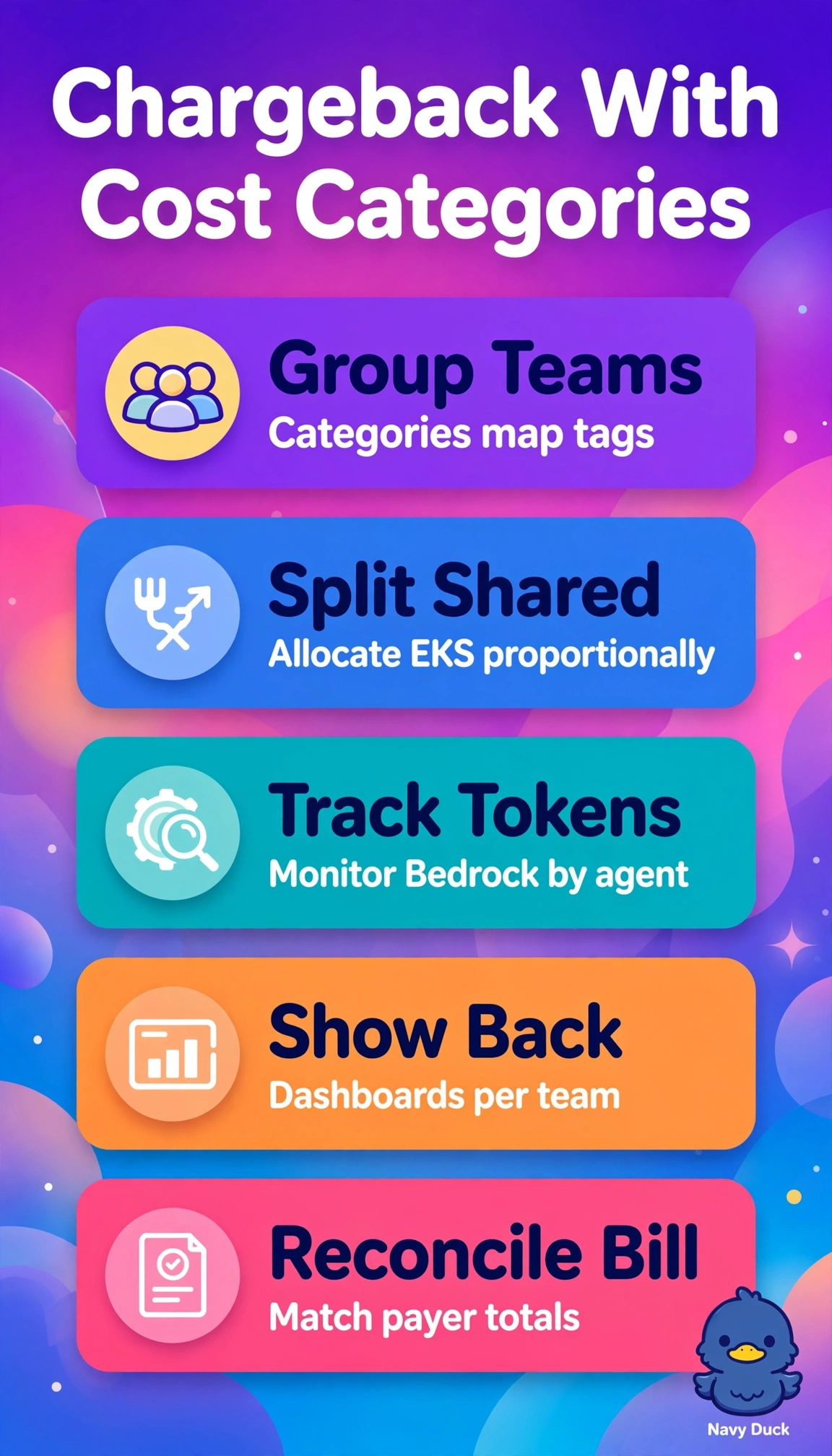
Shared bills need fair splits, so you turn on split cost allocation for the shared clusters, tag your Bedrock usage, and group everything by team with cost categories. One invoice becomes twelve accountable statements.
Full Explanation
Split cost allocation data for Amazon EKS attributes shared cluster costs to namespaces and pods by CPU and memory usage, tagged Bedrock application inference profiles let Bedrock token spend be attributed per team or agent, and cost categories apply rule-based grouping by tag, account, or charge type so each team sees a consolidated monthly chargeback and showback view. Activating tags and emailing the consolidated bill provides raw visibility but does not apportion shared cluster costs or isolate Bedrock tokens per agent, missing fair allocation logic. Buying Savings Plans and spreading discounts evenly lowers total spend but does not attribute consumption to teams and misallocates heavy versus light users. Exporting the Cost and Usage Report and granting billing access supplies data but leaves teams to manually calculate splits without governed category rules, missing repeatable chargeback. Exam caveat is that split cost allocation data (usage-based EKS/ECS attribution) is separate from cost category split charge rules, and both help divide shared costs. Practical check is to reconcile category totals to the payer bill and validate Bedrock token tags per agent.